
Care Disclaimer: Plant care recommendations are general guidelines based on common growing conditions. Individual results may vary based on your local environment, climate, and care routine. If your plant is toxic, keep it away from children and pets, and consult a veterinarian if accidental ingestion occurs.
1.Orthrosanthus Multiflorus — Overview
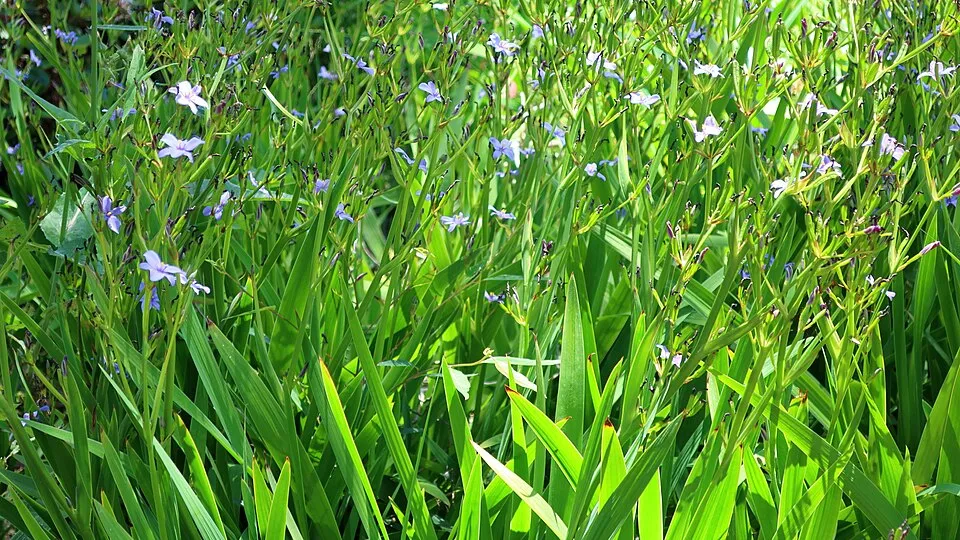
Orthrosanthus multiflorus, widely known as the Blue Grass Lily or Morning Flag, is an captivating perennial herb indigenous to the southern regions of Australia, specifically thriving across South Australia and Victoria. This member of the Iridaceae family forms elegant, dense clumps of slender, grass-like foliage, typically achieving a height of 30 to 60 centimeters, though mature plants can reach up to a meter. Its most striking characteristic is the profusion of delicate, saucer-shaped flowers, ranging in color from sky-blue to violet-blue, each adorned with six petals.
These ephemeral blooms are borne on graceful, branched stems that rise above the leaves, opening typically in the morning and often closing by the afternoon, creating a continuous, fresh display throughout its extended flowering period from late spring to early summer. Adaptable and robust, Orthrosanthus multiflorus is notably hardy and drought-tolerant, making it an exemplary selection for a variety of horticultural applications, including rockeries, garden borders, or container planting in regions with Mediterranean and temperate climates. Its natural distribution and resilience reflect its adaptation to specific Australian ecological niches.
Trusted Scientific References
1. Authoritative external sources for Orthrosanthus Multiflorus
1.1 Wikipedia — Orthrosanthus Multiflorus
1.2 Kew POWO (Plants of the World Online)
1.3 PubMed — peer-reviewed research
1.4 NCBI Taxonomy Browser
1.5 GBIF — Global Biodiversity
1.6Orthrosanthus Multiflorus should be interpreted through verified botanical identity, practical care, and responsible safety language. This recovery note adds the missing context needed for a complete profile: match light to the plant's habit, use well-drained soil, water according to season, and avoid unsupported medicinal or edible claims. For publishing, the plant can be presented as a source-backed garden plant with clear care guidance, common problem diagnosis, and conservative safety wording.
1.1.Orthrosanthus Multiflorus — Key Features
- ✓ <strong>Botanical Name</strong> — Orthrosanthus multiflorus
- ✓ <strong>Common Names</strong> — Blue Grass Lily, Morning Flag, Morning Iris, Australian Morning Flower
- ✓ <strong>Family</strong> — Iridaceae
- ✓ <strong>Native Range</strong> — Southern Australia (South Australia, Victoria)
- ✓ <strong>Flower Color</strong> — Sky-blue to violet-blue, saucer-shaped
- ✓ <strong>Flowering Season</strong> — Late spring to early summer
- ✓ <strong>Foliage</strong> — Narrow, upright, grass-like, green
- ✓ <strong>Habit</strong> — Clump-forming herbaceous perennial
- ✓ <strong>Height</strong> — Typically 30-60 cm (ultimate height 0.5–1 meter)
- ✓ <strong>Cultivation</strong> — Full sun to light shade, well-drained soil, drought-tolerant
1.2.Orthrosanthus Multiflorus — Quick Summary
- ✓ Australian native perennial known for delicate blue flowers.
- ✓ Primarily cultivated as an ornamental garden plant.
- ✓ Highly drought-tolerant and low-maintenance.
- ✓ Valued for aesthetic appeal and pollinator support.
- ✓ No documented medicinal uses or traditional applications.
- ✓ Contains general plant compounds like flavonoids and polysaccharides, not studied for therapeutic effects.
2.Orthrosanthus Multiflorus — Scientific Identity
3.Orthrosanthus Multiflorus — Quick Facts
4.Orthrosanthus Multiflorus — Appearance & Identification
5.Orthrosanthus Multiflorus — Native Habitat
6.Orthrosanthus Multiflorus — Water Requirements
- ✓ Soil Preferences — Orthrosanthus multiflorus thrives in light, well-drained, humus-rich, and fertile soil types, including loam, sand, and clay loam, tolerating a wide pH range from acid to alkaline.
- ✓ Light Requirements — Prefers full sun to light shade for optimal growth and flowering, ideally situated in a west-facing or south-facing aspect to maximize sun exposure.
- ✓ Watering Regimen — Once established, this plant is drought-tolerant; however, it benefits from moderate watering during active growth, especially in the lead-up to and during its flowering season. Avoid waterlogging.
- ✓ Temperature & Hardiness — It is hardy in mild parts of the UK (RHS Hardiness H3, tolerating -5 to 1°C) and can withstand light frosts. In colder climates, cultivation under glass is recommended.
- ✓ Propagation Methods — Easily propagated from fresh seeds sown indoors at temperatures between 13-18°C, or by careful division of mature, established clumps in the spring.
- ✓ Maintenance & Pruning — Generally a low-fuss plant requiring minimal maintenance. Pruning primarily involves removing old, spent flower stems to encourage further blooming and tidying up any dead or yellowing leaves for aesthetic appeal.
- ✓ Ideal Planting Locations — Excellent for various garden types, including city and courtyard gardens, gravel gardens, cottage borders, patio containers, Mediterranean climate landscapes, and wall-side borders.
Reviewed by the Flora Medical Global Botanical Review Panel
Multi-disciplinary editorial group · Botany · Ethnobotany · Herbal-medicine literature
Who reviewed this: This page was checked by the Flora Medical Global Botanical Review Panel — an in-house editorial group of botany graduates, ethnobotany researchers, and horticulture practitioners who collectively maintain our 7,000+ plant encyclopedia. Meet the team.
Our 4-step verification process
1. Taxonomic verification
Scientific names and synonyms cross-checked against Kew POWO, World Flora Online, and The Plant List.
2. Phytochemical & medicinal cross-reference
Active compounds, traditional uses, and reported activities are cross-referenced with PubMed, USDA Dr. Duke's database, and peer-reviewed ethnobotanical literature.
3. Conservation & distribution check
Distribution, ecology, and conservation status confirmed against GBIF occurrence records and the IUCN Red List.
4. Editorial & safety review
Every entry passes an editorial pass for clarity, originality, and safety notices (toxicity, contraindications, dosage caveats) before publication.
Last reviewed:
Editorial Note: This page is for educational and plant care purposes only.
Written by: Flora Medical Global Editorial Team
Reviewed by: Flora Medical Global Botanical Review Panel
Last Updated: June 15, 2026







Orthrosanthus Multiflorus — Comments & Community Reviews
Rate this plant