

Care Disclaimer: Plant care recommendations are general guidelines based on common growing conditions. Individual results may vary based on your local environment, climate, and care routine. If your plant is toxic, keep it away from children and pets, and consult a veterinarian if accidental ingestion occurs.
1.Osteospermum Ecklonis — Overview
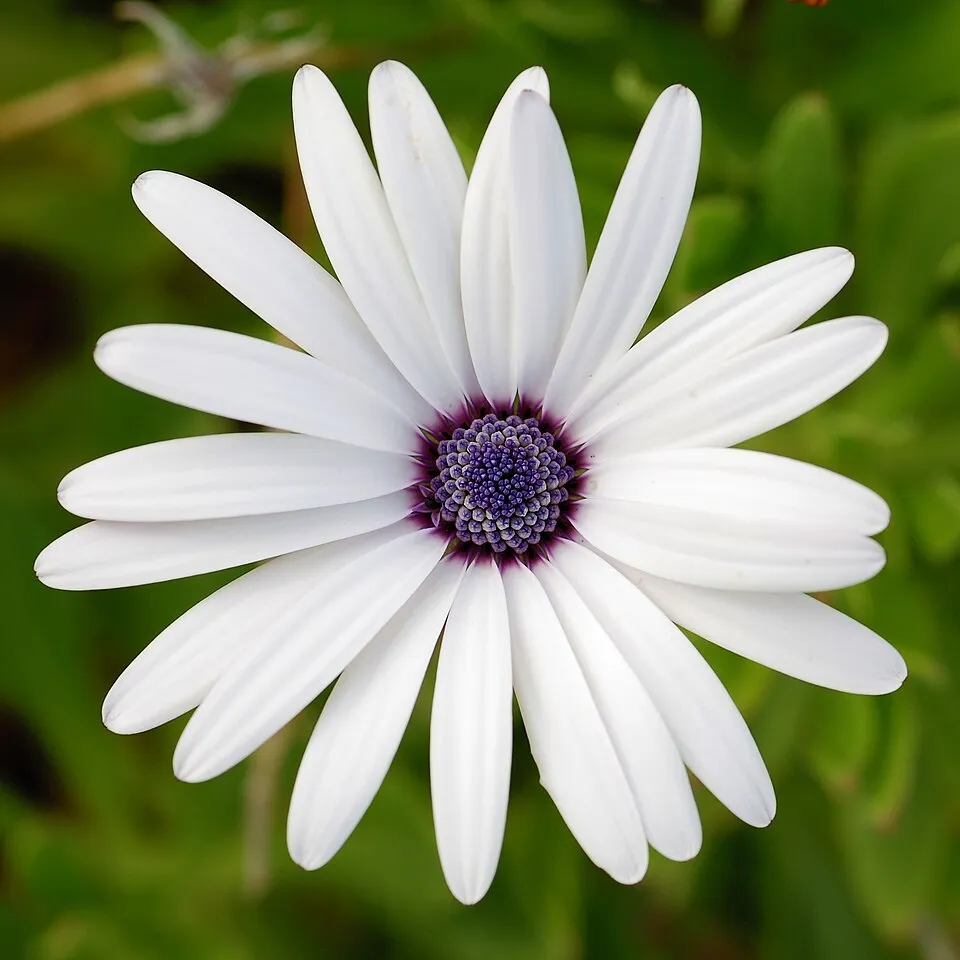
Osteospermum ecklonis, widely recognized as the African Daisy or Cape Daisy, is a strikingly beautiful and floriferous perennial member of the Asteraceae family. Indigenous to the Eastern Cape province of South Africa, this species has been extensively cultivated globally for its ornamental appeal, gracing gardens with its vibrant blooms. The plant typically exhibits a mounding or sprawling growth habit, reaching heights and widths of 30 to 90 cm (12 to 36 inches), which can vary significantly with cultivar selection and environmental factors. Its foliage is characterized by lance-shaped to obovate leaves, often featuring slightly to deeply serrated or lobed margins, presenting in shades ranging from bright green to grayish-green, sometimes with a subtle hirsute texture.
The most distinguishing feature of Osteospermum ecklonis is its solitary, daisy-like capitula, borne atop slender peduncles extending above the leaf canopy. These composite flowers are notable for their prominent central disc florets, which frequently display deep hues of blue, purple, or black, encircled by an impressive array of ray florets. These ray florets showcase an astonishing spectrum of colors, including pure white, creamy yellow, vibrant orange, soft pink, rich purple, and various captivating bicolors, with many modern hybrids exhibiting metallic or iridescent qualities. A fascinating phototropic characteristic means the flowers unfurl in direct sunlight and retract during overcast conditions or at night.
Optimal flowering periods typically occur during the cooler temperatures of spring and autumn, with blooming often diminishing or ceasing during intense summer heat, particularly in warmer climates. This fast-growing species is often cultivated as an annual in colder temperate zones or as a short-lived perennial in frost-free, warmer regions, valued primarily for its aesthetic contribution to landscapes.
Trusted Scientific References
1. Authoritative external sources for Osteospermum Ecklonis
1.1 Wikipedia — Osteospermum Ecklonis
1.2 Kew POWO (Plants of the World Online)
1.3 PubMed — peer-reviewed research
1.4 NCBI Taxonomy Browser
1.5 GBIF — Global Biodiversity
1.1.Osteospermum Ecklonis — Key Features
- ✓ <strong>Strikingly vibrant, daisy</strong> — like flowers with diverse color palettes.
- ✓ <strong>Phototropic blooms that</strong> — Phototropic blooms that open in sunlight and close at night or on cloudy days.
- ✓ <strong>Native to the Eastern Cape of South Africa, well</strong> — adapted to specific climatic conditions.
- ✓ <strong>Belongs to the</strong> — Belongs to the large Asteraceae family, sharing general botanical characteristics.
- ✓ <strong>Forms a mounding</strong> — Forms a mounding or sprawling habit, suitable for various garden designs.
- ✓ <strong>Relatively fast</strong> — growing, offering quick establishment and seasonal color.
- ✓ <strong>Attracts beneficial insects</strong> — Attracts beneficial insects like bees and butterflies, supporting garden ecosystems.
- ✓ <strong>Cultivated globally as</strong> — Cultivated globally as a popular ornamental annual or short-lived perennial.
- ✓ <strong>Features lance</strong> — shaped to obovate leaves, often with serrated or lobed margins.
- ✓ <strong>Exhibits a long</strong> — Exhibits a long flowering season, particularly in cooler spring and fall temperatures.
1.2.Osteospermum Ecklonis — Quick Summary
- ✓ African Daisy is a vibrant, ornamental perennial from South Africa, cherished for its colorful, phototropic blooms.
- ✓ Primarily an aesthetic garden plant, it offers visual appeal and attracts pollinators.
- ✓ Contains potential phytochemicals like flavonoids and phenolic acids, suggesting mild antioxidant and anti-inflammatory properties.
- ✓ Not traditionally recognized for strong medicinal uses; any therapeutic applications are largely speculative or require extensive research.
- ✓ Easy to cultivate in full sun and well-drained soil, making it a popular choice for gardeners.
- ✓ Exercise caution for potential allergic reactions, especially for individuals sensitive to the Asteraceae family.
2.Osteospermum Ecklonis — Scientific Identity
3.Osteospermum Ecklonis — Quick Facts
4.Osteospermum Ecklonis — Appearance & Identification
5.Osteospermum Ecklonis — Native Habitat
6.Osteospermum Ecklonis — Water Requirements
- ✓ Site Selection — Prefers full sun exposure (at least 6 hours daily) for optimal flowering and robust growth.
- ✓ Soil Requirements — Thrives in well-drained soil, ideally a sandy loam, with a slightly acidic to neutral pH (6.0-7.0); avoid heavy, waterlogged conditions.
- ✓ Watering Regimen — Requires consistent moisture, especially during dry spells and establishment, but allow the top inch of soil to dry out between waterings to prevent root rot.
- ✓ Fertilization — Benefit from a balanced, slow-release granular fertilizer applied in spring, or liquid feed every 2-4 weeks during peak growing season.
- ✓ Deadheading — Regular removal of spent flowers encourages continuous blooming and prevents the plant from expending energy on seed production.
- ✓ Pruning — Light pruning after the first flush of blooms can promote bushier growth and a second wave of flowers; a more significant cutback may be needed for overwintering perennials.
- ✓ Pest and Disease Management — Generally robust, but monitor for aphids, whiteflies, and powdery mildew, treating with appropriate organic or chemical controls if necessary.
- ✓ Propagation — Easily propagated from seeds sown in early spring or from softwood cuttings taken in late spring to early summer.
Reviewed by the Flora Medical Global Botanical Review Panel
Multi-disciplinary editorial group · Botany · Ethnobotany · Herbal-medicine literature
Who reviewed this: This page was checked by the Flora Medical Global Botanical Review Panel — an in-house editorial group of botany graduates, ethnobotany researchers, and horticulture practitioners who collectively maintain our 7,000+ plant encyclopedia. Meet the team.
Our 4-step verification process
1. Taxonomic verification
Scientific names and synonyms cross-checked against Kew POWO, World Flora Online, and The Plant List.
2. Phytochemical & medicinal cross-reference
Active compounds, traditional uses, and reported activities are cross-referenced with PubMed, USDA Dr. Duke's database, and peer-reviewed ethnobotanical literature.
3. Conservation & distribution check
Distribution, ecology, and conservation status confirmed against GBIF occurrence records and the IUCN Red List.
4. Editorial & safety review
Every entry passes an editorial pass for clarity, originality, and safety notices (toxicity, contraindications, dosage caveats) before publication.
Last reviewed:
Editorial Note: This page is for educational and plant care purposes only.
Written by: Flora Medical Global Editorial Team
Reviewed by: Flora Medical Global Botanical Review Panel
Last Updated: June 15, 2026







Osteospermum Ecklonis — Comments & Community Reviews
Rate this plant