

Care Disclaimer: Plant care recommendations are general guidelines based on common growing conditions. Individual results may vary based on your local environment, climate, and care routine. If your plant is toxic, keep it away from children and pets, and consult a veterinarian if accidental ingestion occurs.
1.Ox-Eye Daisy — Overview
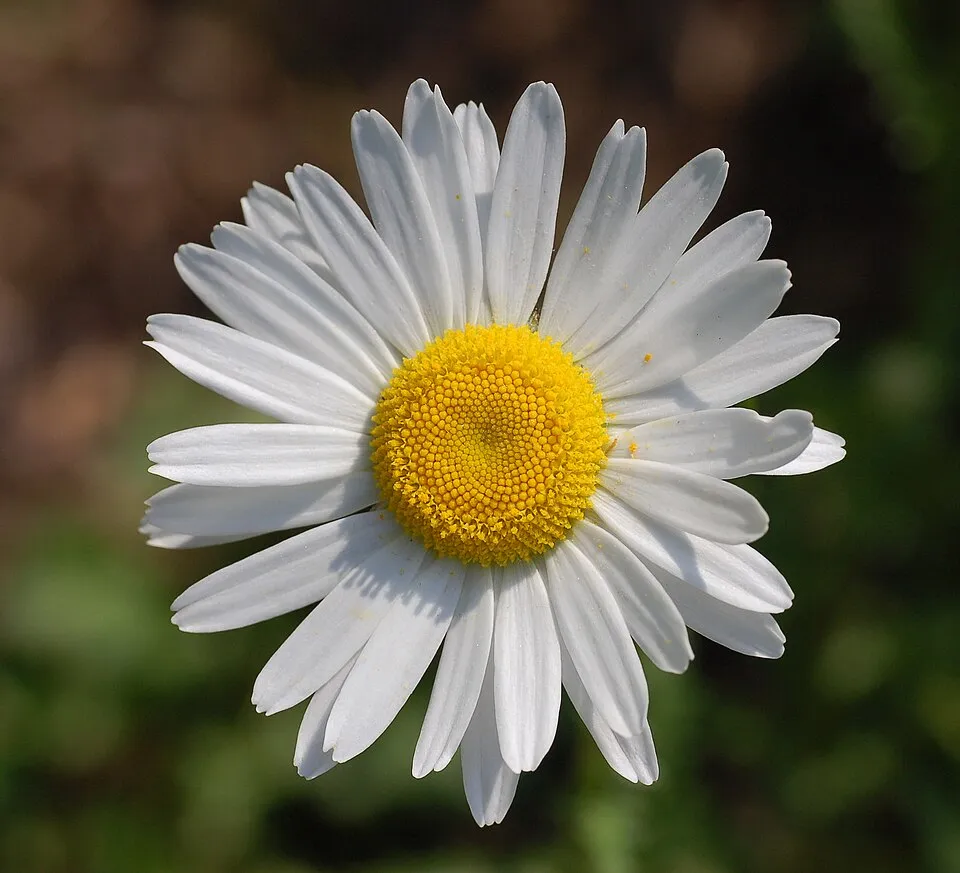
Leucanthemum vulgare, commonly known as the Ox-Eye Daisy, is a charming and remarkably resilient perennial flowering plant belonging to the expansive Asteraceae family. Indigenous to the meadows, grasslands, and open woodlands of Europe and temperate Asia, this species has successfully naturalized across numerous regions globally, including significant portions of North America, where it frequently adorns roadsides, pastures, and disturbed ground. Its iconic flower heads, often perceived as a quintessential daisy, are characterized by a vibrant yellow central disc composed of numerous tiny, fertile disc florets, elegantly encircled by a single row of 20-30 pure white, sterile ray florets.
The plant typically achieves a height of 20-70 cm (8-28 inches) and exhibits a spreading growth habit through underground rhizomes, forming dense colonies. Its basal leaves are dark green, glossy, and distinctively spatulate to obovate with deeply lobed or toothed margins, forming a prominent rosette. Stem leaves are alternately arranged, becoming progressively smaller, more linear, and sessile as they ascend the stem.
Flowering typically spans from late spring through late summer, providing an extended display of simple yet captivating beauty. Highly adaptable to various soil conditions and light exposures, the Ox-Eye Daisy is revered for its cheerful aesthetic, ecological role in attracting pollinators, and historical significance in traditional European folk medicine.
Trusted Scientific References
1. Authoritative external sources for Leucanthemum vulgare
1.1 Wikipedia — Leucanthemum vulgare
1.2 Kew POWO (Plants of the World Online)
1.3 PubMed — peer-reviewed research
1.4 NCBI Taxonomy Browser
1.5 GBIF — Global Biodiversity
1.6Ox-Eye Daisy should be interpreted through verified botanical identity, practical care, and responsible safety language. This recovery note adds the missing context needed for a complete profile: match light to the plant's habit, use well-drained soil, water according to season, and avoid unsupported medicinal or edible claims. For publishing, the plant can be presented as a source-backed garden plant with clear care guidance, common problem diagnosis, and conservative safety wording.
1.1.Ox-Eye Daisy — Key Features
- ✓ <strong>Iconic Appearance</strong> — Features classic white ray florets surrounding a yellow disc, symbolizing innocence.
- ✓ <strong>Widespread Distribution</strong> — Native to Eurasia, widely naturalized across temperate regions globally.
- ✓ <strong>Perennial Herb</strong> — Grows annually from an established rootstock, often spreading via rhizomes.
- ✓ <strong>Asteraceae Family</strong> — Belongs to the daisy family, sharing characteristics with other composites.
- ✓ <strong>Medicinal Folk Use</strong> — Historically valued for mild anti-inflammatory, astringent, and antiseptic actions.
- ✓ <strong>Phytochemically Active</strong> — Contains beneficial flavonoids, sesquiterpenes, and phenolic acids.
- ✓ <strong>Pollinator Attractor</strong> — Its abundant flowers provide nectar and pollen for bees and other insects.
- ✓ <strong>Edible Leaves</strong> — Young leaves can be consumed raw or cooked as a wild vegetable.
- ✓ <strong>Resilient and Adaptable</strong> — Thrives in various disturbed habitats, tolerating diverse soil and light conditions.
- ✓ <strong>Ornamental Value</strong> — Commonly used in naturalized areas, meadows, and cottage gardens for aesthetic appeal.
1.2.Ox-Eye Daisy — Quick Summary
- ✓ Ox-Eye Daisy (Leucanthemum vulgare) is a common perennial wildflower from the Asteraceae family.
- ✓ Traditionally used for mild anti-inflammatory, astringent, and antiseptic properties.
- ✓ Rich in flavonoids, sesquiterpenes, and tannins, contributing to its therapeutic potential.
- ✓ Employed in folk medicine for wound healing, skin irritations, coughs, and as a mild diuretic.
- ✓ Adaptable and easy to cultivate, it also serves as an important pollinator plant.
- ✓ Exercise caution with use, especially for those with Asteraceae allergies or during pregnancy.
2.Ox-Eye Daisy — Scientific Identity
3.Ox-Eye Daisy — Quick Facts
4.Ox-Eye Daisy — Appearance & Identification
5.Ox-Eye Daisy — Native Habitat
6.Ox-Eye Daisy — Water Requirements
- ✓ Site Selection — Choose a location with full sun to partial shade; Ox-Eye Daisy thrives in at least 6 hours of direct sunlight daily.
- ✓ Soil Requirements — Prefers well-drained soil, tolerating a range from sandy to clayey, but performs best in moderately fertile loam.
- ✓ Watering — Water regularly during dry periods, especially when establishing; established plants are moderately drought-tolerant.
- ✓ Propagation — Can be propagated by seeds sown in spring or autumn, by division of rhizomes in spring, or from stem cuttings.
- ✓ Spacing — Space plants 30-45 cm (12-18 inches) apart to allow for spread and air circulation.
- ✓ Maintenance — Deadhead spent blooms to encourage further flowering and prevent excessive self-seeding; cut back foliage after frost.
- ✓ Pest and Disease — Generally robust, but watch for common garden pests like aphids or powdery mildew in humid conditions.
- ✓ Hardiness — Hardy in USDA zones 3-9, tolerating a wide range of temperate climates.
Reviewed by the Flora Medical Global Botanical Review Panel
Multi-disciplinary editorial group · Botany · Ethnobotany · Herbal-medicine literature
Who reviewed this: This page was checked by the Flora Medical Global Botanical Review Panel — an in-house editorial group of botany graduates, ethnobotany researchers, and horticulture practitioners who collectively maintain our 7,000+ plant encyclopedia. Meet the team.
Our 4-step verification process
1. Taxonomic verification
Scientific names and synonyms cross-checked against Kew POWO, World Flora Online, and The Plant List.
2. Phytochemical & medicinal cross-reference
Active compounds, traditional uses, and reported activities are cross-referenced with PubMed, USDA Dr. Duke's database, and peer-reviewed ethnobotanical literature.
3. Conservation & distribution check
Distribution, ecology, and conservation status confirmed against GBIF occurrence records and the IUCN Red List.
4. Editorial & safety review
Every entry passes an editorial pass for clarity, originality, and safety notices (toxicity, contraindications, dosage caveats) before publication.
Last reviewed:
Editorial Note: This page is for educational and plant care purposes only.
Written by: Flora Medical Global Editorial Team
Reviewed by: Flora Medical Global Botanical Review Panel
Last Updated: June 15, 2026







Ox-Eye Daisy — Comments & Community Reviews
Rate this plant