
Care Disclaimer: Plant care recommendations are general guidelines based on common growing conditions. Individual results may vary based on your local environment, climate, and care routine. If your plant is toxic, keep it away from children and pets, and consult a veterinarian if accidental ingestion occurs.
1.Pachysandra Terminalis — Overview
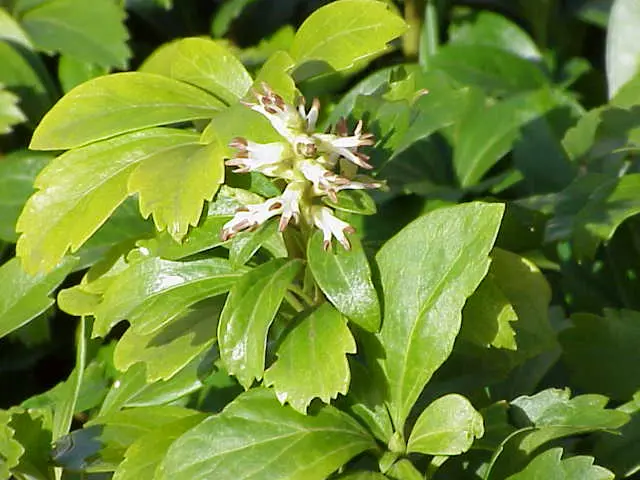
Pachysandra terminalis, commonly known as Japanese spurge or Japanese pachysandra, is an invaluable evergreen groundcover belonging to the Buxaceae family. Native to the shaded understories of woodlands in Japan, Korea, and China, this resilient perennial forms a dense, attractive carpet of foliage, typically reaching a height of 15-30 cm (6-12 inches) and spreading extensively to form thick mats. Its robust growth habit makes it an exceptional choice for suppressing weeds and preventing soil erosion, particularly in challenging shady environments where many other plants struggle. The leaves are a defining feature: glossy, dark green, and leathery, with an obovate to spatulate shape and finely toothed margins, arranged in distinctive whorls at the stem tips.
This arrangement gives the plant a unique textural appeal. In spring, usually from April to May, small, inconspicuous white flowers emerge. These unisexual blooms, with male flowers in terminal clusters and female flowers appearing singly below them, are often hidden amongst the dense foliage. While subtly fragrant and attractive to early pollinators, the primary ornamental value of Japanese spurge lies in its lush, year-round evergreen foliage.
Small, dark drupes may follow in autumn but are not a significant visual element. Pachysandra terminalis is remarkably tolerant of deep shade and thrives best in moist, well-drained, acidic to neutral soils. Once established, it demonstrates resilience to various conditions, including periods of dry shade, though consistent moisture optimizes its performance. Its slow yet steady growth contributes to its low-maintenance appeal, requiring minimal pruning and providing enduring green interest throughout the seasons.
Trusted Scientific References
1. Authoritative external sources for Pachysandra terminalis
1.1 Wikipedia — Pachysandra terminalis
1.2 Kew POWO (Plants of the World Online)
1.3 PubMed — peer-reviewed research
1.4 NCBI Taxonomy Browser
1.5 GBIF — Global Biodiversity
1.6Pachysandra Terminalis should be interpreted through verified botanical identity, practical care, and responsible safety language. This recovery note adds the missing context needed for a complete profile: match light to the plant's habit, use well-drained soil, water according to season, and avoid unsupported medicinal or edible claims. For publishing, the plant can be presented as a source-backed garden plant with clear care guidance, common problem diagnosis, and conservative safety wording.
1.1.Pachysandra Terminalis — Key Features
- ✓ <strong>Botanical Name</strong> — Pachysandra terminalis.
- ✓ <strong>Common Names</strong> — Japanese Spurge, Japanese Pachysandra.
- ✓ <strong>Family</strong> — Buxaceae.
- ✓ <strong>Native Range</strong> — Japan, Korea, and China.
- ✓ <strong>Growth Habit</strong> — Evergreen, low-growing, spreading groundcover (15-30 cm tall).
- ✓ <strong>Foliage</strong> — Glossy, dark green, leathery, obovate leaves in whorls.
- ✓ <strong>Flowers</strong> — Inconspicuous white spikes blooming in spring.
- ✓ <strong>Primary Use</strong> — Ornamental landscaping, weed suppression, erosion control.
- ✓ <strong>Key Phytochemicals</strong> — Steroidal alkaloids (e.g., pachysandrine, pachystermine).
- ✓ <strong>Safety Status</strong> — Considered toxic if ingested by humans or animals.
1.2.Pachysandra Terminalis — Quick Summary
- ✓ Evergreen Groundcover — Dense, low-growing, and shade-tolerant ornamental plant.
- ✓ Native to East Asia — Widely cultivated globally for its aesthetic and ecological benefits.
- ✓ Rich in Alkaloids — Contains steroidal alkaloids with potential biological activity.
- ✓ Primarily Ornamental Use — Not a traditional or widely recognized medicinal herb.
- ✓ Significant Toxicity Warning — Ingestion is toxic and strictly discouraged.
- ✓ Erosion Control — Excellent for stabilizing soil on slopes and in shaded areas.
2.Pachysandra Terminalis — Scientific Identity
3.Pachysandra Terminalis — Quick Facts
4.Pachysandra Terminalis — Appearance & Identification
5.Pachysandra Terminalis — Native Habitat
6.Pachysandra Terminalis — Water Requirements
- ✓ Ideal Soil — Thrives in moist, well-drained, organically rich soils with an acidic to neutral pH (6.0-7.0); heavy clay soils should be amended to improve drainage.
- ✓ Light Requirements — Prefers partial to full shade; can tolerate deep shade but may become leggy; avoid direct afternoon sun which can scorch leaves.
- ✓ Watering — Requires consistent moisture, especially during dry spells and in its establishment phase; ensure adequate drainage to prevent root rot.
- ✓ Propagation — Easily propagated by stem cuttings taken in late spring or early summer, or by division of established clumps in spring or fall.
- ✓ Planting Time — Best planted in spring after the last frost or in early autumn to allow root establishment before winter.
- ✓ Spacing — Plant individual specimens 15-30 cm (6-12 inches) apart to encourage quick formation of a dense groundcover mat.
- ✓ Fertilization — Apply a balanced slow-release granular fertilizer in early spring to support vigorous growth, or top-dress with compost for organic enrichment.
- ✓ Pests and Diseases — Generally resistant, but watch for Volutella blight in humid conditions or scale insects; ensure good air circulation and avoid overwatering to prevent fungal issues.
Reviewed by the Flora Medical Global Botanical Review Panel
Multi-disciplinary editorial group · Botany · Ethnobotany · Herbal-medicine literature
Who reviewed this: This page was checked by the Flora Medical Global Botanical Review Panel — an in-house editorial group of botany graduates, ethnobotany researchers, and horticulture practitioners who collectively maintain our 7,000+ plant encyclopedia. Meet the team.
Our 4-step verification process
1. Taxonomic verification
Scientific names and synonyms cross-checked against Kew POWO, World Flora Online, and The Plant List.
2. Phytochemical & medicinal cross-reference
Active compounds, traditional uses, and reported activities are cross-referenced with PubMed, USDA Dr. Duke's database, and peer-reviewed ethnobotanical literature.
3. Conservation & distribution check
Distribution, ecology, and conservation status confirmed against GBIF occurrence records and the IUCN Red List.
4. Editorial & safety review
Every entry passes an editorial pass for clarity, originality, and safety notices (toxicity, contraindications, dosage caveats) before publication.
Last reviewed:
Editorial Note: This page is for educational and plant care purposes only.
Written by: Flora Medical Global Editorial Team
Reviewed by: Flora Medical Global Botanical Review Panel
Last Updated: June 15, 2026







Pachysandra Terminalis — Comments & Community Reviews
Rate this plant