

Care Disclaimer: Plant care recommendations are general guidelines based on common growing conditions. Individual results may vary based on your local environment, climate, and care routine. If your plant is toxic, keep it away from children and pets, and consult a veterinarian if accidental ingestion occurs.
1.Paeonia Lactiflora — Overview
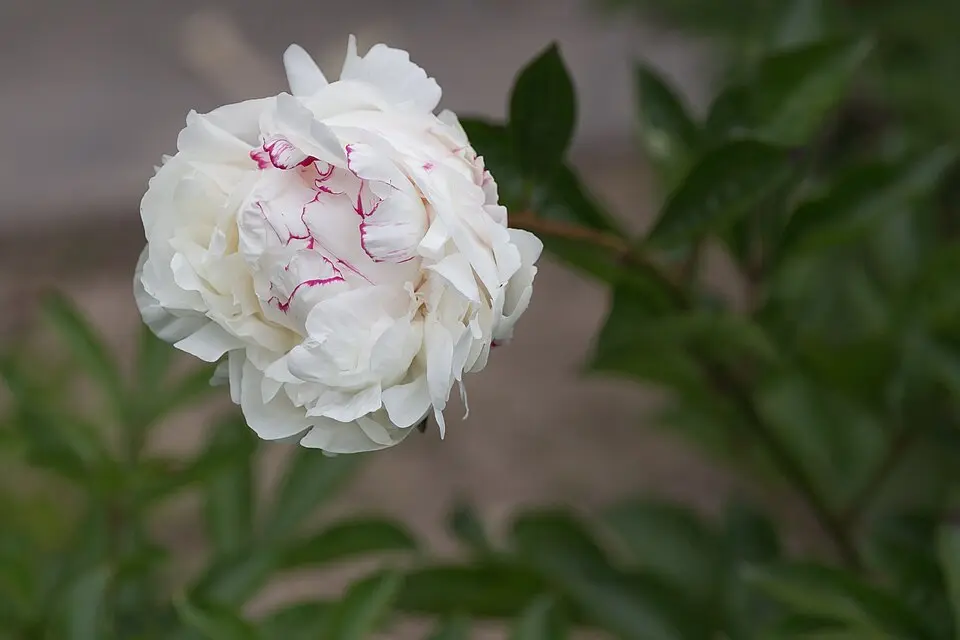
Paeonia lactiflora, widely known as the Chinese peony or common garden peony, is a distinguished herbaceous perennial belonging to the Paeoniaceae family. Native to the temperate regions of central and eastern Asia, this species thrives in a range stretching from Siberia to China and Japan. It typically establishes as a robust plant, reaching heights of 60 to 100 centimeters, characterized by its substantial, deeply lobed or divided green leaves that provide a lush backdrop to its spectacular blooms.
The sturdy stems support large, often fragrant flowers, which unfurl in late spring to early summer. These magnificent blossoms exhibit a remarkable diversity in form, from elegant single petals to opulent double layers, and display a vibrant spectrum of colors including pristine white, various shades of pink, rich reds, and sometimes subtle yellows. Beyond its striking ornamental appeal, Paeonia lactiflora is celebrated for its longevity, often flourishing for decades in gardens with minimal intervention once established.
Its ability to withstand diverse temperate conditions and its timeless beauty make it a cherished staple in horticultural landscapes globally, while its subterranean roots hold profound significance in traditional medicinal practices.
Trusted Scientific References
1. Authoritative external sources for Paeonia Lactiflora
1.1 Wikipedia — Paeonia Lactiflora
1.2 Kew POWO (Plants of the World Online)
1.3 PubMed — peer-reviewed research
1.4 NCBI Taxonomy Browser
1.5 GBIF — Global Biodiversity
1.6Paeonia Lactiflora should be interpreted through verified botanical identity, practical care, and responsible safety language. This recovery note adds the missing context needed for a complete profile: match light to the plant's habit, use well-drained soil, water according to season, and avoid unsupported medicinal or edible claims. For publishing, the plant can be presented as a source-backed garden plant with clear care guidance, common problem diagnosis, and conservative safety wording.
1.1.Paeonia Lactiflora — Key Features
- ✓ <strong>Botanical Name</strong> — Paeonia lactiflora, commonly Chinese Peony or White Peony.
- ✓ <strong>Medicinal Part</strong> — The dried root, known as 'Bai Shao' in TCM.
- ✓ <strong>Primary Bioactive</strong> — Paeoniflorin, a monoterpene glycoside.
- ✓ <strong>Therapeutic Actions</strong> — Anti-inflammatory, analgesic, antispasmodic, immunomodulatory.
- ✓ <strong>Traditional Use</strong> — Widely employed in TCM for pain, menstrual issues, and inflammatory conditions.
- ✓ <strong>Ornamental Value</strong> — Highly prized for its large, fragrant, diverse colored flowers.
- ✓ <strong>Longevity</strong> — A long-lived perennial, capable of thriving for decades.
- ✓ <strong>Habitat</strong> — Native to central and eastern Asia, adapted to temperate climates.
- ✓ <strong>Growth Habit</strong> — Herbaceous perennial growing 60-100 cm tall with deeply lobed leaves.
- ✓ <strong>Soil Preference</strong> — Prefers well-drained, rich, slightly acidic to neutral soil.
1.2.Paeonia Lactiflora — Quick Summary
- ✓ Paeonia lactiflora, or Chinese peony, is a revered herbaceous perennial.
- ✓ Its root, Bai Shao, is a cornerstone of Traditional Chinese Medicine.
- ✓ Known for potent anti-inflammatory, analgesic, and immunomodulatory effects.
- ✓ Active compounds like paeoniflorin are key to its therapeutic actions.
- ✓ Used for pain, muscle spasms, menstrual regulation, and autoimmune support.
- ✓ Requires full sun to partial shade and well-drained soil for cultivation.
2.Paeonia Lactiflora — Scientific Identity
3.Paeonia Lactiflora — Quick Facts
4.Paeonia Lactiflora — Appearance & Identification
5.Paeonia Lactiflora — Native Habitat
6.Paeonia Lactiflora — Water Requirements
- ✓ Site Selection — Choose a location with full sun to partial shade, ideally receiving at least 6 hours of direct sunlight daily for optimal flowering.
- ✓ Soil Preparation — Ensure well-drained, rich, and slightly acidic to neutral soil (pH 6.5-7.0). Amend heavy clay soils with organic matter to improve drainage.
- ✓ Planting Time — Plant bare-root tubers in autumn (September to October) or early spring, allowing roots to establish before extreme temperatures.
- ✓ Planting Depth — Position the 'eyes' (growth buds) of the tuber no more than 2 inches (5 cm) below the soil surface; planting too deep can inhibit blooming.
- ✓ Watering — Provide consistent moisture, especially during dry spells, but avoid waterlogging which can lead to root rot. Established plants show good drought tolerance.
- ✓ Support — For varieties with large, heavy blooms, provide stakes or peony rings to prevent stems from flopping under the weight of the flowers.
- ✓ Deadheading — Remove spent flowers (deadhead) to redirect plant energy into root development and foliage, though it does not promote reblooming.
- ✓ Fertilization — Lightly fertilize in early spring with a balanced, low-nitrogen fertilizer to encourage strong growth and abundant flowers.
Reviewed by the Flora Medical Global Botanical Review Panel
Multi-disciplinary editorial group · Botany · Ethnobotany · Herbal-medicine literature
Who reviewed this: This page was checked by the Flora Medical Global Botanical Review Panel — an in-house editorial group of botany graduates, ethnobotany researchers, and horticulture practitioners who collectively maintain our 7,000+ plant encyclopedia. Meet the team.
Our 4-step verification process
1. Taxonomic verification
Scientific names and synonyms cross-checked against Kew POWO, World Flora Online, and The Plant List.
2. Phytochemical & medicinal cross-reference
Active compounds, traditional uses, and reported activities are cross-referenced with PubMed, USDA Dr. Duke's database, and peer-reviewed ethnobotanical literature.
3. Conservation & distribution check
Distribution, ecology, and conservation status confirmed against GBIF occurrence records and the IUCN Red List.
4. Editorial & safety review
Every entry passes an editorial pass for clarity, originality, and safety notices (toxicity, contraindications, dosage caveats) before publication.
Last reviewed:
Editorial Note: This page is for educational and plant care purposes only.
Written by: Flora Medical Global Editorial Team
Reviewed by: Flora Medical Global Botanical Review Panel
Last Updated: June 15, 2026







Paeonia Lactiflora — Comments & Community Reviews
Rate this plant