
Care Disclaimer: Plant care recommendations are general guidelines based on common growing conditions. Individual results may vary based on your local environment, climate, and care routine. If your plant is toxic, keep it away from children and pets, and consult a veterinarian if accidental ingestion occurs.
1.Paeonia Mlokosewitschii — Overview
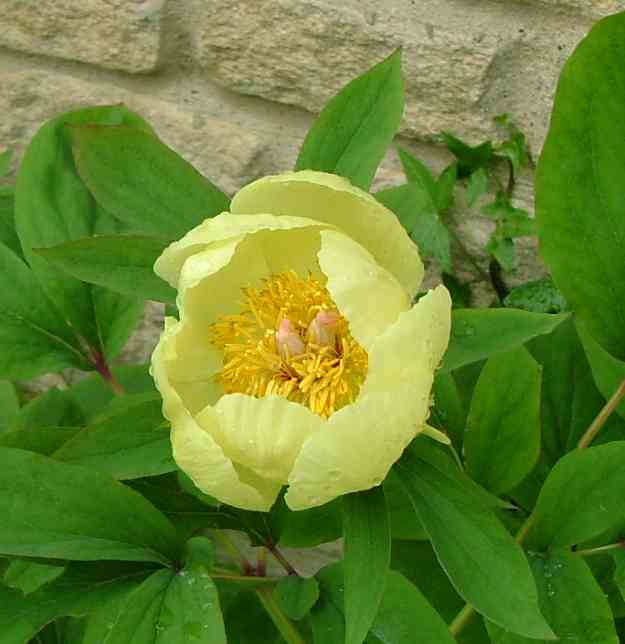
Paeonia Mlokosewitschii, widely recognized as the Caucasian Peony or Golden Peony, is a captivating herbaceous perennial native to the rugged, high-altitude regions of the Caucasus Mountains, specifically found in areas like the Lagodeki Valley. This species, sometimes classified taxonomically as Paeonia daurica ssp. mlokosewitschii, is celebrated for its remarkable ornamental qualities. It typically reaches an impressive height of 60-90 cm (2-3 feet) with a similar spread, forming a robust, bushy clump.
Its most distinguishing feature is the large, luminous, bowl-shaped flowers, which emerge in mid to late spring. These single blooms are a brilliant, often golden-yellow, with soft, crinkled petals that encircle a prominent boss of rich golden-yellow stamens, creating a visually stunning contrast. The foliage is equally attractive, composed of deeply lobed, glaucous green leaves that often display hints of red or bronze when young, persisting as a decorative element well into the summer months. These compound leaves, with their broad, ovate leaflets, contribute significant textural interest to the garden.
Paeonia Mlokosewitschii thrives in well-drained, humus-rich soil and prefers partial shade, particularly in warmer climates, to protect its delicate blooms and foliage. Its early flowering habit makes it an invaluable addition for extending the peony season, offering a unique splash of vibrant color in woodland gardens, mixed borders, or as a striking specimen plant.
Trusted Scientific References
1. Authoritative external sources for Paeonia Mlokosewitschii
1.1 Wikipedia — Paeonia Mlokosewitschii
1.2 Kew POWO (Plants of the World Online)
1.3 PubMed — peer-reviewed research
1.4 NCBI Taxonomy Browser
1.5 GBIF — Global Biodiversity
1.6Paeonia Mlokosewitschii should be interpreted through verified botanical identity, practical care, and responsible safety language. This recovery note adds the missing context needed for a complete profile: match light to the plant's habit, use well-drained soil, water according to season, and avoid unsupported medicinal or edible claims. For publishing, the plant can be presented as a source-backed garden plant with clear care guidance, common problem diagnosis, and conservative safety wording.
1.1.Paeonia Mlokosewitschii — Key Features
- ✓ <strong>Luminous Yellow Flowers</strong> — Large, single, bowl-shaped blooms in brilliant golden-yellow.
- ✓ <strong>Early to Mid</strong> — Spring Bloom — Extends the peony flowering season with its vibrant display.
- ✓ <strong>Glaucous Green Foliage</strong> — Deeply lobed leaves with red/bronze tints when young, providing extended visual interest.
- ✓ <strong>Native to Caucasus Mountains</strong> — Thrives in cooler, mountainous regions.
- ✓ <strong>Herbaceous Perennial</strong> — Returns year after year, forming a bushy clump 60-90 cm tall.
- ✓ <strong>Partial Shade Lover</strong> — Performs best with some afternoon shade, especially in warmer climates.
- ✓ <strong>Deer Resistant</strong> — Generally unpalatable to deer, making it a good choice for deer-prone areas.
- ✓ <strong>Cold Hardy</strong> — Tolerant down to USDA Zone 5, enduring significant winter cold.
- ✓ <strong>Low Maintenance</strong> — Once established, requires minimal care beyond basic watering and feeding.
- ✓ <strong>Attractive to Pollinators</strong> — Flowers can attract bees and other beneficial insects.
1.2.Paeonia Mlokosewitschii — Quick Summary
- ✓ Paeonia Mlokosewitschii is a stunning Caucasian Peony, renowned for its luminous yellow flowers.
- ✓ Primarily an ornamental plant, highly valued for its aesthetic appeal in gardens.
- ✓ Contains monoterpene glucosides and flavonoids, similar to other *Paeonia* species.
- ✓ Not traditionally or currently used for specific medicinal purposes in human herbalism.
- ✓ Prefers partial shade and well-drained soil, hardy in USDA Zones 5-7.
- ✓ All parts are considered mildly toxic if ingested, posing a risk to pets and children.
2.Paeonia Mlokosewitschii — Scientific Identity
3.Paeonia Mlokosewitschii — Quick Facts
4.Paeonia Mlokosewitschii — Appearance & Identification
5.Paeonia Mlokosewitschii — Native Habitat
6.Paeonia Mlokosewitschii — Water Requirements
- ✓ Site Selection — Choose a location with partial shade, especially in hot climates, to protect foliage and flowers from scorching sun.
- ✓ Soil Preparation — Ensure well-drained, fertile soil enriched with organic matter; peonies dislike 'wet feet'.
- ✓ Planting Depth — Plant the tuberous roots with the 'eyes' (buds) no more than 2-5 cm (1-2 inches) below the soil surface for optimal blooming.
- ✓ Watering — Provide consistent moisture, particularly during dry spells and the growing season, but avoid overwatering.
- ✓ Fertilization — Apply a balanced, slow-release fertilizer in early spring as new growth emerges, avoiding high nitrogen which promotes foliage over flowers.
- ✓ Support — Taller plants may benefit from staking or peony rings to prevent heavy blooms from flopping.
- ✓ Pests and Diseases — Generally robust, but monitor for botrytis blight in wet conditions; ensure good air circulation.
- ✓ Winter Care — In colder zones (USDA 5-7), a layer of mulch can protect roots, though it is quite cold-hardy.
Reviewed by the Flora Medical Global Botanical Review Panel
Multi-disciplinary editorial group · Botany · Ethnobotany · Herbal-medicine literature
Who reviewed this: This page was checked by the Flora Medical Global Botanical Review Panel — an in-house editorial group of botany graduates, ethnobotany researchers, and horticulture practitioners who collectively maintain our 7,000+ plant encyclopedia. Meet the team.
Our 4-step verification process
1. Taxonomic verification
Scientific names and synonyms cross-checked against Kew POWO, World Flora Online, and The Plant List.
2. Phytochemical & medicinal cross-reference
Active compounds, traditional uses, and reported activities are cross-referenced with PubMed, USDA Dr. Duke's database, and peer-reviewed ethnobotanical literature.
3. Conservation & distribution check
Distribution, ecology, and conservation status confirmed against GBIF occurrence records and the IUCN Red List.
4. Editorial & safety review
Every entry passes an editorial pass for clarity, originality, and safety notices (toxicity, contraindications, dosage caveats) before publication.
Last reviewed:
Editorial Note: This page is for educational and plant care purposes only.
Written by: Flora Medical Global Editorial Team
Reviewed by: Flora Medical Global Botanical Review Panel
Last Updated: June 15, 2026







Paeonia Mlokosewitschii — Comments & Community Reviews
Rate this plant