
Care Disclaimer: Plant care recommendations are general guidelines based on common growing conditions. Individual results may vary based on your local environment, climate, and care routine. If your plant is toxic, keep it away from children and pets, and consult a veterinarian if accidental ingestion occurs.
1.Paeonia Officinalis — Overview
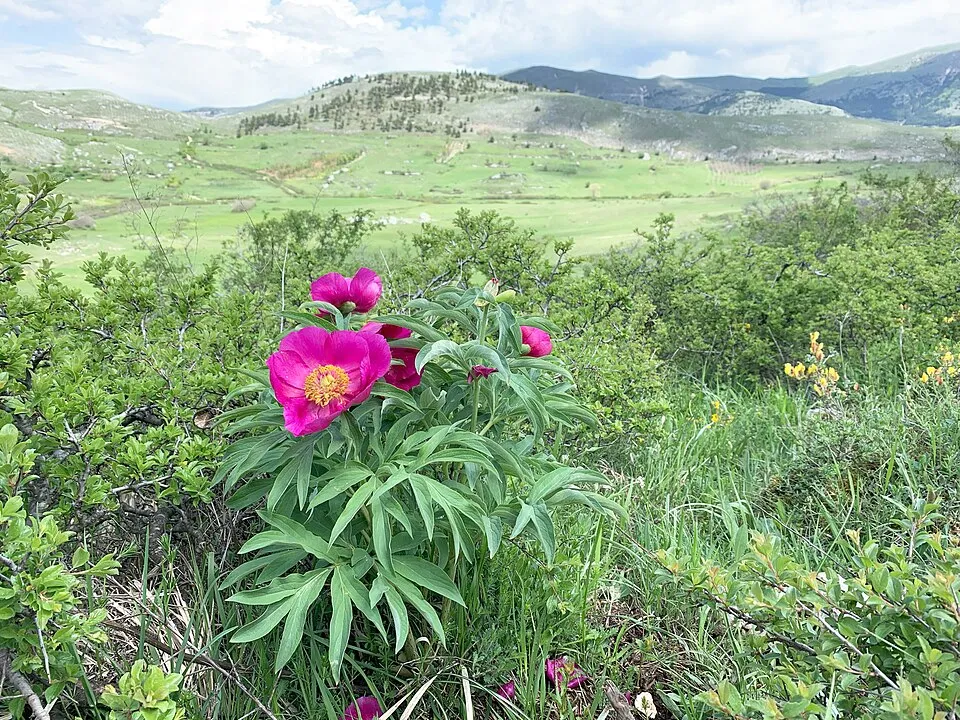
Paeonia officinalis, commonly known as the common peony or garden peony, is a distinguished perennial herbaceous plant belonging to the Paeoniaceae family. Native to Southern Europe, it is widely celebrated for its striking, large, and fragrant flowers, which typically bloom from late spring to early summer. These showy blossoms can range in color from deep crimson to various shades of pink and occasionally white, often featuring crinkled or ruffled petals.
The plant forms dense clumps, usually reaching a height of 40-90 cm. Its leaves are compound, deeply lobed, and present a characteristic bluish-green hue, transitioning to bronze in autumn.
Beyond its ornamental appeal, Paeonia officinalis has a rich history in traditional medicine, with its roots and seeds historically valued for their therapeutic properties. The plant produces large, leathery seed pods that mature to reveal glossy black seeds. It is remarkably hardy and long-lived, thriving for decades in suitable garden conditions.
Preferring sunny locations with well-drained soil, it demonstrates considerable drought tolerance once established. In New England, while introduced as a garden plant, it rarely escapes cultivation. A unique interaction often observed is the presence of honeypot ants, Prenolepis imparis, crowding its flower buds, attracted by the sugary nectar exuded by the plant, a fascinating example of myrmecochory.
Trusted Scientific References
1. Authoritative external sources for Paeonia Officinalis
1.1 Wikipedia — Paeonia Officinalis
1.2 Kew POWO (Plants of the World Online)
1.3 PubMed — peer-reviewed research
1.4 NCBI Taxonomy Browser
1.5 GBIF — Global Biodiversity
1.6Paeonia Officinalis should be interpreted through verified botanical identity, practical care, and responsible safety language. This recovery note adds the missing context needed for a complete profile: match light to the plant's habit, use well-drained soil, water according to season, and avoid unsupported medicinal or edible claims. For publishing, the plant can be presented as a source-backed garden plant with clear care guidance, common problem diagnosis, and conservative safety wording.
1.1.Paeonia Officinalis — Key Features
- ✓ <strong>Botanical Name</strong> — Paeonia officinalis.
- ✓ <strong>Common Names</strong> — Common Peony, Garden Peony.
- ✓ <strong>Family</strong> — Paeoniaceae.
- ✓ <strong>Native Range</strong> — Southern Europe.
- ✓ <strong>Flower Characteristics</strong> — Large, showy, fragrant, red/pink/white, blooming late spring to early summer.
- ✓ <strong>Medicinal Parts</strong> — Primarily the dried roots (Paeoniae radix) and sometimes seeds.
- ✓ <strong>Key Bioactive Compound</strong> — Paeoniflorin, a monoterpene glycoside.
- ✓ <strong>Traditional Uses</strong> — Pain relief, anti-inflammatory, menstrual regulation, nervous conditions, muscle spasms.
- ✓ <strong>Growth Habit</strong> — Perennial herbaceous plant, typically 40-90 cm tall, forming dense clumps.
- ✓ <strong>Ornamental Value</strong> — Highly prized garden ornamental for centuries due to its spectacular blooms.
1.2.Paeonia Officinalis — Quick Summary
- ✓ Renowned European ornamental and traditional medicinal herb, Paeonia officinalis.
- ✓ Roots and seeds historically used for pain, inflammation, and menstrual issues.
- ✓ Rich in monoterpene glycosides like paeoniflorin, flavonoids, and tannins.
- ✓ Exhibits anti-inflammatory, analgesic, antispasmodic, and sedative properties.
- ✓ Requires careful dosing and is contraindicated in pregnancy and with certain medications.
- ✓ A hardy, long-lived perennial valued for both its beauty and pharmacological potential.
2.Paeonia Officinalis — Scientific Identity
3.Paeonia Officinalis — Quick Facts
4.Paeonia Officinalis — Appearance & Identification
5.Paeonia Officinalis — Native Habitat
6.Paeonia Officinalis — Water Requirements
- ✓ Site Selection — Plant Paeonia officinalis in a location receiving full sun to partial shade, ideally with at least six hours of direct sunlight daily for optimal flowering.
- ✓ Soil Requirements — Ensure well-drained, fertile soil with a neutral to slightly alkaline pH (6.5-7.0); heavy clay or overly sandy soils should be amended with organic matter.
- ✓ Planting — Bare-root peonies are best planted in the fall, positioning the 'eyes' (pink buds) no more than 1-2 inches below the soil surface to encourage blooming.
- ✓ Watering — Provide consistent moisture, especially during dry periods and while the plant is establishing; however, avoid waterlogging to prevent root rot.
- ✓ Fertilization — Apply a balanced organic fertilizer or compost in early spring, but avoid high-nitrogen feeds which can promote foliage over flowers.
- ✓ Pruning — Deadhead spent flowers to maintain plant vigor and appearance; cut back foliage to the ground in late fall after it has withered to prevent fungal issues.
- ✓ Pest and Disease Management — Paeonia officinalis is generally robust, but monitor for common issues like botrytis blight in humid conditions and treat promptly with appropriate fungicides.
- ✓ Winter Care — In colder climates, a layer of mulch around the plant's base can provide additional protection to the roots during harsh winters, especially for young plants.
Reviewed by the Flora Medical Global Botanical Review Panel
Multi-disciplinary editorial group · Botany · Ethnobotany · Herbal-medicine literature
Who reviewed this: This page was checked by the Flora Medical Global Botanical Review Panel — an in-house editorial group of botany graduates, ethnobotany researchers, and horticulture practitioners who collectively maintain our 7,000+ plant encyclopedia. Meet the team.
Our 4-step verification process
1. Taxonomic verification
Scientific names and synonyms cross-checked against Kew POWO, World Flora Online, and The Plant List.
2. Phytochemical & medicinal cross-reference
Active compounds, traditional uses, and reported activities are cross-referenced with PubMed, USDA Dr. Duke's database, and peer-reviewed ethnobotanical literature.
3. Conservation & distribution check
Distribution, ecology, and conservation status confirmed against GBIF occurrence records and the IUCN Red List.
4. Editorial & safety review
Every entry passes an editorial pass for clarity, originality, and safety notices (toxicity, contraindications, dosage caveats) before publication.
Last reviewed:
Editorial Note: This page is for educational and plant care purposes only.
Written by: Flora Medical Global Editorial Team
Reviewed by: Flora Medical Global Botanical Review Panel
Last Updated: June 15, 2026







Paeonia Officinalis — Comments & Community Reviews
Rate this plant