
Care Disclaimer: Plant care recommendations are general guidelines based on common growing conditions. Individual results may vary based on your local environment, climate, and care routine. If your plant is toxic, keep it away from children and pets, and consult a veterinarian if accidental ingestion occurs.
1.Paeonia Rockii — Overview
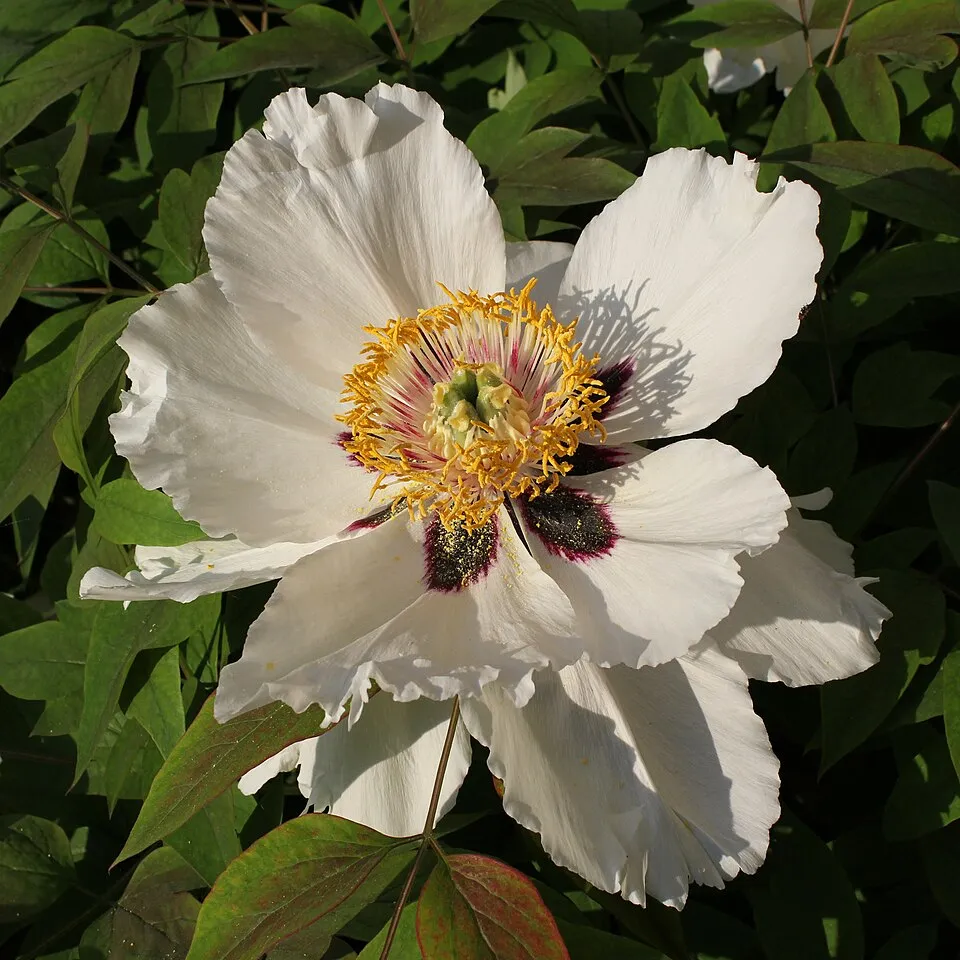
Paeonia rockii, commonly known as Rock's Peony or Tree Peony, is a distinguished woody perennial shrub native to the high-altitude mountainous regions of China, particularly thriving in provinces such as Gansu, Shaanxi, and Qinghai. Unlike its herbaceous counterparts, this magnificent plant is characterized by its persistent woody stems that do not die back to the ground in winter, forming a robust shrub-like structure that can reach impressive heights of 1 to 3 meters (3 to 10 feet).
It belongs to the Paeoniaceae family, a classification that underscores its unique botanical traits.
The foliage of Paeonia rockii is deeply lobed and pinnately compound, presenting a rich, dark green backdrop that enhances its ornamental value. The leaves are typically smooth on the upper surface and lighter green, sometimes with a white powdery coating and sparse hairs, on the underside. The true spectacle unfolds in late spring to early summer when its large, often dramatic flowers unfurl.
These blooms can measure 15 to 30 cm (6 to 12 inches) in diameter, showcasing a breathtaking array of colors from pure white, vibrant pink, and deep crimson to various shades of purple. A defining characteristic, and the origin of its 'purple spot peony' moniker, is the striking dark maroon or crimson blotches, often referred to as 'eye spots' or 'flames,' located at the base of each petal. This distinctive feature sets Paeonia rockii apart from many other peony species and cultivars.
Following its opulent flowering, the plant produces large, woody seed pods that eventually split open to reveal numerous glossy black seeds, adding continued visual interest to the landscape. Beyond its aesthetic appeal, Paeonia rockii holds significant historical and cultural importance in China, with its medicinal properties having been revered and utilized for centuries within traditional Chinese medicine (TCM).
Its resilience and beauty make it a cherished species in both horticulture and ethnobotany.
Trusted Scientific References
1. Authoritative external sources for Paeonia Rockii
1.1 Wikipedia — Paeonia Rockii
1.2 Kew POWO (Plants of the World Online)
1.3 PubMed — peer-reviewed research
1.4 NCBI Taxonomy Browser
1.5 GBIF — Global Biodiversity
1.1.Paeonia Rockii — Key Features
- ✓ <strong>Woody Shrub</strong> — Unlike herbaceous peonies, Paeonia rockii maintains a woody structure year-round.
- ✓ <strong>Distinctive Flowers</strong> — Large, often 15-30 cm diameter, with characteristic dark basal blotches ('eye spots').
- ✓ <strong>Native to China</strong> — Indigenous to mountainous regions of Gansu, Shaanxi, and Qinghai provinces.
- ✓ <strong>Medicinal Significance</strong> — Root bark (Mudanpi) widely used in Traditional Chinese Medicine for centuries.
- ✓ <strong>High</strong> — Altitude Adaptation — Thrives in cooler, well-drained environments.
- ✓ <strong>Deciduous Foliage</strong> — Deeply lobed, pinnately compound leaves provide an attractive green backdrop.
- ✓ <strong>Ornamental Value</strong> — Highly prized in horticulture for its spectacular blooms and elegant form.
- ✓ <strong>Long</strong> — Lived Plant — Tree peonies are known for their longevity, improving with age.
- ✓ <strong>Varied Bloom Colors</strong> — Flowers range from white, pink, and crimson to various purples.
- ✓ <strong>Seed Pods</strong> — Produces large, woody seed pods containing glossy black seeds, adding post-bloom interest.
1.2.Paeonia Rockii — Quick Summary
- ✓ Rock's Peony is a woody shrub native to high-altitude China, prized for its large, distinctive 'eye spot' flowers.
- ✓ Root bark (Mudanpi) is a prominent herb in Traditional Chinese Medicine (TCM).
- ✓ Known for anti-inflammatory, analgesic, antipyretic, and blood-activating properties.
- ✓ Key chemical constituents include paeoniflorin, flavonoids, and phenolic acids.
- ✓ Cultivation requires well-drained soil, partial sun, and protection from strong winds.
- ✓ Use with caution, especially during pregnancy or with anticoagulant medications.
2.Paeonia Rockii — Scientific Identity
3.Paeonia Rockii — Quick Facts
4.Paeonia Rockii — Appearance & Identification
5.Paeonia Rockii — Native Habitat
6.Paeonia Rockii — Water Requirements
- ✓ Site Selection — Plant Paeonia rockii in a location with full sun to partial shade, ensuring protection from strong winds that can damage its large blooms.
- ✓ Soil Requirements — Prefers well-drained, fertile soil with a neutral to slightly alkaline pH. Amend heavy clay soils with organic matter to improve drainage.
- ✓ Planting Depth — Plant so the graft union (if grafted) is 4-6 inches below the soil surface to encourage scion rooting and better establishment.
- ✓ Watering — Requires regular watering during dry spells, especially in its establishment phase, but avoid waterlogging to prevent root rot.
- ✓ Fertilization — Apply a balanced, slow-release fertilizer in early spring as new growth emerges, avoiding high-nitrogen fertilizers that promote foliage over flowers.
- ✓ Pruning — Minimal pruning is needed; remove dead, damaged, or crossing branches in late winter or early spring. Remove spent flowers to prevent seed formation and redirect energy.
- ✓ Winter Protection — In colder zones (USDA 5-6), apply a layer of mulch around the base in late fall to insulate roots and protect newly emerging buds from late frosts.
- ✓ Pest and Disease Management — Generally robust, but monitor for common peony issues like botrytis blight or powdery mildew, ensuring good air circulation.
Reviewed by the Flora Medical Global Botanical Review Panel
Multi-disciplinary editorial group · Botany · Ethnobotany · Herbal-medicine literature
Who reviewed this: This page was checked by the Flora Medical Global Botanical Review Panel — an in-house editorial group of botany graduates, ethnobotany researchers, and horticulture practitioners who collectively maintain our 7,000+ plant encyclopedia. Meet the team.
Our 4-step verification process
1. Taxonomic verification
Scientific names and synonyms cross-checked against Kew POWO, World Flora Online, and The Plant List.
2. Phytochemical & medicinal cross-reference
Active compounds, traditional uses, and reported activities are cross-referenced with PubMed, USDA Dr. Duke's database, and peer-reviewed ethnobotanical literature.
3. Conservation & distribution check
Distribution, ecology, and conservation status confirmed against GBIF occurrence records and the IUCN Red List.
4. Editorial & safety review
Every entry passes an editorial pass for clarity, originality, and safety notices (toxicity, contraindications, dosage caveats) before publication.
Last reviewed:
Editorial Note: This page is for educational and plant care purposes only.
Written by: Flora Medical Global Editorial Team
Reviewed by: Flora Medical Global Botanical Review Panel
Last Updated: June 15, 2026







Paeonia Rockii — Comments & Community Reviews
Rate this plant