
Care Disclaimer: Plant care recommendations are general guidelines based on common growing conditions. Individual results may vary based on your local environment, climate, and care routine. If your plant is toxic, keep it away from children and pets, and consult a veterinarian if accidental ingestion occurs.
1.Papaver Atlanticum — Overview
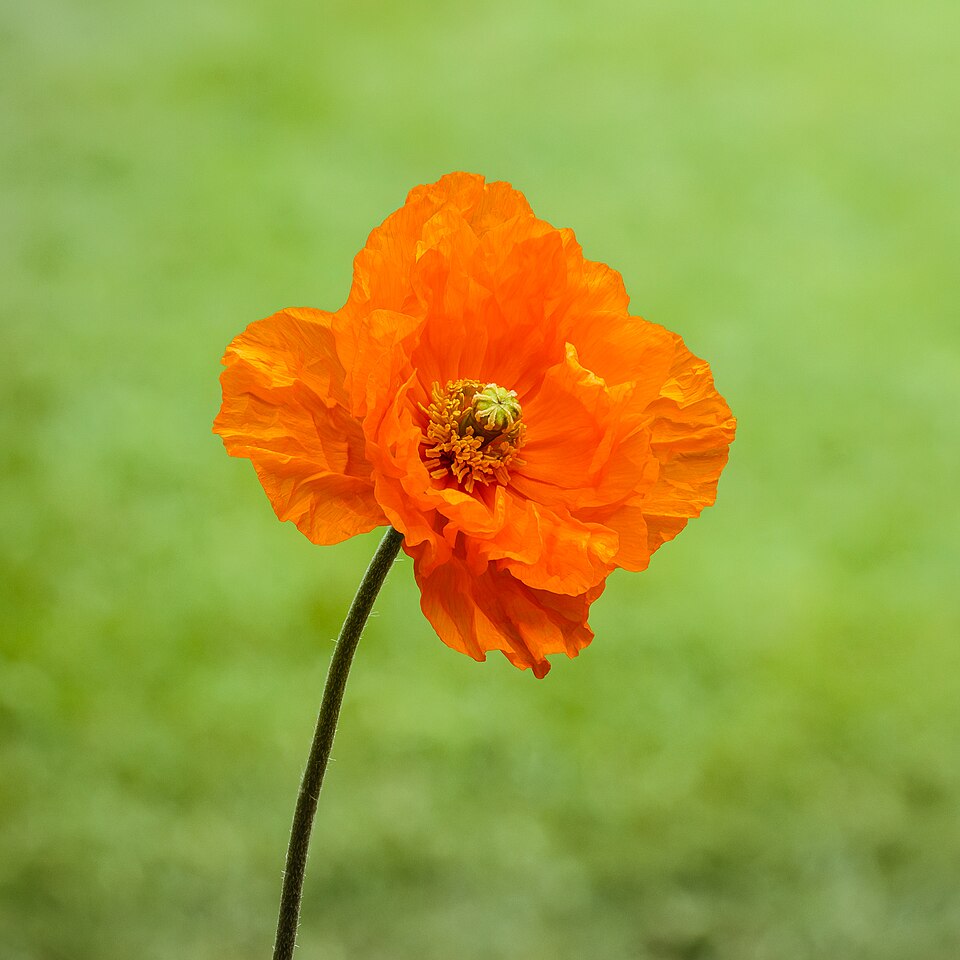
Papaver atlanticum, commonly known as the Atlantic Poppy or Moroccan Poppy, is an enchanting perennial species belonging to the Papaveraceae family. Indigenous to the rugged landscapes of the Atlas Mountains across North Africa, specifically Morocco and Algeria, this poppy is celebrated for its radiant, soft apricot-orange to deep orange flowers. Distinct from many annual poppy varieties, P. atlanticum establishes a robust basal rosette of deeply lobed, hirsute, grayish-green leaves.
From this foundation, slender yet resilient flower stalks ascend, typically reaching heights of 30-60 cm (12-24 inches). Each stem typically culminates in a single, delicate bloom, measuring 5-8 cm (2-3 inches) in diameter. The petals possess a characteristic crinkled, silk-like texture, imparting an ephemeral grace upon opening. Following the blooms, attractive seed pods develop, which contribute further ornamental interest even after the petals have shed.
This species is notable for its extended flowering period, frequently blooming from late spring through the end of summer, a duration that can be prolonged with consistent deadheading. It thrives in well-drained soil and full sun, and once established, demonstrates remarkable drought tolerance, making it an exemplary choice for rock gardens, xeriscaping projects, or charming cottage garden borders. Its delicate aesthetic belies a genuinely tough and adaptable nature, making the Atlantic Poppy a resilient addition to diverse garden settings.
Trusted Scientific References
1. Authoritative external sources for Papaver Atlanticum
1.1 Wikipedia — Papaver Atlanticum
1.2 Kew POWO (Plants of the World Online)
1.3 PubMed — peer-reviewed research
1.4 NCBI Taxonomy Browser
1.5 GBIF — Global Biodiversity
1.6Papaver Atlanticum should be interpreted through verified botanical identity, practical care, and responsible safety language. This recovery note adds the missing context needed for a complete profile: match light to the plant's habit, use well-drained soil, water according to season, and avoid unsupported medicinal or edible claims. For publishing, the plant can be presented as a source-backed garden plant with clear care guidance, common problem diagnosis, and conservative safety wording.
1.1.Papaver Atlanticum — Key Features
- ✓ <strong>Botanical Name</strong> — Papaver atlanticum
- ✓ <strong>Common Names</strong> — Atlantic Poppy, Moroccan Poppy, Atlas Poppy, Spanish Poppy
- ✓ <strong>Plant Family</strong> — Papaveraceae
- ✓ <strong>Native Range</strong> — Atlas Mountains (Morocco, Algeria)
- ✓ <strong>Flower Color</strong> — Bright orange to deep apricot
- ✓ <strong>Bloom Time</strong> — Late spring through end of summer/fall
- ✓ <strong>Growth Habit</strong> — Clump-forming, short-lived perennial
- ✓ <strong>Mature Height</strong> — 30-60 cm (12-24 inches)
- ✓ <strong>Drought Tolerance</strong> — High once established
- ✓ <strong>Soil Preference</strong> — Well-drained; adaptable to various soil types
- ✓ <strong>Primary Use</strong> — Ornamental garden plant, xeriscaping, rock gardens
1.2.Papaver Atlanticum — Quick Summary
- ✓ Ornamental perennial native to North Africa's Atlas Mountains.
- ✓ Features cheerful, bright orange flowers blooming from spring to fall.
- ✓ Highly drought-tolerant and low-maintenance, ideal for diverse gardens.
- ✓ Contains trace amounts of isoquinoline alkaloids, but not medicinally significant.
- ✓ Primarily valued for its aesthetic appeal, ecological role, and garden resilience.
2.Papaver Atlanticum — Scientific Identity
3.Papaver Atlanticum — Quick Facts
4.Papaver Atlanticum — Appearance & Identification
5.Papaver Atlanticum — Native Habitat
6.Papaver Atlanticum — Water Requirements
- Cultivating Papaver atlanticum is straightforward due to its resilient nature and adaptability:
- ✓ Site Selection — Prefers full sun to partial shade for optimal flowering and color retention, ideally receiving at least 6 hours of direct sunlight daily. Flowers retain color longer in part shade.
- ✓ Soil Requirements — Thrives in well-drained soil; tolerates a variety of types including chalk, clay, loam, and sand, with a pH range from acidic to alkaline. Excellent drainage is paramount to prevent root rot.
- ✓ Watering — Drought-tolerant once established, requiring average water needs initially. Water sparingly but deeply, allowing the soil to dry out completely between irrigation cycles.
- ✓ Propagation — Primarily propagated by seed, which can be sown directly into the garden in late autumn or early spring. A period of cold stratification may enhance germination rates.
- ✓ Maintenance — This is a low-maintenance perennial. Regular deadheading of spent blooms encourages a longer and more prolific flowering period, extending from late spring into fall. It self-sows gently.
- ✓ Pest and Disease — Generally robust and exhibits strong resistance to most common garden pests and diseases. It is also notably deer tolerant, making it suitable for areas with wildlife.
- ✓ Hardiness — Hardy in USDA Zones 5-7, tolerating a range of temperatures and climates, making it a reliable and resilient specimen for various garden designs.
Reviewed by the Flora Medical Global Botanical Review Panel
Multi-disciplinary editorial group · Botany · Ethnobotany · Herbal-medicine literature
Who reviewed this: This page was checked by the Flora Medical Global Botanical Review Panel — an in-house editorial group of botany graduates, ethnobotany researchers, and horticulture practitioners who collectively maintain our 7,000+ plant encyclopedia. Meet the team.
Our 4-step verification process
1. Taxonomic verification
Scientific names and synonyms cross-checked against Kew POWO, World Flora Online, and The Plant List.
2. Phytochemical & medicinal cross-reference
Active compounds, traditional uses, and reported activities are cross-referenced with PubMed, USDA Dr. Duke's database, and peer-reviewed ethnobotanical literature.
3. Conservation & distribution check
Distribution, ecology, and conservation status confirmed against GBIF occurrence records and the IUCN Red List.
4. Editorial & safety review
Every entry passes an editorial pass for clarity, originality, and safety notices (toxicity, contraindications, dosage caveats) before publication.
Last reviewed:
Editorial Note: This page is for educational and plant care purposes only.
Written by: Flora Medical Global Editorial Team
Reviewed by: Flora Medical Global Botanical Review Panel
Last Updated: June 15, 2026







Papaver Atlanticum — Comments & Community Reviews
Rate this plant