

Care Disclaimer: Plant care recommendations are general guidelines based on common growing conditions. Individual results may vary based on your local environment, climate, and care routine. If your plant is toxic, keep it away from children and pets, and consult a veterinarian if accidental ingestion occurs.
1.Papaver Nudicaule — Overview
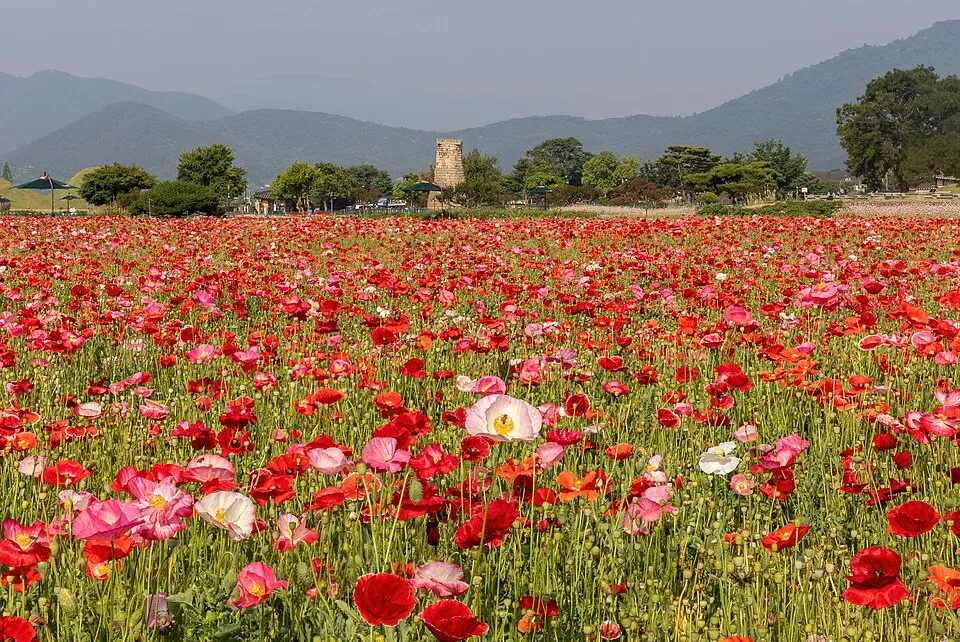
Papaver nudicaule, commonly known as the Arctic poppy or Iceland poppy, is a captivating herbaceous perennial belonging to the Papaveraceae family. It is indigenous to the formidable arctic and subarctic regions, as well as high-altitude alpine zones across North America and Asia, showcasing remarkable resilience in harsh environments. Morphologically, the Iceland poppy is characterized by a basal rosette of deeply lobed, often bluish-green, hairy leaves. From this rosette emerge slender, leafless flower stalks, which can reach up to 16 inches in height, giving rise to its specific epithet 'nudicaule,' meaning 'naked stem.' The flowers themselves are the plant's most striking feature, typically measuring 2-4 inches in diameter with a delicate, papery texture.
They exhibit a spectacular range of colors including brilliant yellow, orange, white, pink, and red, frequently adorned with a contrasting yellow center. These elegant blooms possess a graceful, nodding habit in bud, unfurling into a prolific display from late spring through summer, especially with regular deadheading. Papaver nudicaule thrives in full sun to partial shade and prefers well-drained, often gravelly or sandy, neutral to slightly alkaline soils. While a true perennial in its native cold habitats, it is frequently cultivated as a short-lived perennial or even an annual in warmer climates due to its susceptibility to heat stress.
Its ability to flourish in challenging conditions underscores its evolutionary adaptations, making it a valued ornamental plant for rock gardens, cottage gardens, and as a vibrant cut flower globally. Despite its delicate appearance, the Arctic poppy embodies a robust beauty, adding a splash of vivid color to otherwise stark landscapes.
Trusted Scientific References
1. Authoritative external sources for Papaver Nudicaule
1.1 Wikipedia — Papaver Nudicaule
1.2 Kew POWO (Plants of the World Online)
1.3 PubMed — peer-reviewed research
1.4 NCBI Taxonomy Browser
1.5 GBIF — Global Biodiversity
1.6Papaver Nudicaule should be interpreted through verified botanical identity, practical care, and responsible safety language. This recovery note adds the missing context needed for a complete profile: match light to the plant's habit, use well-drained soil, water according to season, and avoid unsupported medicinal or edible claims. For publishing, the plant can be presented as a source-backed garden plant with clear care guidance, common problem diagnosis, and conservative safety wording.
1.1.Papaver Nudicaule — Key Features
- ✓ <strong>Botanical Name</strong> — Papaver nudicaule
- ✓ <strong>Common Names</strong> — Arctic Poppy, Iceland Poppy
- ✓ <strong>Plant Family</strong> — Papaveraceae (Poppy Family)
- ✓ <strong>Native Habitat</strong> — Arctic and alpine regions of North America and Asia
- ✓ <strong>Flower Characteristics</strong> — Vibrant, papery blooms in yellow, orange, white, pink, red; 2-4 inches diameter.
- ✓ <strong>Growth Habit</strong> — Basal rosette of lobed leaves, leafless flower stalks up to 16 inches tall.
- ✓ <strong>Primary Use</strong> — Highly valued ornamental garden plant and popular cut flower.
- ✓ <strong>Environmental Adaptations</strong> — Exceptionally hardy in cold climates, tolerates poor, well-drained soils.
- ✓ <strong>Phytochemical Profile</strong> — Contains trace amounts of benzylisoquinoline alkaloids, flavonoids, and carotenoids.
- ✓ <strong>Medicinal Status</strong> — Limited and unverified traditional medicinal uses; primarily recognized for its ornamental value.
1.2.Papaver Nudicaule — Quick Summary
- ✓ *Papaver nudicaule*, or Iceland Poppy, is a vibrant ornamental perennial native to arctic and alpine regions.
- ✓ Characterized by colorful, papery blooms on leafless stalks, it's cherished for its delicate beauty and resilience.
- ✓ While primarily ornamental, it belongs to the Papaveraceae family, known for containing various alkaloids.
- ✓ Specific medicinal benefits for *P. nudicaule* are largely unresearched and unverified, with only trace alkaloid content.
- ✓ Best appreciated for its aesthetic value in gardens and as a cut flower, with cautious traditional or exploratory uses.
- ✓ Safety concerns include potential mild toxicity if ingested in large quantities and lack of data for vulnerable groups.
2.Papaver Nudicaule — Scientific Identity
3.Papaver Nudicaule — Quick Facts
4.Papaver Nudicaule — Appearance & Identification
5.Papaver Nudicaule — Native Habitat
6.Papaver Nudicaule — Water Requirements
- ✓ Climate Preference — Thrives in cool to cold climates, ideally USDA Hardiness Zones 2-7, and struggles in intense heat.
- ✓ Soil Requirements — Prefers well-drained, sandy or gravelly loam with a neutral to slightly alkaline pH; avoid heavy, waterlogged soils.
- ✓ Sunlight Exposure — Requires full sun to partial shade; full sun promotes the best flowering, especially in cooler regions.
- ✓ Watering — Water moderately and consistently, allowing the topsoil to dry slightly between waterings; established plants show some drought tolerance.
- ✓ Propagation — Primarily propagated by seed; direct sow in late fall or early spring as seeds require cold stratification for germination.
- ✓ Maintenance & Care — Deadhead spent blooms regularly to encourage continuous flowering and prevent unwanted self-seeding.
- ✓ Pests and Diseases — Generally robust, but can be susceptible to aphids, slugs, and powdery mildew in overly humid or crowded conditions.
- ✓ Lifespan — Often treated as a short-lived perennial or annual in garden settings outside its native cold habitat due to heat sensitivity.
Reviewed by the Flora Medical Global Botanical Review Panel
Multi-disciplinary editorial group · Botany · Ethnobotany · Herbal-medicine literature
Who reviewed this: This page was checked by the Flora Medical Global Botanical Review Panel — an in-house editorial group of botany graduates, ethnobotany researchers, and horticulture practitioners who collectively maintain our 7,000+ plant encyclopedia. Meet the team.
Our 4-step verification process
1. Taxonomic verification
Scientific names and synonyms cross-checked against Kew POWO, World Flora Online, and The Plant List.
2. Phytochemical & medicinal cross-reference
Active compounds, traditional uses, and reported activities are cross-referenced with PubMed, USDA Dr. Duke's database, and peer-reviewed ethnobotanical literature.
3. Conservation & distribution check
Distribution, ecology, and conservation status confirmed against GBIF occurrence records and the IUCN Red List.
4. Editorial & safety review
Every entry passes an editorial pass for clarity, originality, and safety notices (toxicity, contraindications, dosage caveats) before publication.
Last reviewed:
Editorial Note: This page is for educational and plant care purposes only.
Written by: Flora Medical Global Editorial Team
Reviewed by: Flora Medical Global Botanical Review Panel
Last Updated: June 15, 2026







Papaver Nudicaule — Comments & Community Reviews
Rate this plant