
Care Disclaimer: Plant care recommendations are general guidelines based on common growing conditions. Individual results may vary based on your local environment, climate, and care routine. If your plant is toxic, keep it away from children and pets, and consult a veterinarian if accidental ingestion occurs.
1.Papaver Rupifragum — Overview
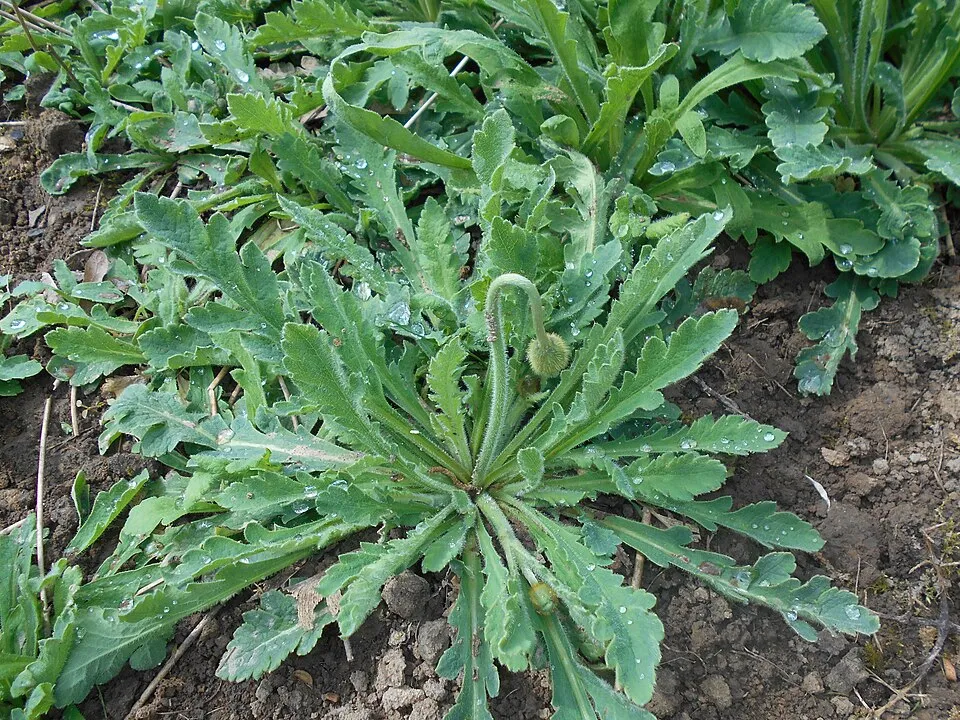
Papaver rupifragum, often known as the Canary Island poppy or Spanish poppy, is a captivating perennial herb originating from the rugged, volcanic terrains of the Canary Islands, particularly Tenerife and Gran Canaria, and also found in Spain and Morocco. This species is a robust member of the Papaver genus, recognized for its exceptional adaptability to challenging, exposed environments. Typically reaching a height of 30-60 cm (12-18 inches), it forms a distinctive basal rosette of delicate, often deeply lobed or dissected glaucous (blue-green) leaves that are lightly fuzzed. The plant's most striking feature is its profusion of vibrant, usually orange to reddish-orange flowers, which emerge singly on tall, slender stems.
These blooms showcase large, papery, and often crinkled petals, giving them an ethereal quality. The flower's center is adorned with a cluster of dark stamens, providing a stark visual contrast to the bright petals. Following bloom, globose seed capsules characteristic of poppies develop, eventually opening by pores to release numerous tiny seeds. Papaver rupifragum thrives in arid and semi-arid conditions, preferring poor to rich, well-drained soils and abundant full sun.
Its natural habitat includes rocky slopes, cliff faces, and gravelly areas, where it exhibits remarkable resilience against wind and drought. Despite its wild origins, it has gained considerable popularity in horticulture for its intense ornamental value, offering a brilliant splash of color to gardens, rockeries, and xeriscapes, making it an attractive, low-maintenance choice for dry landscapes. Though a short-lived perennial, often behaving as a biennial, it readily self-seeds, ensuring its persistent presence in suitable environments.
Trusted Scientific References
1. Authoritative external sources for Papaver Rupifragum
1.1 Wikipedia — Papaver Rupifragum
1.2 Kew POWO (Plants of the World Online)
1.3 PubMed — peer-reviewed research
1.4 NCBI Taxonomy Browser
1.5 GBIF — Global Biodiversity
1.6Papaver Rupifragum should be interpreted through verified botanical identity, practical care, and responsible safety language. This recovery note adds the missing context needed for a complete profile: match light to the plant's habit, use well-drained soil, water according to season, and avoid unsupported medicinal or edible claims. For publishing, the plant can be presented as a source-backed garden plant with clear care guidance, common problem diagnosis, and conservative safety wording.
1.1.Papaver Rupifragum — Key Features
- ✓ <strong>Botanical Origin</strong> — Native to the Canary Islands, Spain, and Morocco, thriving in arid, rocky environments.
- ✓ <strong>Striking Blooms</strong> — Produces vibrant orange to reddish-orange flowers with delicate, crinkled petals.
- ✓ <strong>Drought Tolerance</strong> — Exceptionally well-adapted to dry conditions, requiring minimal water once established.
- ✓ <strong>Rocky Habitat Specialist</strong> — Flourishes in poor, well-drained, gravelly, or rocky soils.
- ✓ <strong>Perennial/Biennial Nature</strong> — A short-lived perennial often behaving as a biennial, ensuring its presence through self-seeding.
- ✓ <strong>Self</strong> — Seeding Capability — Readily propagates itself from seed, allowing it to naturalize in suitable garden settings.
- ✓ <strong>Glaucous Foliage</strong> — Distinctive blue-green leaves that are often lobed and lightly fuzzed.
- ✓ <strong>Ornamental Value</strong> — Highly prized in horticulture for its intense color and suitability for rockeries and xeriscapes.
- ✓ <strong>Genus Papaver Member</strong> — Belongs to the diverse poppy family, sharing general characteristics but with unique adaptations.
- ✓ <strong>Unstudied Medicinal Properties</strong> — Lacks specific scientific research regarding its efficacy or safety for human medicinal purposes.
1.2.Papaver Rupifragum — Quick Summary
- ✓ Papaver rupifragum is known as the Canary Island or Spanish poppy.
- ✓ A striking ornamental perennial, native to arid Canary Islands and North Africa.
- ✓ Features vibrant orange flowers and glaucous, fuzzy foliage.
- ✓ Highly valued for its drought tolerance and suitability for xeriscaping.
- ✓ Medicinal uses are largely unstudied and unconfirmed for this specific species.
- ✓ Contains uncharacterized alkaloids, thus internal use is strongly discouraged due to unknown safety.
2.Papaver Rupifragum — Scientific Identity
3.Papaver Rupifragum — Quick Facts
4.Papaver Rupifragum — Appearance & Identification
5.Papaver Rupifragum — Native Habitat
6.Papaver Rupifragum — Water Requirements
- Cultivating Papaver rupifragum, the Spanish poppy, is relatively straightforward due to its hardy nature and adaptability.
- ✓ Soil Requirements — Prefers well-drained soil; tolerates poor, sandy, or gravelly conditions but can thrive in rich soil if drainage is excellent.
- ✓ Light Exposure — Requires full sun exposure for optimal growth and abundant flowering, needing at least 6-8 hours of direct sunlight daily.
- ✓ Watering — Drought-tolerant once established; water sparingly, allowing the soil to dry out completely between waterings to prevent root rot.
- ✓ Propagation — Primarily propagated by seed; it readily self-seeds in favorable conditions, allowing it to persist in the garden for years.
- ✓ Hardiness Zones — Thrives in USDA Plant Hardiness Zones 6 through 9, tolerating both moderate cold and significant heat.
- ✓ Maintenance — Low maintenance plant; deadheading spent flowers can encourage more blooms but is not strictly necessary as it will self-seed.
- ✓ Spacing — Plant individual specimens 6 to 9 inches apart to allow for its mature spread and air circulation.
- ✓ Lifespan — A short-lived perennial that often behaves as a biennial, completing its life cycle within two to three years but maintaining presence through self-sowing.
Reviewed by the Flora Medical Global Botanical Review Panel
Multi-disciplinary editorial group · Botany · Ethnobotany · Herbal-medicine literature
Who reviewed this: This page was checked by the Flora Medical Global Botanical Review Panel — an in-house editorial group of botany graduates, ethnobotany researchers, and horticulture practitioners who collectively maintain our 7,000+ plant encyclopedia. Meet the team.
Our 4-step verification process
1. Taxonomic verification
Scientific names and synonyms cross-checked against Kew POWO, World Flora Online, and The Plant List.
2. Phytochemical & medicinal cross-reference
Active compounds, traditional uses, and reported activities are cross-referenced with PubMed, USDA Dr. Duke's database, and peer-reviewed ethnobotanical literature.
3. Conservation & distribution check
Distribution, ecology, and conservation status confirmed against GBIF occurrence records and the IUCN Red List.
4. Editorial & safety review
Every entry passes an editorial pass for clarity, originality, and safety notices (toxicity, contraindications, dosage caveats) before publication.
Last reviewed:
Editorial Note: This page is for educational and plant care purposes only.
Written by: Flora Medical Global Editorial Team
Reviewed by: Flora Medical Global Botanical Review Panel
Last Updated: June 15, 2026







Papaver Rupifragum — Comments & Community Reviews
Rate this plant