

Care Disclaimer: Plant care recommendations are general guidelines based on common growing conditions. Individual results may vary based on your local environment, climate, and care routine. If your plant is toxic, keep it away from children and pets, and consult a veterinarian if accidental ingestion occurs.
1.Paulownia Tomentosa — Overview
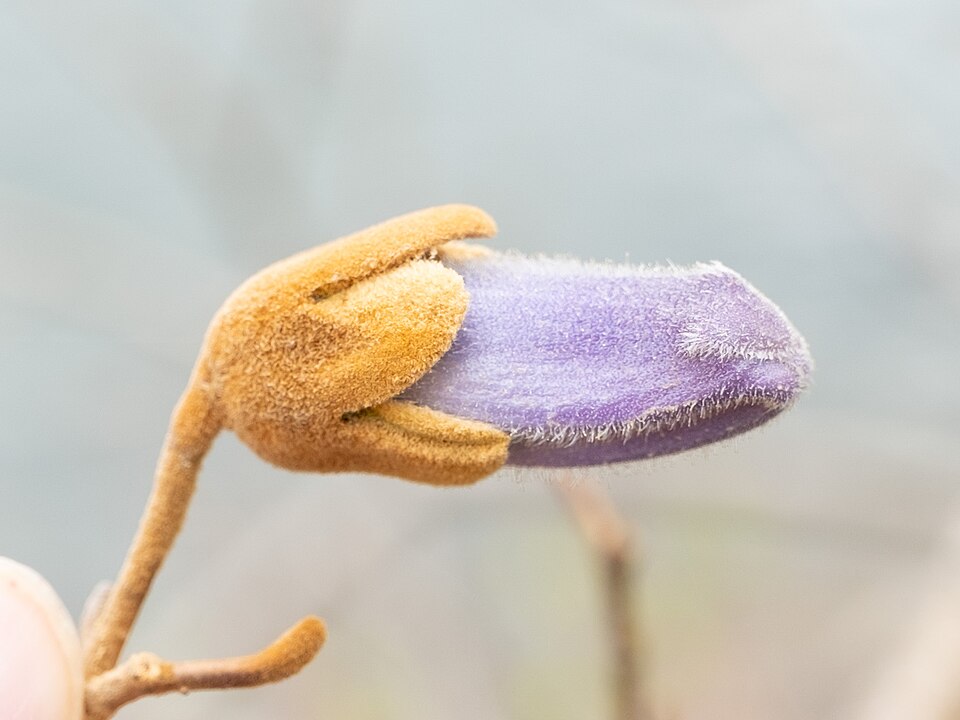
Paulownia tomentosa, commonly known as the foxglove tree, princess tree, or empress tree, is a remarkable deciduous tree native to the temperate regions of central and western China. This fast-growing species typically achieves impressive heights of 10-25 meters (33-82 feet) with an expansive, often rounded, spreading crown, making it a prominent feature in its natural and cultivated landscapes. Its leaves are distinctively large, heart-shaped, and can reach up to 60 cm (24 inches) across, characterized by a soft, velvety texture on their undersides. A striking display occurs in early spring, prior to leaf emergence, when the tree produces abundant clusters of highly fragrant, trumpet-shaped flowers.
These showy blossoms are generally pale violet to lavender, frequently adorned with darker purple streaks within, and are borne in large, upright panicles that can extend up to 30 cm (12 inches) in length. Following the flowering period, the tree develops woody, egg-shaped capsules, approximately 3-4 cm (1.2-1.6 inches) long, which mature to contain numerous small, winged seeds designed for wind dispersal. Paulownia tomentosa is renowned for its extraordinarily rapid growth rate and its adaptability to a diverse range of soil conditions, though it thrives best in well-drained, fertile loams. Its notable tolerance to urban pollution and nutrient-poor soils has made it a favored choice for urban reforestation, land reclamation, and ornamental planting.
However, its vigorous root system and prolific seed production necessitate careful management, as it can exhibit invasive tendencies in certain non-native environments, potentially outcompeting indigenous flora. Historically, its lightweight, yet strong and warp-resistant wood has been highly valued for crafting furniture, musical instruments, and intricate carvings, particularly in East Asia. Modern applications also explore its potential for rapid biomass production in biofuel initiatives and sustainable timber harvesting.
Trusted Scientific References
1. Authoritative external sources for Paulownia Tomentosa
1.1 Wikipedia — Paulownia Tomentosa
1.2 Kew POWO (Plants of the World Online)
1.3 PubMed — peer-reviewed research
1.4 NCBI Taxonomy Browser
1.5 GBIF — Global Biodiversity
1.1.Paulownia Tomentosa — Key Features
- ✓ <strong>Rapid Growth Rate</strong> — One of the fastest-growing deciduous trees, reaching maturity quickly.
- ✓ <strong>Ornamental Value</strong> — Produces striking, fragrant violet-lavender flowers in spring.
- ✓ <strong>Large Foliage</strong> — Features exceptionally large, heart-shaped, velvety leaves.
- ✓ <strong>Medicinal Properties</strong> — Rich in anti-inflammatory, antioxidant, and hepatoprotective compounds.
- ✓ <strong>Traditional Use</strong> — Employed in Traditional Chinese Medicine for various health conditions.
- ✓ <strong>Durable Wood</strong> — Yields lightweight, strong, and warp-resistant timber, historically significant.
- ✓ <strong>Environmental Adaptability</strong> — Tolerant of diverse soils, pollution, and urban conditions.
- ✓ <strong>Invasive Potential</strong> — Can be invasive in non-native ecosystems due to prolific seeding.
- ✓ <strong>Phytochemical Richness</strong> — Contains a wide array of bioactive flavonoids, iridoids, and phenolic acids.
- ✓ <strong>Biomass Production</strong> — High potential for sustainable forestry and biofuel applications.
1.2.Paulownia Tomentosa — Quick Summary
- ✓ Paulownia tomentosa, the Empress Tree, is a fast-growing deciduous tree native to China.
- ✓ Renowned for its beautiful, fragrant flowers and large leaves.
- ✓ Medicinally valued for potent anti-inflammatory, antioxidant, and hepatoprotective properties.
- ✓ Traditional uses span various ailments, including inflammation and liver support.
- ✓ Contains diverse bioactive compounds like flavonoids and iridoids.
- ✓ Caution advised for pregnant/nursing individuals, children, and those on specific medications.
2.Paulownia Tomentosa — Scientific Identity
3.Paulownia Tomentosa — Quick Facts
4.Paulownia Tomentosa — Appearance & Identification
5.Paulownia Tomentosa — Native Habitat
6.Paulownia Tomentosa — Water Requirements
- ✓ Site Selection — Paulownia tomentosa thrives in full sun exposure and requires well-drained, deep, fertile loam soils for optimal growth, although it tolerates a wide range of soil types.
- ✓ Propagation — Primarily propagated by seeds, which require light for germination, or vegetatively through root cuttings, offering faster establishment.
- ✓ Planting — Young trees should be planted in spring after the last frost, ensuring adequate spacing for their expansive crown and root system.
- ✓ Watering — Regular watering is crucial during the establishment phase; mature trees are relatively drought-tolerant but benefit from consistent moisture, especially in dry periods.
- ✓ Fertilization — Young trees benefit from balanced fertilizers to support their rapid growth; mature trees generally require less, depending on soil fertility.
- ✓ Pruning — Pruning can be performed to shape the tree, remove dead or damaged branches, and manage its vigorous growth, particularly for timber production.
- ✓ Pest and Disease Management — Generally resistant, but monitor for common tree pests and fungal diseases, addressing issues proactively to maintain tree health.
- ✓ Invasive Potential — Due to its rapid growth and prolific seeding, monitor its spread in non-native areas to prevent ecological disruption.
Reviewed by the Flora Medical Global Botanical Review Panel
Multi-disciplinary editorial group · Botany · Ethnobotany · Herbal-medicine literature
Who reviewed this: This page was checked by the Flora Medical Global Botanical Review Panel — an in-house editorial group of botany graduates, ethnobotany researchers, and horticulture practitioners who collectively maintain our 7,000+ plant encyclopedia. Meet the team.
Our 4-step verification process
1. Taxonomic verification
Scientific names and synonyms cross-checked against Kew POWO, World Flora Online, and The Plant List.
2. Phytochemical & medicinal cross-reference
Active compounds, traditional uses, and reported activities are cross-referenced with PubMed, USDA Dr. Duke's database, and peer-reviewed ethnobotanical literature.
3. Conservation & distribution check
Distribution, ecology, and conservation status confirmed against GBIF occurrence records and the IUCN Red List.
4. Editorial & safety review
Every entry passes an editorial pass for clarity, originality, and safety notices (toxicity, contraindications, dosage caveats) before publication.
Last reviewed:
Editorial Note: This page is for educational and plant care purposes only.
Written by: Flora Medical Global Editorial Team
Reviewed by: Flora Medical Global Botanical Review Panel
Last Updated: June 15, 2026







Paulownia Tomentosa — Comments & Community Reviews
Rate this plant