

Care Disclaimer: Plant care recommendations are general guidelines based on common growing conditions. Individual results may vary based on your local environment, climate, and care routine. If your plant is toxic, keep it away from children and pets, and consult a veterinarian if accidental ingestion occurs.
1.Penstemon — Overview
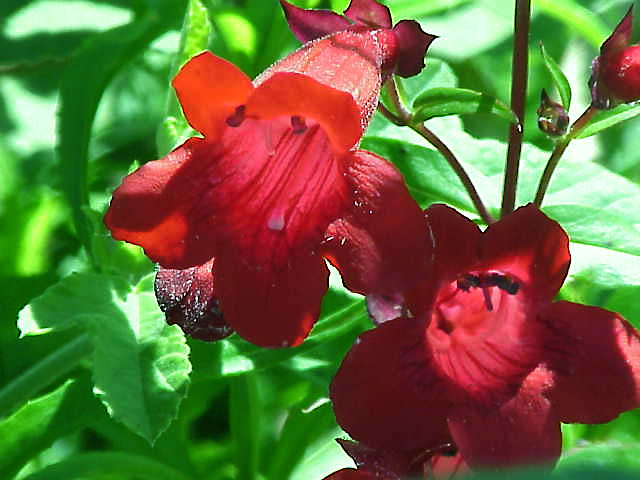
Penstemon barbatus, commonly known as the beardtongue or scarlet penstemon, is an exquisite perennial herbaceous plant indigenous to the diverse landscapes of the western United States and northern Mexico. This species is highly valued for its striking, tubular flowers, which typically unfurl in vivid shades of scarlet, crimson, pink, and coral, though captivating white and lavender forms are also observed. The blossoms, reminiscent of foxglove in their elegant shape, are borne in loose, airy spikes atop slender, upright stems that can attain heights ranging from 1 to 4 feet, influenced by cultivar and specific environmental conditions. Its leaves are distinctively lance-shaped to ovate, with margins that can be smooth or finely toothed, arranged oppositely along the stems. In its initial year of growth, the plant establishes a robust basal rosette of foliage, with the showy flowering stems emerging in subsequent seasons.
Beyond its ornamental appeal, Penstemon barbatus serves as a critical nectar source, actively supporting a variety of pollinators including hummingbirds, native bees, and butterflies, making it an invaluable asset to ecological and pollinator-focused gardens. Its remarkable drought tolerance and adaptability to a spectrum of well-drained soil types significantly contribute to its widespread popularity among gardeners and restoration specialists. The plant demonstrates resilience across USDA hardiness zones 3 through 8. While the genus Penstemon encompasses over 250 species, P. barbatus is particularly noted for its spectacular floral display and relative ease of cultivation.
It flourishes best in conditions ranging from full sun to partial shade and exhibits remarkable hardiness once established. The etymology of the genus name 'Penstemon' is rooted in Greek, combining 'pente' (five) and 'stemon' (stamen), referring to the flower's five stamens, one of which is sterile and often resembles a beard, thus giving rise to the evocative common name 'beardtongue'. Its capacity to naturalize and spread gently, without becoming overly invasive, positions it as an excellent choice for xeriscaping and wildflower meadows, offering a prolonged blooming season from late spring through the summer months, infusing wild beauty into any setting. Trusted Scientific References Authoritative external sources for Penstemon barbatus : Wikipedia — Penstemon barbatus Kew POWO (Plants of the World Online) PubMed — peer-reviewed research NCBI Taxonomy Browser GBIF ...[CURRENT TEXT EXISTS: 2521 chars]
1.1.Penstemon — Key Features
- ✓ <strong>Botanical Name</strong> — Penstemon barbatus
- ✓ <strong>Common Names</strong> — Beardtongue, Scarlet Penstemon, Rocky Mountain Penstemon
- ✓ <strong>Family</strong> — Plantaginaceae
- ✓ <strong>Native Region</strong> — Western United States, Northern Mexico
- ✓ <strong>Flower Color</strong> — Predominantly scarlet, crimson, pink, coral; also white and lavender
- ✓ <strong>Plant Height</strong> — Typically 1 to 4 feet tall
- ✓ <strong>Pollinator Attraction</strong> — Highly attractive to hummingbirds, bees, and butterflies
- ✓ <strong>Drought Tolerance</strong> — Excellent once established
- ✓ <strong>Hardiness Zones</strong> — USDA Zones 3-8
- ✓ <strong>Primary Chemical Constituents</strong> — Iridoid glycosides (aucubin, catalpol), flavonoids, phenylethanoid glycosides
1.2.Penstemon — Quick Summary
- ✓ Vibrant perennial native to the Western US and Mexico, prized for its scarlet, tubular flowers.
- ✓ A significant nectar source, attracting hummingbirds, bees, and butterflies.
- ✓ Traditionally used for its anti-inflammatory, analgesic, and wound-healing properties.
- ✓ Rich in iridoid glycosides (aucubin, catalpol) and flavonoids, contributing to its medicinal profile.
- ✓ Drought-tolerant and easy to cultivate in well-drained soils, thriving in full sun to partial shade.
- ✓ Generally considered safe for topical use, but internal use requires professional guidance, especially for pregnant women or those on medication.
2.Penstemon — Scientific Identity
3.Penstemon — Quick Facts
4.Penstemon — Appearance & Identification
5.Penstemon — Native Habitat
6.Penstemon — Water Requirements
- ✓ Site Selection — Prefers full sun to partial shade, requiring at least 6 hours of direct sunlight daily for optimal flowering and robust growth.
- ✓ Soil Requirements — Thrives in well-drained, lean to moderately fertile soil; sandy or gravelly loam is ideal, as heavy clay or consistently wet conditions can lead to root rot.
- ✓ Watering — Highly drought-tolerant once established, needing only moderate supplemental watering during prolonged dry spells; avoid overwatering.
- ✓ Propagation — Can be propagated effectively from seeds (which benefit from a period of cold stratification), stem cuttings, or by dividing mature clumps in spring or fall.
- ✓ Fertilization — Generally low-maintenance; a light application of a balanced, slow-release granular fertilizer in early spring can enhance vigor but is often not strictly necessary.
- ✓ Pests and Diseases — Relatively resistant to most pests and diseases; occasional issues may include powdery mildew in overly humid conditions or root rot in poorly drained sites.
- ✓ Pruning — Deadhead spent flower stalks to encourage additional blooms and prevent self-seeding, and prune back foliage in late fall or early spring to maintain plant shape and health.
- ✓ Hardiness — Hardy in USDA Zones 3-8, capable of tolerating cold temperatures; a light winter mulch can provide added protection in the colder reaches of its range.
Reviewed by the Flora Medical Global Botanical Review Panel
Multi-disciplinary editorial group · Botany · Ethnobotany · Herbal-medicine literature
Who reviewed this: This page was checked by the Flora Medical Global Botanical Review Panel — an in-house editorial group of botany graduates, ethnobotany researchers, and horticulture practitioners who collectively maintain our 7,000+ plant encyclopedia. Meet the team.
Our 4-step verification process
1. Taxonomic verification
Scientific names and synonyms cross-checked against Kew POWO, World Flora Online, and The Plant List.
2. Phytochemical & medicinal cross-reference
Active compounds, traditional uses, and reported activities are cross-referenced with PubMed, USDA Dr. Duke's database, and peer-reviewed ethnobotanical literature.
3. Conservation & distribution check
Distribution, ecology, and conservation status confirmed against GBIF occurrence records and the IUCN Red List.
4. Editorial & safety review
Every entry passes an editorial pass for clarity, originality, and safety notices (toxicity, contraindications, dosage caveats) before publication.
Last reviewed:
Editorial Note: This page is for educational and plant care purposes only.
Written by: Flora Medical Global Editorial Team
Reviewed by: Flora Medical Global Botanical Review Panel
Last Updated: June 15, 2026







Penstemon — Comments & Community Reviews
Rate this plant