
Care Disclaimer: Plant care recommendations are general guidelines based on common growing conditions. Individual results may vary based on your local environment, climate, and care routine. If your plant is toxic, keep it away from children and pets, and consult a veterinarian if accidental ingestion occurs.
1.Phlomis Russeliana — Overview
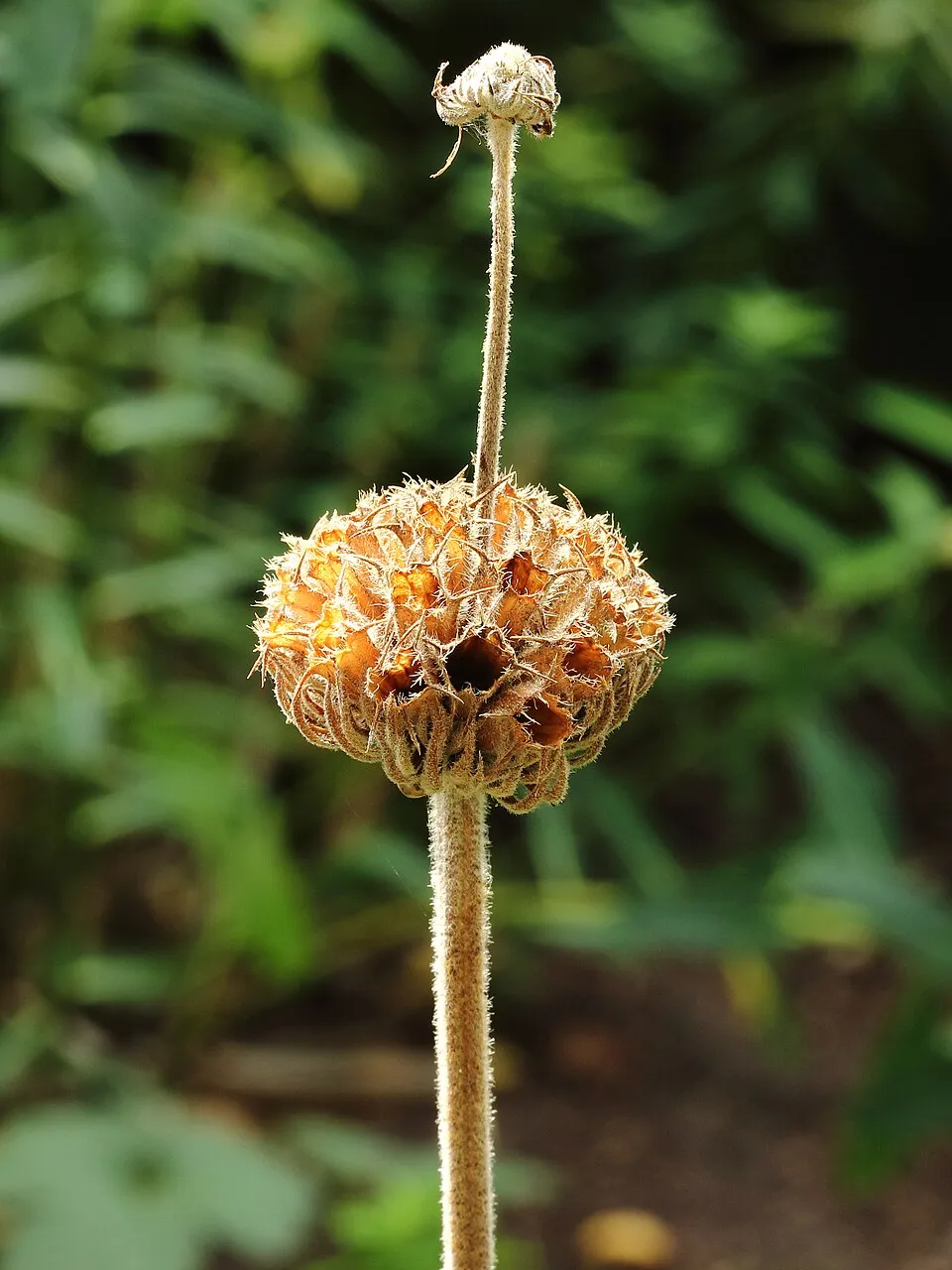
Phlomis russeliana, commonly known as Jerusalem Sage or Turkish Sage, is a captivating perennial subshrub native to the Eastern Mediterranean, specifically Turkey, where it thrives in hard and softwood forest environments at elevations ranging from 1,000 to 5,500 feet. This robust member of the Lamiaceae family is celebrated for its distinctive architectural form, typically reaching 1-2 feet in height with a spread of 4-5 feet due to its wide-ranging rhizomatous growth. The plant features large, heart-shaped to ovate leaves, measuring 4-8 inches long, which are softly woolly and olive-green, particularly on their undersides, contributing to its excellent drought tolerance and heat resistance. These striking leaves form a dense basal rosette from which sturdy, square stems emerge.
The true botanical spectacle unfolds from late spring through summer, as unbranched flowering stems ascend 2-3 feet above the foliage. These stems bear stunning whorls of hooded, pale yellow to creamy white flowers, typically arranged in 3-5 distinct tiers. The zygomorphic flowers, characteristic of the mint family, are perfectly adapted for insect pollination, attracting bees and butterflies. Even after flowering, the persistent, papery calyces add significant architectural interest, ensuring the plant remains an attractive feature in the garden year-round.
Phlomis russeliana flourishes in full sun to light shade and requires well-drained, poor to moderately fertile soils, making it an ideal candidate for xeriscaping, low-maintenance gardens, and as an effective weed-smothering groundcover. Its resilience and unique form make it a valuable asset for adding texture and structure to various landscape designs.
Trusted Scientific References
1. Authoritative external sources for Phlomis russeliana
1.1 Wikipedia — Phlomis russeliana
1.2 Kew POWO (Plants of the World Online)
1.3 PubMed — peer-reviewed research
1.4 NCBI Taxonomy Browser
1.5 GBIF — Global Biodiversity
1.6Phlomis Russeliana should be interpreted through verified botanical identity, practical care, and responsible safety language. This recovery note adds the missing context needed for a complete profile: match light to the plant's habit, use well-drained soil, water according to season, and avoid unsupported medicinal or edible claims. For publishing, the plant can be presented as a source-backed garden plant with clear care guidance, common problem diagnosis, and conservative safety wording.
1.1.Phlomis Russeliana — Key Features
- ✓ <strong>Botanical Name</strong> — Phlomis russeliana, also known as Jerusalem Sage or Turkish Sage.
- ✓ <strong>Family</strong> — Lamiaceae (Mint family), characterized by square stems and opposite leaves.
- ✓ <strong>Native Range</strong> — Endemic to Turkey, found in forests at high elevations.
- ✓ <strong>Growth Habit</strong> — Spreading evergreen perennial subshrub, 1-2 ft tall, 4-5 ft wide.
- ✓ <strong>Foliage</strong> — Large, heart-shaped, woolly olive-green leaves forming a basal rosette.
- ✓ <strong>Flowers</strong> — Hooded, pale yellow to creamy white flowers in distinct tiered whorls.
- ✓ <strong>Bloom Time</strong> — Late spring through summer, offering extended seasonal interest.
- ✓ <strong>Drought Tolerance</strong> — Highly resilient to dry conditions once established.
- ✓ <strong>Landscape Use</strong> — Excellent for xeriscapes, borders, groundcover, and rock gardens.
- ✓ <strong>Pollinator Attraction</strong> — Attracts bees and butterflies, contributing to garden biodiversity.
1.2.Phlomis Russeliana — Quick Summary
- ✓ Architectural beauty with striking tiered yellow flowers.
- ✓ Drought-tolerant, low-maintenance perennial for xeriscaping.
- ✓ Attracts pollinators like bees and butterflies, deer resistant.
- ✓ Contains potential anti-inflammatory and antioxidant compounds.
- ✓ Native to Turkey, thriving in well-drained, sunny conditions.
- ✓ Primarily ornamental, with limited traditional medicinal documentation for this specific species.
2.Phlomis Russeliana — Scientific Identity
3.Phlomis Russeliana — Quick Facts
4.Phlomis Russeliana — Appearance & Identification
5.Phlomis Russeliana — Native Habitat
6.Phlomis Russeliana — Water Requirements
- ✓ Soil Preference — Thrives in well-drained, poor to moderately fertile soils; sandy or rocky loam is ideal to prevent root rot.
- ✓ Sun Exposure — Prefers full sun to light shade, with full sun promoting the best flowering and densest growth.
- ✓ Water Needs — Drought-tolerant once established, requiring low to very low irrigation; overwatering should be avoided.
- ✓ Hardiness — Root hardy to approximately 0-10° F (USDA Zones 6-9), remaining evergreen in milder climates.
- ✓ Propagation — Easily propagated by division of its rhizomes in spring or autumn, or by softwood cuttings.
- ✓ Maintenance — Low maintenance; prune spent flower stalks for tidiness and to encourage a second flush of blooms, though dried stalks offer winter interest.
- ✓ Pest and Disease Resistance — Generally robust and resistant to most pests and diseases, and deer typically leave the foliage untouched.
- ✓ Spreading Habit — Spreads by rhizomes and can form a dense groundcover, effectively suppressing weeds; spread is usually easy to control.
Reviewed by the Flora Medical Global Botanical Review Panel
Multi-disciplinary editorial group · Botany · Ethnobotany · Herbal-medicine literature
Who reviewed this: This page was checked by the Flora Medical Global Botanical Review Panel — an in-house editorial group of botany graduates, ethnobotany researchers, and horticulture practitioners who collectively maintain our 7,000+ plant encyclopedia. Meet the team.
Our 4-step verification process
1. Taxonomic verification
Scientific names and synonyms cross-checked against Kew POWO, World Flora Online, and The Plant List.
2. Phytochemical & medicinal cross-reference
Active compounds, traditional uses, and reported activities are cross-referenced with PubMed, USDA Dr. Duke's database, and peer-reviewed ethnobotanical literature.
3. Conservation & distribution check
Distribution, ecology, and conservation status confirmed against GBIF occurrence records and the IUCN Red List.
4. Editorial & safety review
Every entry passes an editorial pass for clarity, originality, and safety notices (toxicity, contraindications, dosage caveats) before publication.
Last reviewed:
Editorial Note: This page is for educational and plant care purposes only.
Written by: Flora Medical Global Editorial Team
Reviewed by: Flora Medical Global Botanical Review Panel
Last Updated: June 15, 2026







Phlomis Russeliana — Comments & Community Reviews
Rate this plant