
Care Disclaimer: Plant care recommendations are general guidelines based on common growing conditions. Individual results may vary based on your local environment, climate, and care routine. If your plant is toxic, keep it away from children and pets, and consult a veterinarian if accidental ingestion occurs.
1.Physocarpus Opulifolius — Overview
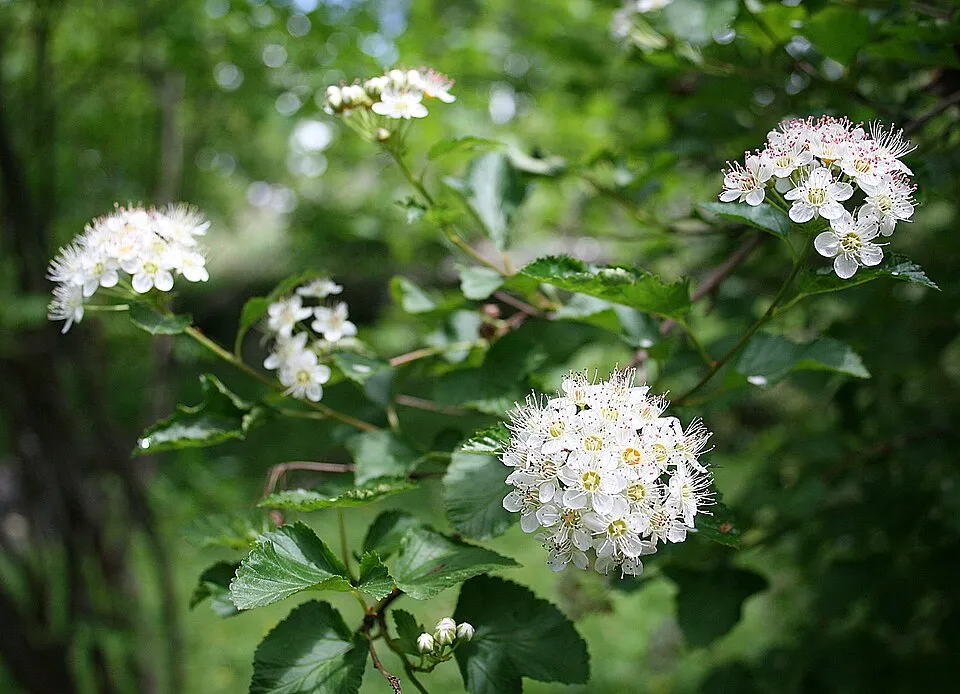
Physocarpus opulifolius, commonly known as common ninebark or eastern ninebark, is a robust deciduous shrub native to a wide range of North American ecosystems, from Canada south to Georgia and west to Minnesota. As a member of the Rosaceae family, it exhibits characteristic resilience and adaptability, thriving in diverse habitats from rocky slopes and riverbanks to open woodlands. This multi-stemmed shrub typically achieves a mature height and spread of 6-10 feet (1.8-3 meters), developing a dense, rounded to arching habit. Its most distinguishing feature, and the origin of its common name, is the exfoliating bark, which peels away in thin, papery strips to reveal multiple layers of inner bark in shades of tan, reddish-brown, and cinnamon, creating year-round visual interest.
The alternate, simple leaves are broadly ovate with 3-5 shallow lobes and serrated margins, typically measuring 2-5 inches (5-12.5 cm) long. While the species generally has medium green foliage, numerous cultivars boast striking colors ranging from deep purple and bronze to vibrant gold and variegated patterns. In late spring to early summer, Physocarpus opulifolius produces abundant, showy clusters of small, five-petaled, star-shaped flowers, usually white or pale pink, borne in corymb-like racemes at the tips of branches. These blossoms are a valuable nectar source for pollinators.
Following the floral display, ornamental fruit clusters emerge, consisting of inflated, bladder-like follicles that ripen to a reddish-brown hue and persist through fall and into winter, providing sustenance for various bird species. Its hardiness, tolerance to a wide range of soil types and moisture levels (including drought once established), and aesthetic appeal make it a popular landscape plant.
Trusted Scientific References
1. Authoritative external sources for Physocarpus opulifolius
1.1 Wikipedia — Physocarpus opulifolius
1.2 Kew POWO (Plants of the World Online)
1.3 PubMed — peer-reviewed research
1.4 NCBI Taxonomy Browser
1.5 GBIF — Global Biodiversity
1.1.Physocarpus Opulifolius — Key Features
- ✓ <strong>Distinctive Exfoliating Bark</strong> — Peeling bark in layers of brown, tan, and cinnamon.
- ✓ <strong>Native to North America</strong> — Found across a broad range of the continent.
- ✓ <strong>Hardy and Adaptable</strong> — Tolerates diverse soil types, moisture levels, and temperatures.
- ✓ <strong>Ornamental Value</strong> — Attractive foliage (often colorful cultivars), white/pink flowers, and reddish fruit.
- ✓ <strong>Traditional Medicinal Uses</strong> — Employed by First Nations for various ailments including inflammation and wounds.
- ✓ <strong>Rich in Bioactive Compounds</strong> — Contains tannins, flavonoids, and phenolic acids.
- ✓ <strong>Pollinator Friendly</strong> — Flowers provide nectar for bees and other beneficial insects.
- ✓ <strong>Wildlife Food Source</strong> — Fruits persist into winter, offering food for birds.
- ✓ <strong>Low Maintenance Shrub</strong> — Generally resistant to pests and diseases, requiring minimal care.
1.2.Physocarpus Opulifolius — Quick Summary
- ✓ Physocarpus opulifolius is a North American native shrub known for its distinctive exfoliating bark.
- ✓ Traditionally used by First Nations for anti-inflammatory, wound-healing, and fever-reducing properties.
- ✓ Rich in tannins, flavonoids, and phenolic acids, contributing to its astringent and antioxidant activities.
- ✓ Easy to cultivate, adapting to various soil and light conditions, making it popular in landscaping.
- ✓ Preparations include decoctions, poultices, and tinctures from bark and roots.
- ✓ Exercise caution with internal use, especially during pregnancy, lactation, or with pre-existing conditions.
2.Physocarpus Opulifolius — Scientific Identity
3.Physocarpus Opulifolius — Quick Facts
4.Physocarpus Opulifolius — Appearance & Identification
5.Physocarpus Opulifolius — Native Habitat
6.Physocarpus Opulifolius — Water Requirements
- ✓ Site Selection — Choose a location with full sun to partial shade; full sun promotes the best flowering and foliage color for Physocarpus opulifolius.
- ✓ Soil Requirements — Adaptable to a wide range of soil types, from sandy to clay, but prefers well-drained, slightly acidic to neutral soil (pH 6.0-7.0).
- ✓ Watering — Water regularly during the first growing season to establish a strong root system; mature plants are drought-tolerant but benefit from occasional watering during prolonged dry spells.
- ✓ Fertilization — Generally not required in fertile soils; if growth is poor, a balanced slow-release fertilizer can be applied in spring.
- ✓ Pruning — Prune common ninebark after flowering to maintain shape, remove dead or crossing branches, and encourage new growth; renewal pruning by cutting back old stems to the ground can rejuvenate older plants.
- ✓ Pest and Disease Management — Physocarpus opulifolius is relatively pest and disease resistant; occasional issues may include powdery mildew in humid conditions or aphids, which are typically managed with good air circulation and organic sprays.
- ✓ Propagation — Easily propagated by softwood cuttings taken in early summer or by hardwood cuttings in late fall/winter; seeds require stratification.
Reviewed by the Flora Medical Global Botanical Review Panel
Multi-disciplinary editorial group · Botany · Ethnobotany · Herbal-medicine literature
Who reviewed this: This page was checked by the Flora Medical Global Botanical Review Panel — an in-house editorial group of botany graduates, ethnobotany researchers, and horticulture practitioners who collectively maintain our 7,000+ plant encyclopedia. Meet the team.
Our 4-step verification process
1. Taxonomic verification
Scientific names and synonyms cross-checked against Kew POWO, World Flora Online, and The Plant List.
2. Phytochemical & medicinal cross-reference
Active compounds, traditional uses, and reported activities are cross-referenced with PubMed, USDA Dr. Duke's database, and peer-reviewed ethnobotanical literature.
3. Conservation & distribution check
Distribution, ecology, and conservation status confirmed against GBIF occurrence records and the IUCN Red List.
4. Editorial & safety review
Every entry passes an editorial pass for clarity, originality, and safety notices (toxicity, contraindications, dosage caveats) before publication.
Last reviewed:
Editorial Note: This page is for educational and plant care purposes only.
Written by: Flora Medical Global Editorial Team
Reviewed by: Flora Medical Global Botanical Review Panel
Last Updated: June 15, 2026







Physocarpus Opulifolius — Comments & Community Reviews
Rate this plant