
Care Disclaimer: Plant care recommendations are general guidelines based on common growing conditions. Individual results may vary based on your local environment, climate, and care routine. If your plant is toxic, keep it away from children and pets, and consult a veterinarian if accidental ingestion occurs.
1.Pieris Japonica — Overview
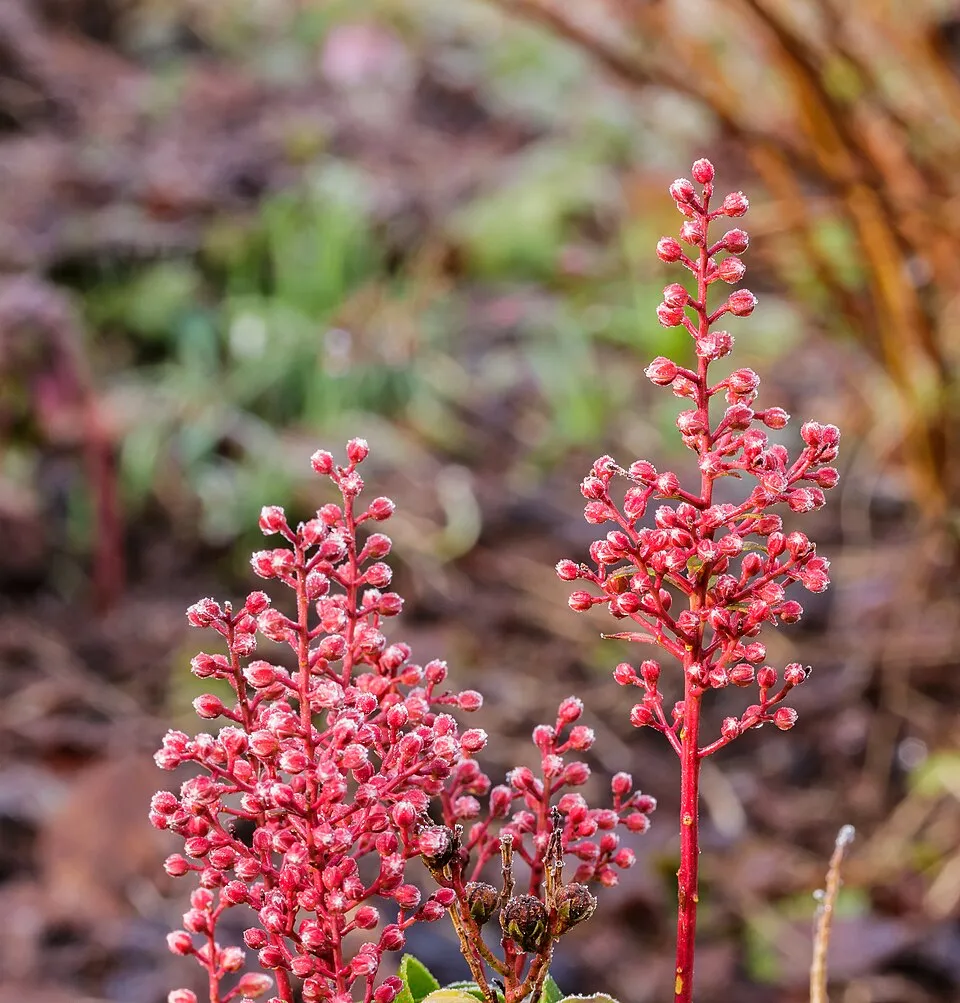
Pieris japonica, commonly known as Japanese Andromeda or Lily-of-the-Valley Shrub, is a distinguished evergreen shrub native to the temperate forests and mountainous regions of East Asia, specifically flourishing across Japan, Taiwan, and China. This captivating member of the Ericaceae family, which also encompasses rhododendrons and azaleas, thrives in acidic, well-drained soils and dappled to partial shade, mirroring its natural understory habitat. Morphologically, the shrub typically grows 2-4 meters tall and wide, forming a dense, rounded habit. Its leathery, dark green, lance-shaped leaves, ranging from 5-12 cm in length, provide year-round visual interest.
However, it's the spectacular new growth that truly defines its ornamental allure, emerging in striking hues of bronzy-red, vibrant pink, or deep burgundy. This coloration is attributed to a high concentration of anthocyanins, which not only protect the tender young foliage from intense UV radiation and herbivory but also offer a prolonged display of color before maturing to a deep green. In late winter to early spring, preceding the full unfurling of new leaves, Pieris japonica produces abundant, elegant, urn-shaped flowers. These blossoms, typically white or pale pink, are densely clustered in graceful, drooping panicles, strongly resembling the delicate flowers of the Lily-of-the-Valley, hence one of its common names.
These fragrant flowers serve as an important early nectar source for pollinators, contributing to the ecological balance of its native ecosystems. Various cultivars have been developed, offering a spectrum of flower colors, growth habits, and foliage variegations, enhancing its appeal as a prized specimen in ornamental horticulture.
Trusted Scientific References
1. Authoritative external sources for Pieris japonica
1.1 Wikipedia — Pieris japonica
1.2 Kew POWO (Plants of the World Online)
1.3 PubMed — peer-reviewed research
1.4 NCBI Taxonomy Browser
1.5 GBIF — Global Biodiversity
1.6Pieris Japonica should be interpreted through verified botanical identity, practical care, and responsible safety language. This recovery note adds the missing context needed for a complete profile: match light to the plant's habit, use well-drained soil, water according to season, and avoid unsupported medicinal or edible claims. For publishing, the plant can be presented as a source-backed garden plant with clear care guidance, common problem diagnosis, and conservative safety wording.
1.1.Pieris Japonica — Key Features
- ✓ <strong>Botanical Name</strong> — *Pieris japonica*.
- ✓ <strong>Common Names</strong> — Japanese Andromeda, Lily-of-the-Valley Shrub.
- ✓ <strong>Plant Family</strong> — Ericaceae.
- ✓ <strong>Native Range</strong> — Japan, Taiwan, China.
- ✓ <strong>Foliage</strong> — Evergreen, lance-shaped, new growth vibrant bronzy-red to burgundy.
- ✓ <strong>Flowers</strong> — Urn-shaped, white or pale pink, arranged in drooping panicles, early spring bloom.
- ✓ <strong>Soil Requirements</strong> — Prefers acidic, well-drained, organic-rich soil.
- ✓ <strong>Light Conditions</strong> — Thrives in dappled shade to partial shade.
- ✓ <strong>Toxicity</strong> — Highly toxic due to the presence of grayanotoxins in all plant parts.
- ✓ <strong>Primary Use</strong> — Exclusively ornamental landscaping and garden specimen.
1.2.Pieris Japonica — Quick Summary
- ✓ Evergreen ornamental shrub native to East Asia.
- ✓ Features vibrant new foliage and pendulous, urn-shaped flowers.
- ✓ All parts are highly toxic due to the presence of grayanotoxins.
- ✓ Not recognized or used in traditional or modern internal herbal medicine.
- ✓ Requires acidic, well-drained soil and dappled to partial shade for optimal growth.
- ✓ Primarily valued for its significant aesthetic appeal in ornamental landscaping.
2.Pieris Japonica — Scientific Identity
3.Pieris Japonica — Quick Facts
4.Pieris Japonica — Appearance & Identification
5.Pieris Japonica — Native Habitat
6.Pieris Japonica — Water Requirements
- ✓ Soil Preference — Thrives in well-drained, consistently moist, and highly acidic soils (pH 4.5-6.0), rich in organic matter, mimicking its native forest understory conditions.
- ✓ Light Requirements — Prefers dappled shade to partial shade; direct, intense afternoon sun, especially in warmer climates, can scorch its delicate foliage, though some morning sun encourages robust flowering.
- ✓ Watering — Requires regular and consistent watering to maintain even soil moisture, particularly during prolonged dry periods, but absolutely avoid waterlogging to prevent root rot.
- ✓ Pruning — Generally requires minimal pruning; prune lightly after flowering to maintain a desirable shape, remove spent flower clusters, or eliminate any dead, damaged, or crossing branches.
- ✓ Propagation — Can be propagated effectively by semi-hardwood cuttings taken in mid-to-late summer, or less commonly by seed, though seed propagation can be slow and may not yield true-to-type cultivars.
- ✓ Fertilization — Benefits from an annual application of an acid-forming fertilizer in early spring, specifically formulated for acid-loving plants such as rhododendrons, camellias, and azaleas.
- ✓ Pest and Disease Management — Generally resistant to most severe pests; however, watch for lace bugs, spider mites, and Phytophthora root rot in poorly drained conditions; ensure good air circulation to deter fungal issues.
- ✓ Winter Protection — In colder zones (USDA Zone 4-5), provide winter protection with mulching around the base to insulate roots and shield from harsh winds and extreme temperatures.
Reviewed by the Flora Medical Global Botanical Review Panel
Multi-disciplinary editorial group · Botany · Ethnobotany · Herbal-medicine literature
Who reviewed this: This page was checked by the Flora Medical Global Botanical Review Panel — an in-house editorial group of botany graduates, ethnobotany researchers, and horticulture practitioners who collectively maintain our 7,000+ plant encyclopedia. Meet the team.
Our 4-step verification process
1. Taxonomic verification
Scientific names and synonyms cross-checked against Kew POWO, World Flora Online, and The Plant List.
2. Phytochemical & medicinal cross-reference
Active compounds, traditional uses, and reported activities are cross-referenced with PubMed, USDA Dr. Duke's database, and peer-reviewed ethnobotanical literature.
3. Conservation & distribution check
Distribution, ecology, and conservation status confirmed against GBIF occurrence records and the IUCN Red List.
4. Editorial & safety review
Every entry passes an editorial pass for clarity, originality, and safety notices (toxicity, contraindications, dosage caveats) before publication.
Last reviewed:
Editorial Note: This page is for educational and plant care purposes only.
Written by: Flora Medical Global Editorial Team
Reviewed by: Flora Medical Global Botanical Review Panel
Last Updated: June 15, 2026







Pieris Japonica — Comments & Community Reviews
Rate this plant