
Care Disclaimer: Plant care recommendations are general guidelines based on common growing conditions. Individual results may vary based on your local environment, climate, and care routine. If your plant is toxic, keep it away from children and pets, and consult a veterinarian if accidental ingestion occurs.
1.Plumbago — Overview
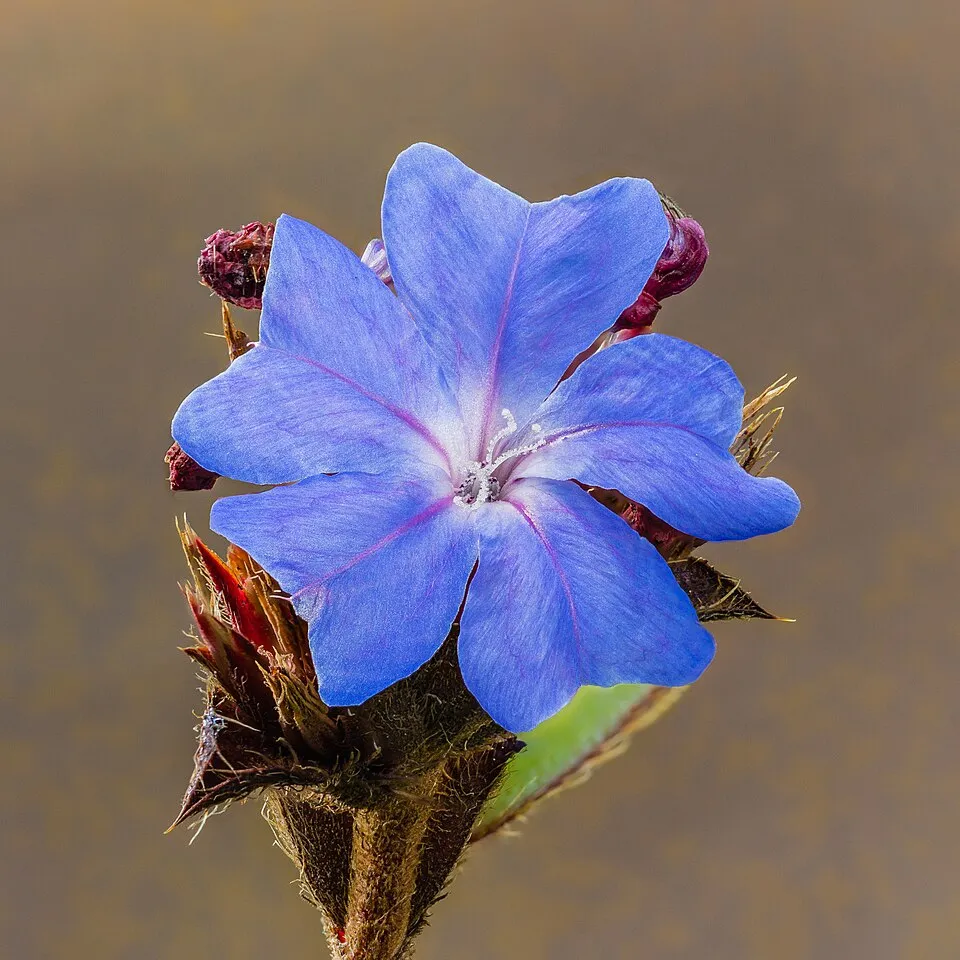
Plumbago auriculata, commonly known as Cape Plumbago or Skyflower, is an evergreen shrub belonging to the Plumbaginaceae family. Native to the warm, temperate regions of South Africa, particularly the Eastern Cape, this species is characterized by its vigorous, sprawling growth habit. It typically reaches heights of 1 to 3 meters and can spread between 2 to 4 meters, forming an attractive, informal hedge or groundcover.
The plant features slender, arching stems adorned with bright green, ovate to oblong leaves, which are usually alternate and have entire margins. Its most striking feature is the profusion of delicate, sky-blue, white, or occasionally deep blue flowers, borne in terminal racemes or panicles. Each flower possesses five distinct petals that are fused at the base into a slender tube, creating a charming, somewhat trumpet-like appearance.
These blooms are present for extended periods, especially during warmer months, making Plumbago auriculata a popular ornamental plant globally. The fruit is a small, glandular capsule containing a single seed, often covered in sticky hairs facilitating dispersal. Its adaptability to various conditions, from full sun to partial shade, and its relatively low maintenance requirements contribute to its widespread cultivation in Mediterranean and subtropical climates.
Trusted Scientific References
1. Authoritative external sources for Plumbago auriculata
1.1 Wikipedia — Plumbago auriculata
1.2 Kew POWO (Plants of the World Online)
1.3 PubMed — peer-reviewed research
1.4 NCBI Taxonomy Browser
1.5 GBIF — Global Biodiversity
1.6Plumbago should be interpreted through verified botanical identity, practical care, and responsible safety language. This recovery note adds the missing context needed for a complete profile: match light to the plant's habit, use well-drained soil, water according to season, and avoid unsupported medicinal or edible claims. For publishing, the plant can be presented as a source-backed garden plant with clear care guidance, common problem diagnosis, and conservative safety wording.
1.1.Plumbago — Key Features
- ✓ <strong>Botanical Name</strong> — Plumbago auriculata, also known as Cape Plumbago or Skyflower.
- ✓ <strong>Family</strong> — Plumbaginaceae.
- ✓ <strong>Native Range</strong> — South Africa (Eastern Cape).
- ✓ <strong>Growth Habit</strong> — Fast-growing, sprawling evergreen shrub, 1-3 m tall, 2-4 m wide.
- ✓ <strong>Flowers</strong> — Profuse, sky-blue, white, or deep blue, five-petaled, trumpet-shaped blooms.
- ✓ <strong>Leaves</strong> — Bright green, ovate to oblong, alternate.
- ✓ <strong>Key Compound</strong> — Plumbagin, a potent naphthoquinone.
- ✓ <strong>Medicinal Uses</strong> — Traditional topical for skin ailments, wounds; internal for fever, parasites (with caution).
- ✓ <strong>Cultivation</strong> — Full sun to partial shade, well-drained soil, drought-tolerant once established.
- ✓ <strong>Toxicity</strong> — Contains plumbagin, which can cause skin irritation and is toxic if ingested.
1.2.Plumbago — Quick Summary
- ✓ Cape Plumbago is a South African ornamental shrub with sky-blue flowers.
- ✓ Traditionally used for anti-inflammatory, antimicrobial, and wound-healing properties.
- ✓ Contains plumbagin, a potent naphthoquinone with significant bioactivity.
- ✓ Primarily recommended for external use due to potential toxicity upon ingestion.
- ✓ Cultivated for its beauty and adaptability in warm climates.
- ✓ Requires careful handling due to skin irritant properties.
2.Plumbago — Scientific Identity
3.Plumbago — Quick Facts
4.Plumbago — Appearance & Identification
5.Plumbago — Native Habitat
6.Plumbago — Water Requirements
- ✓ Sunlight — Thrives in full sun to partial shade; requires at least 6 hours of direct sunlight for prolific flowering.
- ✓ Soil — Prefers well-drained, moderately fertile soil; adaptable to sandy or loamy types.
- ✓ Watering — Water regularly until established, then becomes drought-tolerant; allow soil to dry slightly between waterings.
- ✓ Pruning — Prune heavily in late winter or early spring to maintain shape, promote bushiness, and encourage more blooms.
- ✓ Fertilization — Fertilize annually in spring with a balanced, slow-release fertilizer for optimal growth and flowering.
- ✓ Propagation — Easily propagated from semi-hardwood cuttings taken in summer or by seed.
- ✓ Temperature — Hardy in USDA zones 9-11; protect from frost in colder regions or grow as an annual.
- ✓ Pests/Diseases — Generally resistant, but monitor for aphids, whiteflies, or powdery mildew in humid conditions.
Reviewed by the Flora Medical Global Botanical Review Panel
Multi-disciplinary editorial group · Botany · Ethnobotany · Herbal-medicine literature
Who reviewed this: This page was checked by the Flora Medical Global Botanical Review Panel — an in-house editorial group of botany graduates, ethnobotany researchers, and horticulture practitioners who collectively maintain our 7,000+ plant encyclopedia. Meet the team.
Our 4-step verification process
1. Taxonomic verification
Scientific names and synonyms cross-checked against Kew POWO, World Flora Online, and The Plant List.
2. Phytochemical & medicinal cross-reference
Active compounds, traditional uses, and reported activities are cross-referenced with PubMed, USDA Dr. Duke's database, and peer-reviewed ethnobotanical literature.
3. Conservation & distribution check
Distribution, ecology, and conservation status confirmed against GBIF occurrence records and the IUCN Red List.
4. Editorial & safety review
Every entry passes an editorial pass for clarity, originality, and safety notices (toxicity, contraindications, dosage caveats) before publication.
Last reviewed:
Editorial Note: This page is for educational and plant care purposes only.
Written by: Flora Medical Global Editorial Team
Reviewed by: Flora Medical Global Botanical Review Panel
Last Updated: June 15, 2026







Plumbago — Comments & Community Reviews
Rate this plant