
Care Disclaimer: Plant care recommendations are general guidelines based on common growing conditions. Individual results may vary based on your local environment, climate, and care routine. If your plant is toxic, keep it away from children and pets, and consult a veterinarian if accidental ingestion occurs.
1.Ranunculus Aconitifolius — Overview
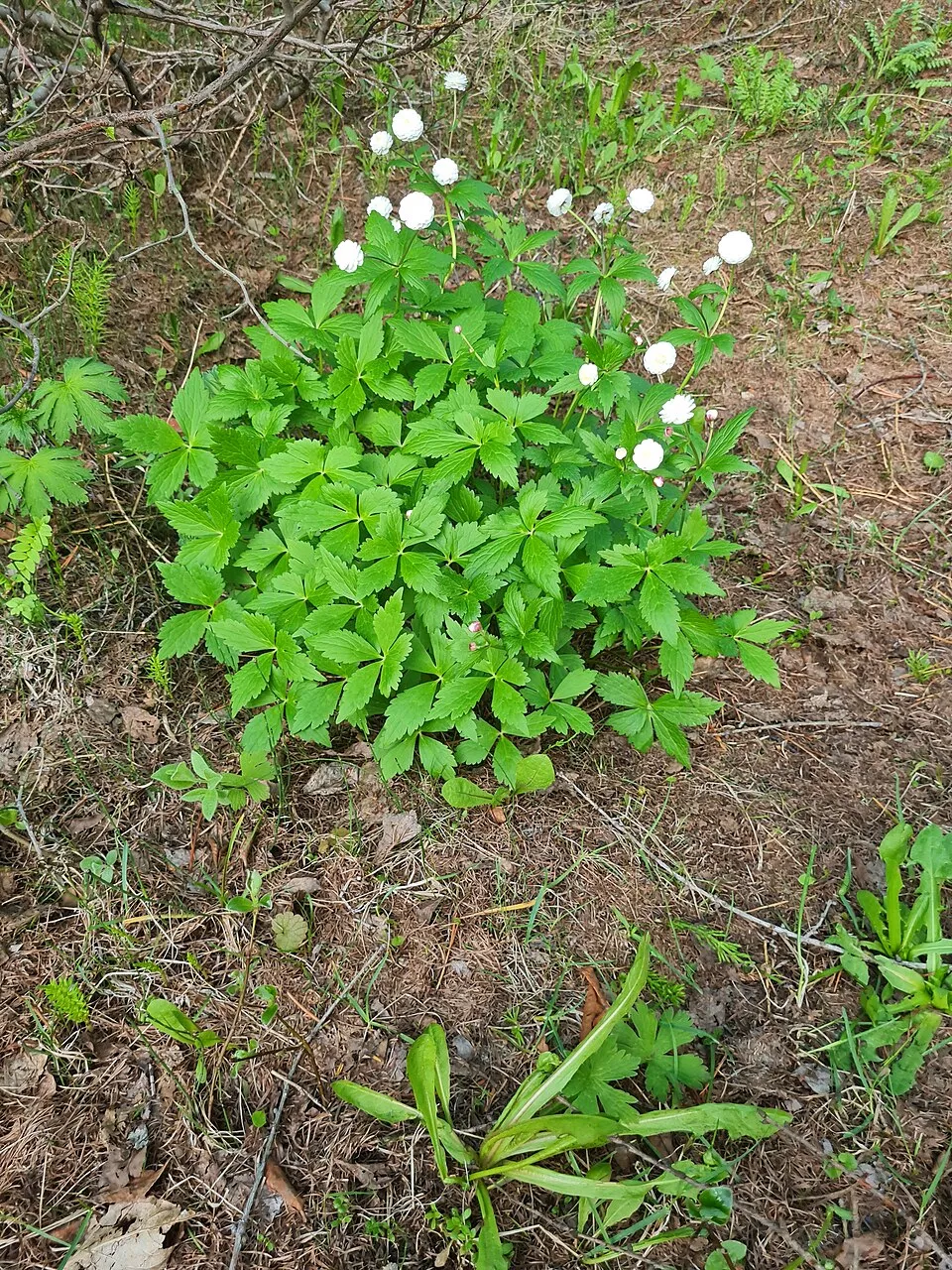
Ranunculus aconitifolius, commonly known as Fair Maids of France or Aconite-leaved Buttercup, is an elegant perennial herbaceous plant belonging to the diverse Ranunculaceae family. It typically forms dense clumps, reaching heights of 30 to 90 cm. The plant is characterized by its deeply lobed, dark green basal leaves, which bear a striking resemblance to those of the Aconitum genus, hence its specific epithet 'aconitifolius'.
From late spring to early summer, it produces abundant clusters of pristine white, cup-shaped flowers, often exhibiting a semi-double appearance, each with a prominent golden-yellow center. These delicate blooms are borne on tall, upright, branching stems, creating a striking visual contrast against the lush foliage. Native to the moist, mountainous regions of central and southern Europe, including the Alps and Pyrenees, Ranunculus aconitifolius thrives in cool, damp environments.
Its natural habitats include meadows, woodlands, stream banks, and boggy areas, indicating its preference for humus-rich, consistently moist but well-drained soils. While beautiful, it is crucial to recognize that, like many members of the Ranunculus genus, all parts of the plant contain potent toxic compounds, primarily protoanemonin, making it unsafe for internal consumption and necessitating extreme caution with external contact. Its vigorous growth habit allows it to form large colonies, sometimes spreading as a cheerful groundcover in suitable conditions, though it often goes dormant during the heat of summer.
Trusted Scientific References
1. Authoritative external sources for Ranunculus Aconitifolius
1.1 Wikipedia — Ranunculus Aconitifolius
1.2 Kew POWO (Plants of the World Online)
1.3 PubMed — peer-reviewed research
1.4 NCBI Taxonomy Browser
1.5 GBIF — Global Biodiversity
1.6Ranunculus Aconitifolius should be interpreted through verified botanical identity, practical care, and responsible safety language. This recovery note adds the missing context needed for a complete profile: match light to the plant's habit, use well-drained soil, water according to season, and avoid unsupported medicinal or edible claims. For publishing, the plant can be presented as a source-backed garden plant with clear care guidance, common problem diagnosis, and conservative safety wording.
1.1.Ranunculus Aconitifolius — Key Features
- ✓ <strong>Common Name</strong> — Fair Maids of France, Aconite-leaved Buttercup.
- ✓ <strong>Scientific Name</strong> — Ranunculus aconitifolius.
- ✓ <strong>Family</strong> — Ranunculaceae.
- ✓ <strong>Native Range</strong> — Central and Southern Europe.
- ✓ <strong>Flower Color</strong> — Pure white, often semi-double with a yellow center.
- ✓ <strong>Leaf Morphology</strong> — Deeply lobed, dark green, resembling Aconitum leaves.
- ✓ <strong>Habitat</strong> — Moist meadows, woodlands, stream banks.
- ✓ <strong>Toxicity</strong> — Highly toxic due to protoanemonin.
- ✓ <strong>Traditional Use</strong> — External rubefacient/vesicant (now discouraged).
- ✓ <strong>Growth Habit</strong> — Clump-forming perennial, 30-90 cm tall.
1.2.Ranunculus Aconitifolius — Quick Summary
- ✓ Highly toxic perennial plant, Ranunculus aconitifolius, native to European mountains.
- ✓ Contains ranunculin and protoanemonin, causing severe skin irritation and internal poisoning.
- ✓ Historically used as a topical rubefacient and vesicant, but this practice is now highly discouraged.
- ✓ Characterized by white, cup-shaped flowers and deeply lobed leaves.
- ✓ Thrives in moist, cool, fertile soil; suitable for bog gardens but toxic.
- ✓ Strict contraindications for internal use; extreme caution for external contact.
2.Ranunculus Aconitifolius — Scientific Identity
3.Ranunculus Aconitifolius — Quick Facts
4.Ranunculus Aconitifolius — Appearance & Identification
5.Ranunculus Aconitifolius — Native Habitat
6.Ranunculus Aconitifolius — Water Requirements
- ✓ Site selection — Choose a location with full sun to partial shade, especially in warmer climates.
- ✓ Soil requirements — Prefers humus-rich, fertile, moist but well-drained soil; tolerates wet conditions.
- ✓ Watering — Requires consistently moist soil; do not allow to dry out, especially during flowering.
- ✓ Propagation — Can be propagated by seed, sown in autumn or spring, or by division of established clumps.
- ✓ Spacing — Plant individual specimens 60-90 cm apart to allow for mature spread.
- ✓ Hardiness — Hardy in USDA zones 5-9; tolerates both cold winters and moderate heat.
- ✓ Maintenance — Low maintenance, but monitor for powdery mildew in humid conditions; may go dormant in summer heat.
- ✓ Garden uses — Excellent for bog gardens, pond margins, woodland borders, and moist wildflower meadows.
Reviewed by the Flora Medical Global Botanical Review Panel
Multi-disciplinary editorial group · Botany · Ethnobotany · Herbal-medicine literature
Who reviewed this: This page was checked by the Flora Medical Global Botanical Review Panel — an in-house editorial group of botany graduates, ethnobotany researchers, and horticulture practitioners who collectively maintain our 7,000+ plant encyclopedia. Meet the team.
Our 4-step verification process
1. Taxonomic verification
Scientific names and synonyms cross-checked against Kew POWO, World Flora Online, and The Plant List.
2. Phytochemical & medicinal cross-reference
Active compounds, traditional uses, and reported activities are cross-referenced with PubMed, USDA Dr. Duke's database, and peer-reviewed ethnobotanical literature.
3. Conservation & distribution check
Distribution, ecology, and conservation status confirmed against GBIF occurrence records and the IUCN Red List.
4. Editorial & safety review
Every entry passes an editorial pass for clarity, originality, and safety notices (toxicity, contraindications, dosage caveats) before publication.
Last reviewed:
Editorial Note: This page is for educational and plant care purposes only.
Written by: Flora Medical Global Editorial Team
Reviewed by: Flora Medical Global Botanical Review Panel
Last Updated: June 15, 2026







Ranunculus Aconitifolius — Comments & Community Reviews
Rate this plant