
Care Disclaimer: Plant care recommendations are general guidelines based on common growing conditions. Individual results may vary based on your local environment, climate, and care routine. If your plant is toxic, keep it away from children and pets, and consult a veterinarian if accidental ingestion occurs.
1.Ranunculus Repens Pleniflorus — Overview
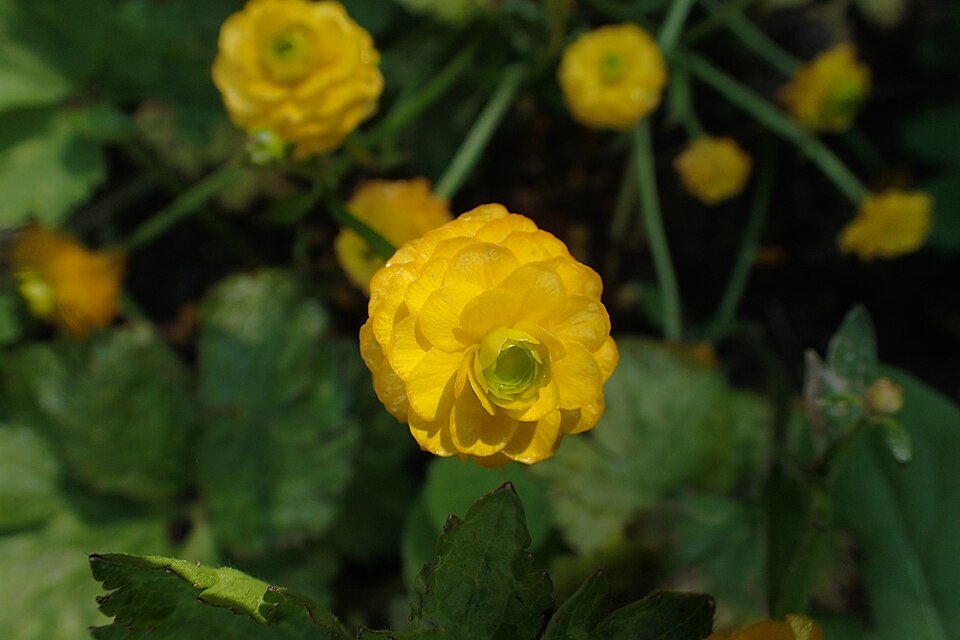
Ranunculus repens 'Pleniflorus', commonly recognized as the double-flowered creeping buttercup, is a distinguished cultivar derived from the ubiquitous Ranunculus repens. This resilient perennial herbaceous plant is noted for its characteristically vigorous, stoloniferous growth habit, which allows it to form expansive, dense ground cover. The foliage consists of trifoliate or deeply palmately lobed leaves, each featuring coarsely toothed margins and borne upon hairy petioles. The most notable horticultural attribute of 'Pleniflorus' is its profusion of vibrant, glossy yellow double flowers, which exhibit a distinctive pom-pom-like appearance.
These sterile blooms, unlike those of the wild type, do not produce viable seeds, thereby preventing sexual reproduction. However, its robust vegetative propagation via extensive stolons ensures rapid spread and establishment in suitable environments. The plant thrives optimally in moist, well-drained soil conditions and demonstrates considerable adaptability to a range of light exposures, from full sun to partial shade. While aesthetically pleasing, its aggressive growth can pose challenges in cultivated garden settings if not diligently managed.
It is frequently encountered in lawns, meadows, and various disturbed habitats, underscoring its broad ecological adaptability. The characteristic glossiness of its petals, a hallmark of the Ranunculus genus, contributes significantly to its visual appeal and light-reflecting properties.
Trusted Scientific References
1. Authoritative external sources for Ranunculus Repens Pleniflorus
1.1 Wikipedia — Ranunculus Repens Pleniflorus
1.2 Kew POWO (Plants of the World Online)
1.3 PubMed — peer-reviewed research
1.4 NCBI Taxonomy Browser
1.5 GBIF — Global Biodiversity
1.6Ranunculus Repens Pleniflorus should be interpreted through verified botanical identity, practical care, and responsible safety language. This recovery note adds the missing context needed for a complete profile: match light to the plant's habit, use well-drained soil, water according to season, and avoid unsupported medicinal or edible claims. For publishing, the plant can be presented as a source-backed garden plant with clear care guidance, common problem diagnosis, and conservative safety wording.
1.1.Ranunculus Repens Pleniflorus — Key Features
- ✓ <strong>Species Name</strong> — Ranunculus repens 'Pleniflorus'.
- ✓ <strong>Common Name</strong> — Double-flowered Creeping Buttercup.
- ✓ <strong>Plant Type</strong> — Perennial herbaceous groundcover.
- ✓ <strong>Flower Color</strong> — Vibrant, glossy yellow.
- ✓ <strong>Flower Morphology</strong> — Double, pom-pom-like flowers.
- ✓ <strong>Reproduction</strong> — Sterile flowers; propagates vegetatively via stolons.
- ✓ <strong>Growth Habit</strong> — Vigorous, creeping, mat-forming.
- ✓ <strong>Habitat</strong> — Moist soils, full sun to partial shade, lawns, meadows.
- ✓ <strong>Toxicity</strong> — Highly toxic when fresh, containing protoanemonin.
- ✓ <strong>Historical Use</strong> — Counter-irritant, rubefacient (topical, with severe risks).
1.2.Ranunculus Repens Pleniflorus — Quick Summary
- ✓ Vigorous, double-flowered creeping buttercup, Ranunculus repens 'Pleniflorus'.
- ✓ Known for its bright yellow, sterile pom-pom flowers and aggressive stoloniferous spread.
- ✓ Historically used topically as a counter-irritant and vesicant, but highly toxic.
- ✓ Contains protoanemonin, responsible for severe skin and internal irritation.
- ✓ Not recommended for medicinal use due to significant safety concerns and toxicity.
- ✓ Primarily an ornamental plant with invasive tendencies in gardens.
2.Ranunculus Repens Pleniflorus — Scientific Identity
3.Ranunculus Repens Pleniflorus — Quick Facts
4.Ranunculus Repens Pleniflorus — Appearance & Identification
5.Ranunculus Repens Pleniflorus — Native Habitat
6.Ranunculus Repens Pleniflorus — Water Requirements
- ✓ Soil Preference — Thrives in moist, well-drained loams; tolerates clay but prefers rich organic matter.
- ✓ Light Requirements — Adaptable to full sun to partial shade, with best flowering in brighter conditions.
- ✓ Water Needs — Requires consistent moisture, especially during dry periods; avoid waterlogging.
- ✓ Propagation — Primarily propagates vegetatively via stolons; can be divided in spring or fall.
- ✓ Hardiness Zone — Hardy in USDA zones 3-9, tolerating a wide range of climates.
- ✓ Maintenance — Aggressive spreader; regular monitoring and removal of stolons are essential to prevent invasiveness.
- ✓ Fertilization — Benefits from a balanced, slow-release fertilizer in early spring, especially in poor soils.
- ✓ Pest and Disease — Generally robust, but can be susceptible to powdery mildew in humid conditions or slug damage.
Reviewed by the Flora Medical Global Botanical Review Panel
Multi-disciplinary editorial group · Botany · Ethnobotany · Herbal-medicine literature
Who reviewed this: This page was checked by the Flora Medical Global Botanical Review Panel — an in-house editorial group of botany graduates, ethnobotany researchers, and horticulture practitioners who collectively maintain our 7,000+ plant encyclopedia. Meet the team.
Our 4-step verification process
1. Taxonomic verification
Scientific names and synonyms cross-checked against Kew POWO, World Flora Online, and The Plant List.
2. Phytochemical & medicinal cross-reference
Active compounds, traditional uses, and reported activities are cross-referenced with PubMed, USDA Dr. Duke's database, and peer-reviewed ethnobotanical literature.
3. Conservation & distribution check
Distribution, ecology, and conservation status confirmed against GBIF occurrence records and the IUCN Red List.
4. Editorial & safety review
Every entry passes an editorial pass for clarity, originality, and safety notices (toxicity, contraindications, dosage caveats) before publication.
Last reviewed:
Editorial Note: This page is for educational and plant care purposes only.
Written by: Flora Medical Global Editorial Team
Reviewed by: Flora Medical Global Botanical Review Panel
Last Updated: June 15, 2026







Ranunculus Repens Pleniflorus — Comments & Community Reviews
Rate this plant