
Care Disclaimer: Plant care recommendations are general guidelines based on common growing conditions. Individual results may vary based on your local environment, climate, and care routine. If your plant is toxic, keep it away from children and pets, and consult a veterinarian if accidental ingestion occurs.
1.Red Hot Poker — Overview
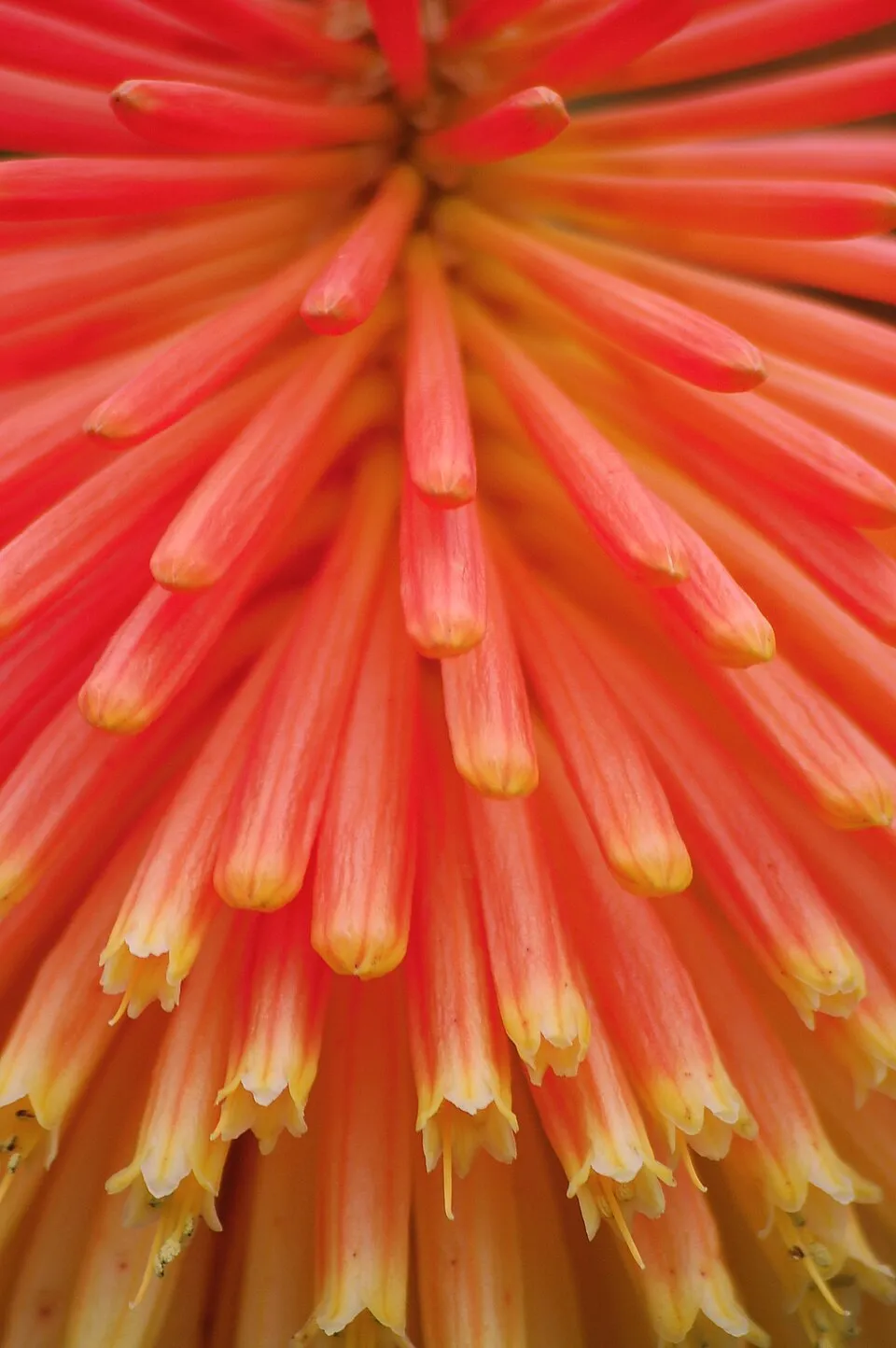
Kniphofia rooperi, commonly known as Rooper's Red Hot Poker or simply Red Hot Poker, is a striking ornamental perennial native to the Eastern Cape of South Africa, belonging to the family Asphodelaceae. This robust species is celebrated for its dramatic, torch-like flower spikes that emerge in late summer and autumn, providing a vibrant display when many other garden plants begin to wane. The inflorescence is a dense, cylindrical raceme, typically measuring 15-30 cm in length, densely packed with tubular flowers.
These flowers exhibit a captivating color gradient, transitioning from bright orange at the tips to a deeper red or scarlet at the base, often with subtle yellow or green accents. The individual flowers are pendulous, with prominent stamens and styles that extend beyond the petals, creating a delicate, feathery appearance. Complementing its fiery blooms, the plant forms a substantial, fountain-like clump of long, arching, strap-like leaves.
These dark green, somewhat leathery leaves can reach over a meter in length, contributing a significant architectural presence throughout the growing season. Kniphofia rooperi grows from a thick, woody rhizome, enabling its perennial nature and gradual spread. It thrives in full sun and well-drained, sandy or loamy soils, demonstrating good drought tolerance once established, making it a valuable choice for water-wise landscapes and attracting pollinators.
Trusted Scientific References
1. Authoritative external sources for Kniphofia rooperi
1.1 Wikipedia — Kniphofia rooperi
1.2 Kew POWO (Plants of the World Online)
1.3 PubMed — peer-reviewed research
1.4 NCBI Taxonomy Browser
1.5 GBIF — Global Biodiversity
1.6Red Hot Poker should be interpreted through verified botanical identity, practical care, and responsible safety language. This recovery note adds the missing context needed for a complete profile: match light to the plant's habit, use well-drained soil, water according to season, and avoid unsupported medicinal or edible claims. For publishing, the plant can be presented as a source-backed garden plant with clear care guidance, common problem diagnosis, and conservative safety wording.
1.1.Red Hot Poker — Key Features
- ✓ <strong>Striking ornamental perennial with torch</strong> — like flower spikes.
- ✓ <strong>Native to the</strong> — Native to the Eastern Cape of South Africa.
- ✓ <strong>Member of the</strong> — Member of the Asphodelaceae family, related to Aloes.
- ✓ <strong>Flowers transition from</strong> — Flowers transition from orange to red, appearing in late summer/autumn.
- ✓ <strong>Forms dense clumps of long, arching, strap</strong> — like foliage.
- ✓ <strong>Grows from a</strong> — Grows from a robust, woody rhizome.
- ✓ <strong>Drought</strong> — tolerant once established, suitable for xeriscaping.
- ✓ <strong>Attracts pollinators, including</strong> — Attracts pollinators, including hummingbirds and bees.
- ✓ <strong>Contains naphthoquinones like</strong> — Contains naphthoquinones like knipholone, unique to the genus.
- ✓ <strong>Traditional uses include anti</strong> — inflammatory and wound-healing applications.
1.2.Red Hot Poker — Quick Summary
- ✓ Red Hot Poker (Kniphofia rooperi) is a South African perennial known for vibrant, torch-like flowers.
- ✓ Possesses traditional medicinal uses for inflammation, wounds, and infections.
- ✓ Rich in anthraquinones, naphthoquinones, and flavonoids with diverse bioactivities.
- ✓ Thrives in full sun and well-drained soil, making it a drought-tolerant garden plant.
- ✓ Requires careful handling due to potential skin irritation and internal toxicity risks.
- ✓ Further scientific research is needed to fully validate its pharmacological potential.
2.Red Hot Poker — Scientific Identity
3.Red Hot Poker — Quick Facts
4.Red Hot Poker — Appearance & Identification
5.Red Hot Poker — Native Habitat
6.Red Hot Poker — Water Requirements
- ✓ Sunlight — Thrives in full sun, requiring at least 6-8 hours of direct sunlight daily for optimal flowering.
- ✓ Soil — Prefers well-drained, sandy or loamy soil; avoid heavy, waterlogged conditions to prevent root rot.
- ✓ Watering — Water regularly during the first growing season to establish roots; once established, it is drought-tolerant.
- ✓ Fertilization — Apply a balanced, slow-release fertilizer in spring, or compost, to support vigorous growth.
- ✓ Spacing — Plant individual specimens 60-90 cm apart to allow for mature clump size and air circulation.
- ✓ Propagation — Can be propagated by division of rhizomes in spring or autumn, or from seed.
- ✓ Pruning — Remove spent flower stalks after blooming to encourage reblooming and maintain a tidy appearance.
- ✓ Winter Care — In colder zones, provide a protective layer of mulch around the base to insulate rhizomes.
Reviewed by the Flora Medical Global Botanical Review Panel
Multi-disciplinary editorial group · Botany · Ethnobotany · Herbal-medicine literature
Who reviewed this: This page was checked by the Flora Medical Global Botanical Review Panel — an in-house editorial group of botany graduates, ethnobotany researchers, and horticulture practitioners who collectively maintain our 7,000+ plant encyclopedia. Meet the team.
Our 4-step verification process
1. Taxonomic verification
Scientific names and synonyms cross-checked against Kew POWO, World Flora Online, and The Plant List.
2. Phytochemical & medicinal cross-reference
Active compounds, traditional uses, and reported activities are cross-referenced with PubMed, USDA Dr. Duke's database, and peer-reviewed ethnobotanical literature.
3. Conservation & distribution check
Distribution, ecology, and conservation status confirmed against GBIF occurrence records and the IUCN Red List.
4. Editorial & safety review
Every entry passes an editorial pass for clarity, originality, and safety notices (toxicity, contraindications, dosage caveats) before publication.
Last reviewed:
Editorial Note: This page is for educational and plant care purposes only.
Written by: Flora Medical Global Editorial Team
Reviewed by: Flora Medical Global Botanical Review Panel
Last Updated: June 15, 2026







Red Hot Poker — Comments & Community Reviews
Rate this plant