
Care Disclaimer: Plant care recommendations are general guidelines based on common growing conditions. Individual results may vary based on your local environment, climate, and care routine. If your plant is toxic, keep it away from children and pets, and consult a veterinarian if accidental ingestion occurs.
1.Redbud — Overview
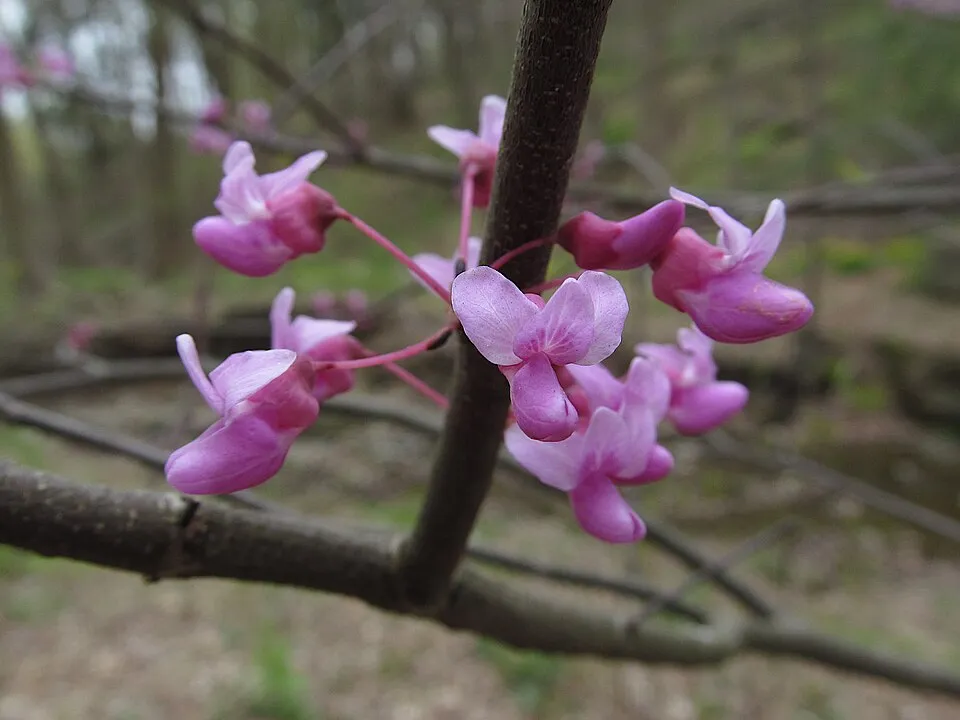
The Eastern Redbud, scientifically known as Cercis canadensis, is a captivating deciduous understory tree or large shrub belonging to the Fabaceae family. Native to the woodlands of eastern and central North America, its natural range extends from southern Canada down to northern Mexico, typically thriving in forest margins, open woods, and along stream banks. This species is celebrated for its distinctive growth habit, reaching heights of 20 to 30 feet with a comparable spread, often developing an elegant, multi-trunked form and an irregular, rounded crown. Its most striking feature is the spectacular display of vibrant, rosy-pink to purplish-red, pea-like flowers that emerge in early to mid-spring, often before the heart-shaped leaves unfurl.
This unique phenomenon, known as cauliflory, sees blossoms sprouting directly from older branches, the trunk, and even roots, creating a breathtaking visual spectacle. The flowers are borne in clusters, emitting a delicate, sweet fragrance that attracts early pollinators, particularly native bees. Following the floral show, the tree produces attractive, broadly cordate (heart-shaped) leaves, 3 to 6 inches across, which are a fresh green throughout summer before transitioning to a golden yellow in autumn. The fruit consists of flattened, reddish-brown pods, 2 to 4 inches long, which persist on the branches through winter, providing continued ornamental interest.
The bark is dark brown to black, often developing furrows with age, and the young twigs are characteristically slender and zigzagging. Cercis canadensis adapts well to various soil types but prefers moist, well-drained conditions in full sun to partial shade, making it a versatile and ecologically valuable ornamental tree.
Trusted Scientific References
1. Authoritative external sources for Cercis canadensis
1.1 Wikipedia — Cercis canadensis
1.2 Kew POWO (Plants of the World Online)
1.3 PubMed — peer-reviewed research
1.4 NCBI Taxonomy Browser
1.5 GBIF — Global Biodiversity
1.6Redbud should be interpreted through verified botanical identity, practical care, and responsible safety language. This recovery note adds the missing context needed for a complete profile: match light to the plant's habit, use well-drained soil, water according to season, and avoid unsupported medicinal or edible claims. For publishing, the plant can be presented as a source-backed garden plant with clear care guidance, common problem diagnosis, and conservative safety wording.
1.1.Redbud — Key Features
- ✓ <strong>Spectacular Spring Blooms</strong> — Profusion of vibrant pink-purple flowers directly on branches.
- ✓ <strong>Cauliflory</strong> — Flowers emerge from old wood, trunk, and roots.
- ✓ <strong>Heart</strong> — shaped Foliage — Distinctive cordate leaves.
- ✓ <strong>Edible Flowers</strong> — Tart flavor, used in salads and garnishes.
- ✓ <strong>Native to North America</strong> — Important ecological role.
- ✓ <strong>Medicinal History</strong> — Traditional use of bark for various ailments.
- ✓ <strong>Antioxidant Rich</strong> — High in flavonoids and phenolic compounds.
- ✓ <strong>Wildlife Attractor</strong> — Provides nectar for early pollinators.
- ✓ <strong>Adaptable Ornamental Tree</strong> — Suitable for diverse landscapes.
- ✓ <strong>Fall Color</strong> — Attractive yellow autumn foliage.
1.2.Redbud — Quick Summary
- ✓ Eastern Redbud (*Cercis canadensis*) is a North American native known for its stunning pink-purple spring flowers.
- ✓ Traditionally used for its astringent, anti-inflammatory, and antioxidant properties.
- ✓ Contains beneficial flavonoids, tannins, and phenolic acids.
- ✓ Flowers are edible and bark has historical medicinal uses for digestive and skin issues.
- ✓ Requires well-drained soil and sun to partial shade for cultivation.
- ✓ Exercise caution and consult a professional before medicinal use due to potential side effects and interactions.
2.Redbud — Scientific Identity
3.Redbud — Quick Facts
4.Redbud — Appearance & Identification
5.Redbud — Native Habitat
6.Redbud — Water Requirements
- ✓ Site Selection — Choose a location with full sun to partial shade; too much shade reduces flowering.
- ✓ Soil Requirements — Prefers well-drained, moist, fertile loams; tolerates clay but not consistently wet conditions.
- ✓ Planting — Plant in spring or fall; dig a hole twice as wide as the root ball and just as deep.
- ✓ Watering — Water regularly during the first growing season to establish roots; mature trees are moderately drought tolerant.
- ✓ Fertilization — Apply a balanced, slow-release fertilizer in early spring, especially for young trees.
- ✓ Pruning — Prune in late winter or early spring to remove dead, damaged, or crossing branches; avoid heavy pruning.
- ✓ Pest and Disease Management — Generally low maintenance but watch for canker, verticillium wilt, and leaf spot.
- ✓ Propagation — Can be propagated by seed (requires stratification), softwood cuttings, or grafting.
Reviewed by the Flora Medical Global Botanical Review Panel
Multi-disciplinary editorial group · Botany · Ethnobotany · Herbal-medicine literature
Who reviewed this: This page was checked by the Flora Medical Global Botanical Review Panel — an in-house editorial group of botany graduates, ethnobotany researchers, and horticulture practitioners who collectively maintain our 7,000+ plant encyclopedia. Meet the team.
Our 4-step verification process
1. Taxonomic verification
Scientific names and synonyms cross-checked against Kew POWO, World Flora Online, and The Plant List.
2. Phytochemical & medicinal cross-reference
Active compounds, traditional uses, and reported activities are cross-referenced with PubMed, USDA Dr. Duke's database, and peer-reviewed ethnobotanical literature.
3. Conservation & distribution check
Distribution, ecology, and conservation status confirmed against GBIF occurrence records and the IUCN Red List.
4. Editorial & safety review
Every entry passes an editorial pass for clarity, originality, and safety notices (toxicity, contraindications, dosage caveats) before publication.
Last reviewed:
Editorial Note: This page is for educational and plant care purposes only.
Written by: Flora Medical Global Editorial Team
Reviewed by: Flora Medical Global Botanical Review Panel
Last Updated: June 15, 2026







Redbud — Comments & Community Reviews
Rate this plant