

Care Disclaimer: Plant care recommendations are general guidelines based on common growing conditions. Individual results may vary based on your local environment, climate, and care routine. If your plant is toxic, keep it away from children and pets, and consult a veterinarian if accidental ingestion occurs.
1.Rhododendron Garden — Overview
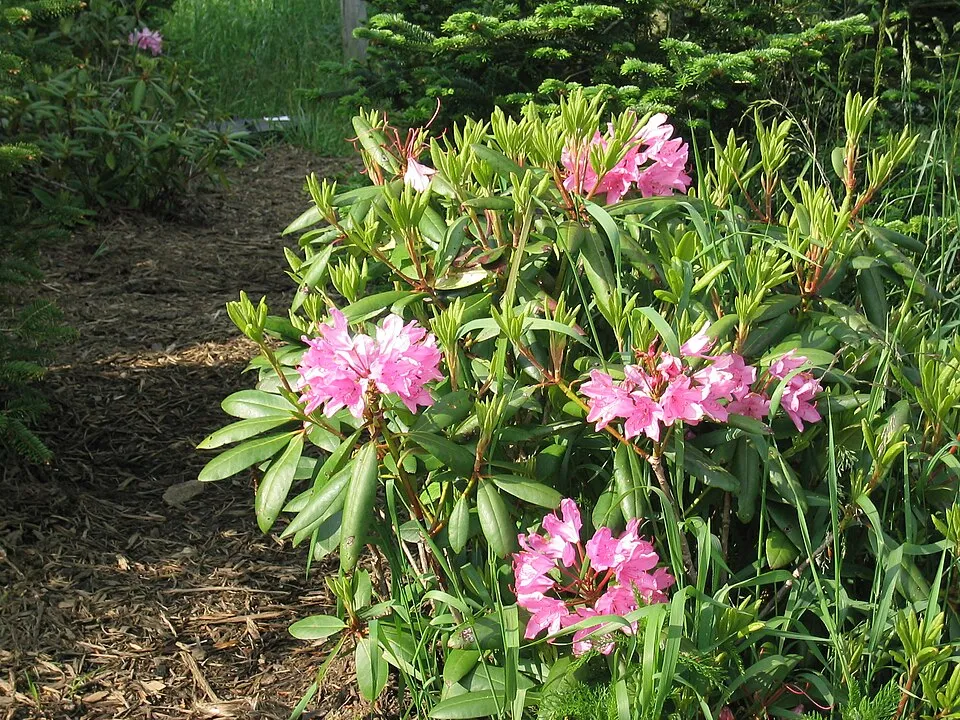
Rhododendron catawbiense, commonly known as Catawba Rhododendron, Mountain Rosebay, Purple Rhododendron, or Red Laurel, is a prominent, broadleaf evergreen shrub native to the higher elevations of the Appalachian Mountains in the eastern United States, spanning from Virginia south to Georgia and Alabama. This hardy member of the Ericaceae family typically grows as a mound-shaped shrub, reaching heights of 6 to 20 feet, characterized by stout, ascending branches and dense, dark green, glossy foliage that may acquire a yellowish tint in winter. It is celebrated for its spectacular floral display in late spring to early summer (April to June), featuring abundant clusters of large, bell-shaped, rosy-lilac to purple-pink flowers.
These showy inflorescences make it a highly prized ornamental plant, frequently utilized in landscaping and as a parent in hybridizing with less hardy species to create new cultivars. In its natural habitat, it forms dense thickets on rocky slopes and within mountain woodlands, thriving in the cool, humid conditions and acidic soils typical of these regions.
Trusted Scientific References
1. Authoritative external sources for Rhododendron catawbiense
1.1 Wikipedia — Rhododendron catawbiense
1.2 Kew POWO (Plants of the World Online)
1.3 PubMed — peer-reviewed research
1.4 NCBI Taxonomy Browser
1.5 GBIF — Global Biodiversity
1.6Rhododendron Garden should be interpreted through verified botanical identity, practical care, and responsible safety language. This recovery note adds the missing context needed for a complete profile: match light to the plant's habit, use well-drained soil, water according to season, and avoid unsupported medicinal or edible claims. For publishing, the plant can be presented as a source-backed garden plant with clear care guidance, common problem diagnosis, and conservative safety wording.
1.7Rhododendron Garden (Rhododendron catawbiense) is maintained in this recovery file as a complete garden profile with practical care, safety, and identification context. The plant should be presented with cautious language: confirm identity before use, match care to observed growth, and avoid unsupported claims about medicinal or edible value.
1.1.Rhododendron Garden — Key Features
- ✓ <strong>Evergreen Shrub</strong> — Maintains foliage throughout the year, providing year-round interest.
- ✓ <strong>Showy Flowers</strong> — Produces abundant clusters of bell-shaped, rosy-lilac to purple-pink blooms.
- ✓ <strong>Native to Appalachia</strong> — Indigenous to the mountainous regions of the eastern United States.
- ✓ <strong>High Toxicity</strong> — Contains grayanotoxins, rendering it poisonous if ingested.
- ✓ <strong>Acidic Soil Lover</strong> — Thrives in highly acidic, organic-rich, and well-drained soils.
- ✓ <strong>Partial Shade Preference</strong> — Best growth and flowering occur in locations with morning sun and afternoon shade.
- ✓ <strong>Cold Hardy</strong> — Tolerant of cold temperatures within its native range.
- ✓ <strong>Ornamental Value</strong> — Widely cultivated for its aesthetic appeal in gardens and landscapes.
- ✓ <strong>Parent to Hybrids</strong> — Used extensively in the development of numerous hybrid rhododendron cultivars.
- ✓ <strong>Wildlife Value (Limited)</strong> — While attractive, its toxicity limits its direct value to most foraging wildlife.
1.2.Rhododendron Garden — Quick Summary
- ✓ Rhododendron catawbiense is a toxic evergreen shrub native to Appalachia, prized for its ornamental flowers.
- ✓ Contains grayanotoxins, making all parts, including nectar, highly poisonous if ingested.
- ✓ Symptoms of poisoning include severe gastrointestinal, cardiovascular, and neurological effects.
- ✓ Primary use is ornamental; no safe internal medicinal applications.
- ✓ Requires acidic, well-drained soil and partial shade for cultivation.
- ✓ Essential to avoid consumption by humans and animals, and to be cautious with handling.
2.Rhododendron Garden — Scientific Identity
3.Rhododendron Garden — Quick Facts
4.Rhododendron Garden — Appearance & Identification
5.Rhododendron Garden — Native Habitat
6.Rhododendron Garden — Water Requirements
- ✓ Soil Preference — Requires highly acidic soil (pH 4.5-5.5) rich in organic matter and exceptionally well-drained to prevent root rot, mimicking its native woodland conditions.
- ✓ Light Requirements — Thrives in partial shade, preferably with morning sun and afternoon shade; excessive direct sun can scorch leaves, while deep shade may inhibit prolific flowering.
- ✓ Watering — Needs consistent moisture, particularly during dry spells and its establishment phase, but is highly intolerant of waterlogging; prefers humid environments.
- ✓ Pruning — Generally requires minimal pruning; remove spent flower trusses carefully to encourage new growth and prevent seed formation, and selectively prune dead, damaged, or crossing branches.
- ✓ Fertilization — Use slow-release, acid-forming fertilizers specifically formulated for rhododendrons and azaleas, applied judiciously in early spring before new growth emerges.
- ✓ Propagation — Can be effectively propagated by semi-hardwood stem cuttings taken in late summer, by layering, or by seed, although seed propagation is a considerably slower process.
- ✓ Pest and Disease Management — Monitor diligently for common issues such as lace bugs, rhododendron borers, fungal leaf spots (e.g., powdery mildew), and root rot, addressing problems promptly with appropriate organic or chemical treatments.
- ✓ Winter Protection — In colder climate zones, provide adequate winter protection from harsh winds and extreme cold, especially for younger plants, using burlap wraps or anti-desiccants.
Reviewed by the Flora Medical Global Botanical Review Panel
Multi-disciplinary editorial group · Botany · Ethnobotany · Herbal-medicine literature
Who reviewed this: This page was checked by the Flora Medical Global Botanical Review Panel — an in-house editorial group of botany graduates, ethnobotany researchers, and horticulture practitioners who collectively maintain our 7,000+ plant encyclopedia. Meet the team.
Our 4-step verification process
1. Taxonomic verification
Scientific names and synonyms cross-checked against Kew POWO, World Flora Online, and The Plant List.
2. Phytochemical & medicinal cross-reference
Active compounds, traditional uses, and reported activities are cross-referenced with PubMed, USDA Dr. Duke's database, and peer-reviewed ethnobotanical literature.
3. Conservation & distribution check
Distribution, ecology, and conservation status confirmed against GBIF occurrence records and the IUCN Red List.
4. Editorial & safety review
Every entry passes an editorial pass for clarity, originality, and safety notices (toxicity, contraindications, dosage caveats) before publication.
Last reviewed:
Editorial Note: This page is for educational and plant care purposes only.
Written by: Flora Medical Global Editorial Team
Reviewed by: Flora Medical Global Botanical Review Panel
Last Updated: June 15, 2026







Rhododendron Garden — Comments & Community Reviews
Rate this plant