

Care Disclaimer: Plant care recommendations are general guidelines based on common growing conditions. Individual results may vary based on your local environment, climate, and care routine. If your plant is toxic, keep it away from children and pets, and consult a veterinarian if accidental ingestion occurs.
1.Sidalcea Malviflora — Overview
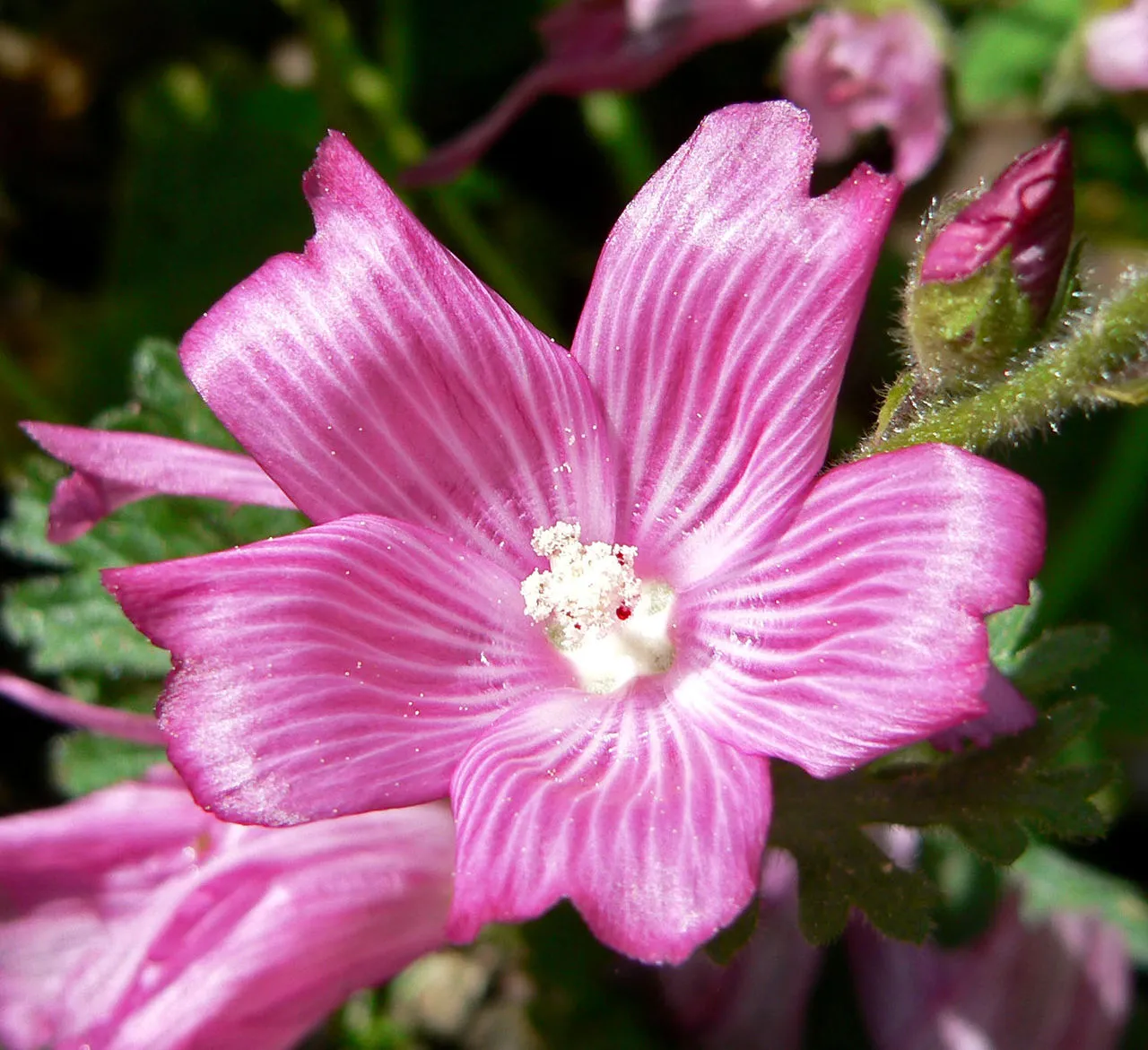
Sidalcea malviflora, commonly known as checkerbloom, prairie mallow, or pink mallow, is a captivating perennial herbaceous plant indigenous to western North America, primarily found across California, Oregon, and extending into southwestern Washington. Belonging to the Malvaceae family, which includes well-known relatives like hollyhocks and cotton, this species typically reaches heights of 30 to 90 cm (1 to 3 feet). Its morphology is characterized by attractive, mallow-like flowers, generally ranging from soft pink to vibrant purplish-magenta, occasionally appearing in white or deeper rose hues. These flowers are arranged in erect, often branched racemes atop slender stems, each featuring five petals, frequently notched at the apex, and numerous stamens fused into a central column.
Sidalcea malviflora is gynodioecious, meaning populations contain both hermaphrodite and female-only flowering plants. The leaves exhibit dimorphism: basal leaves are broadly ovate and distinctly lobed, while upper leaves become progressively smaller and more deeply divided, often palmately lobed or dissected. Stems are erect, slender, and can be covered in soft, branched (stellate) hairs, often trailing or reclining and capable of rooting at the base. The plant possesses a strong taproot and short rhizomes, enabling it to form clumps over time.
S. malviflora is remarkably adaptable, thriving in diverse habitats from grasslands and open woodlands to serpentine soils, and tolerating conditions ranging from moist meadows to seasonally dry, upland slopes. Its resilience, attractive floral display, and role as a crucial nectar source for pollinators, including specialist native bees and the federally endangered Fender's blue butterfly, make it invaluable for native plant gardens and ecological restoration efforts.
Trusted Scientific References
1. Authoritative external sources for Sidalcea malviflora
1.1 Wikipedia — Sidalcea malviflora
1.2 Kew POWO (Plants of the World Online)
1.3 PubMed — peer-reviewed research
1.4 NCBI Taxonomy Browser
1.5 GBIF — Global Biodiversity
1.1.Sidalcea Malviflora — Key Features
- ✓ <strong>Perennial herbaceous plant, typically 30</strong> — 90 cm tall.
- ✓ <strong>Features attractive pink to purplish, mallow</strong> — like flowers.
- ✓ <strong>Native to Western</strong> — Native to Western North America, particularly California and Oregon.
- ✓ <strong>Abundant in mucilage,</strong> — Abundant in mucilage, providing significant demulcent properties.
- ✓ <strong>Contains anti</strong> — inflammatory flavonoids and phenolic compounds.
- ✓ <strong>Young leaves are</strong> — Young leaves are edible, suitable for raw or cooked consumption.
- ✓ <strong>Important pollinator plant,</strong> — Important pollinator plant, supporting bees and the Fender's blue butterfly.
- ✓ <strong>Resilient and adaptable</strong> — Resilient and adaptable to various grassland and woodland habitats.
- ✓ <strong>Exhibits gynodioecious reproductive</strong> — Exhibits gynodioecious reproductive characteristics.
- ✓ <strong>Spreads via rhizomes,</strong> — Spreads via rhizomes, forming clumps, and is generally pest-resistant.
1.2.Sidalcea Malviflora — Quick Summary
- ✓ Native to Western North America, Sidalcea malviflora is a perennial mallow known for its attractive pink-purplish flowers.
- ✓ Rich in soothing mucilage, anti-inflammatory flavonoids, and phenolic compounds.
- ✓ Traditionally valued for its demulcent, anti-inflammatory, and emollient properties, aiding respiratory, digestive, and skin health.
- ✓ Its young leaves are edible, offering a mild flavor for culinary use.
- ✓ Serves as an important pollinator plant, attracting specialist bees and butterflies.
- ✓ Generally considered safe for use, though caution is advised regarding medication interactions and use during pregnancy.
2.Sidalcea Malviflora — Scientific Identity
3.Sidalcea Malviflora — Quick Facts
4.Sidalcea Malviflora — Appearance & Identification
5.Sidalcea Malviflora — Native Habitat
6.Sidalcea Malviflora — Water Requirements
- ✓ Prefers a deep, fertile, well-drained but moisture-retentive soil for optimal growth.
- ✓ Thrives in full sun to partial shade, especially benefiting from some afternoon shade in hotter climates.
- ✓ Tolerates temperatures down to approximately -15°C, but benefit from winter mulching in areas with prolonged cold without snow cover.
- ✓ Propagate from seed sown in spring in a greenhouse; prick out seedlings into individual pots and plant out in summer.
- ✓ Division of mature clumps in early spring is an effective method for propagation and revitalization.
- ✓ Cut back spent flower stalks immediately after the first flush of blooms to encourage a second flowering period in late summer.
- ✓ Requires adequate drainage to prevent root rot, though it is adaptable to a range of soil types.
- ✓ Attracts a variety of pollinators, including bees and butterflies, making it an excellent choice for biodiversity gardens.
Reviewed by the Flora Medical Global Botanical Review Panel
Multi-disciplinary editorial group · Botany · Ethnobotany · Herbal-medicine literature
Who reviewed this: This page was checked by the Flora Medical Global Botanical Review Panel — an in-house editorial group of botany graduates, ethnobotany researchers, and horticulture practitioners who collectively maintain our 7,000+ plant encyclopedia. Meet the team.
Our 4-step verification process
1. Taxonomic verification
Scientific names and synonyms cross-checked against Kew POWO, World Flora Online, and The Plant List.
2. Phytochemical & medicinal cross-reference
Active compounds, traditional uses, and reported activities are cross-referenced with PubMed, USDA Dr. Duke's database, and peer-reviewed ethnobotanical literature.
3. Conservation & distribution check
Distribution, ecology, and conservation status confirmed against GBIF occurrence records and the IUCN Red List.
4. Editorial & safety review
Every entry passes an editorial pass for clarity, originality, and safety notices (toxicity, contraindications, dosage caveats) before publication.
Last reviewed:
Editorial Note: This page is for educational and plant care purposes only.
Written by: Flora Medical Global Editorial Team
Reviewed by: Flora Medical Global Botanical Review Panel
Last Updated: June 15, 2026







Sidalcea Malviflora — Comments & Community Reviews
Rate this plant