
Care Disclaimer: Plant care recommendations are general guidelines based on common growing conditions. Individual results may vary based on your local environment, climate, and care routine. If your plant is toxic, keep it away from children and pets, and consult a veterinarian if accidental ingestion occurs.
1.Sisyrinchium Angustifolium — Overview
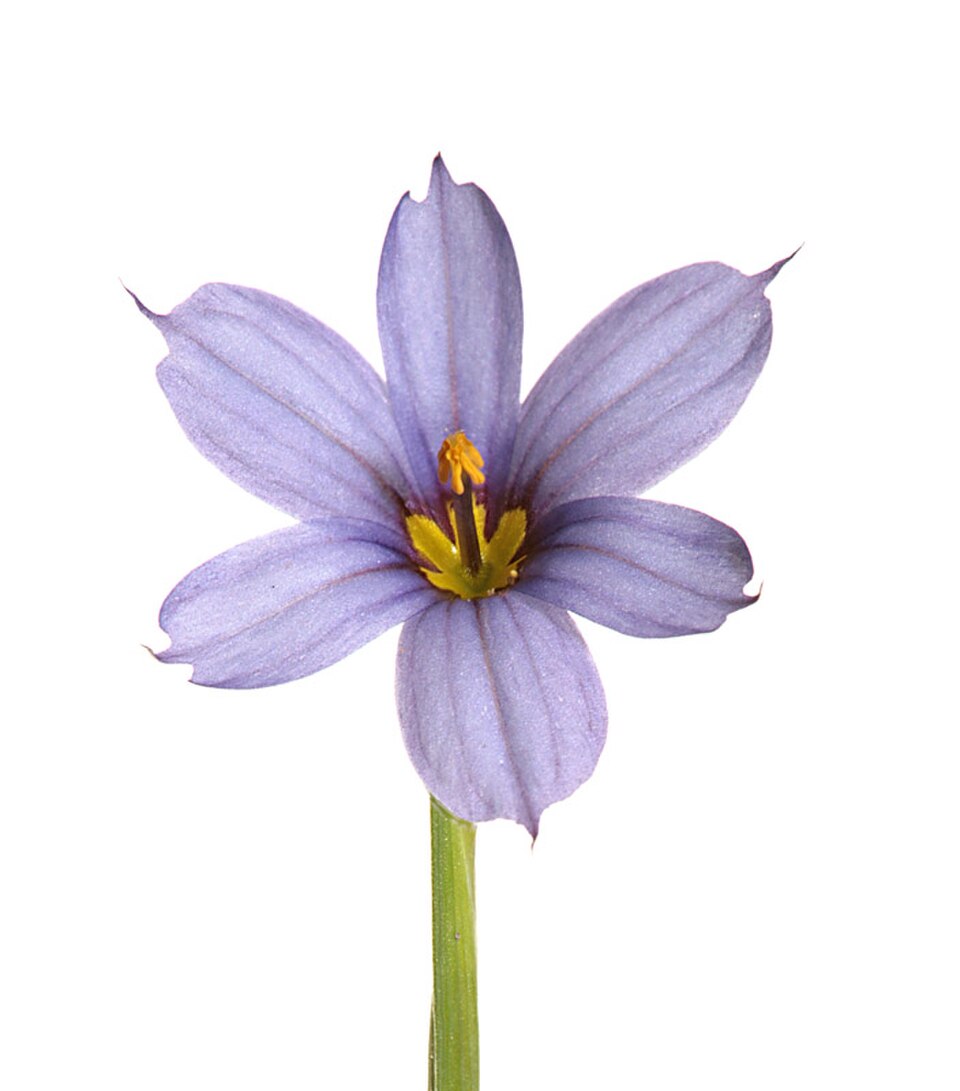
Sisyrinchium angustifolium, commonly known as Blue-eyed Grass, is an enchanting perennial herbaceous plant belonging to the Iridaceae, or Iris family. Despite its common name, it is not a true grass but rather a monocot characterized by its distinctive morphology. The plant forms dense, fan-like clumps of slender, grass-like leaves, typically growing 15-50 cm tall.
From this basal foliage emerge delicate, star-shaped flowers, usually bright blue to violet-purple, each featuring a prominent yellow center that gives rise to its 'golden eye' moniker. These charming blossoms typically appear from late spring through early summer, adding a splash of color to its native habitats. Sisyrinchium angustifolium is indigenous to eastern and central North America, extending into parts of Canada and some western states.
It thrives in a variety of moist, open environments, including meadows, prairies, open woodlands, along stream banks, and in disturbed areas. Its adaptability, attractive appearance, and low maintenance requirements make it a popular choice for rock gardens, borders, and naturalized landscapes, where it contributes to local biodiversity.
Trusted Scientific References
1. Authoritative external sources for Sisyrinchium angustifolium
1.1 Wikipedia — Sisyrinchium angustifolium
1.2 Kew POWO (Plants of the World Online)
1.3 PubMed — peer-reviewed research
1.4 NCBI Taxonomy Browser
1.5 GBIF — Global Biodiversity
1.6Sisyrinchium Angustifolium should be interpreted through verified botanical identity, practical care, and responsible safety language. This recovery note adds the missing context needed for a complete profile: match light to the plant's habit, use well-drained soil, water according to season, and avoid unsupported medicinal or edible claims. For publishing, the plant can be presented as a source-backed garden plant with clear care guidance, common problem diagnosis, and conservative safety wording.
1.7Sisyrinchium Angustifolium (Sisyrinchium angustifolium) is maintained in this recovery file as a complete garden profile with practical care, safety, and identification context. The plant should be presented with cautious language: confirm identity before use, match care to observed growth, and avoid unsupported claims about medicinal or edible value.
1.1.Sisyrinchium Angustifolium — Key Features
- ✓ <strong>Native North American</strong> — Native North American perennial herb.
- ✓ <strong>Member of the</strong> — Member of the Iridaceae (Iris family).
- ✓ <strong>Characterized by slender, grass</strong> — like foliage.
- ✓ <strong>Produces delicate, star</strong> — shaped blue-violet flowers with bright yellow centers.
- ✓ <strong>Blooms typically occur</strong> — Blooms typically occur from late spring through early summer.
- ✓ <strong>Historically utilized by</strong> — Historically utilized by various Native American tribes for traditional medicinal purposes.
- ✓ <strong>Contains beneficial phytochemicals</strong> — Contains beneficial phytochemicals including flavonoids and saponins.
- ✓ <strong>Adaptable and low</strong> — maintenance ornamental plant for gardens and naturalized areas.
- ✓ <strong>Valued for its potential antioxidant and mild anti</strong> — inflammatory properties.
- ✓ <strong>Requires further scientific</strong> — Requires further scientific research to fully validate its traditional medicinal claims and safety profile.
1.2.Sisyrinchium Angustifolium — Quick Summary
- ✓ Blue-eyed Grass (Sisyrinchium angustifolium) is a charming perennial from the Iris family, known for its vibrant blue-violet flowers.
- ✓ Historically utilized by Native American tribes for mild respiratory, digestive, and topical skin support.
- ✓ Contains beneficial phytochemicals such as flavonoids, saponins, and potential iridoid glycosides with antioxidant properties.
- ✓ Modern scientific validation for its medicinal efficacy is limited, underscoring the need for further research.
- ✓ Easily cultivated in gardens, preferring moist, well-drained soil and full sun to partial shade, making it a low-maintenance ornamental.
- ✓ Medicinal use is not widely recognized in modern herbalism and requires expert guidance due to potential toxicity and lack of comprehensive safety data.
2.Sisyrinchium Angustifolium — Scientific Identity
3.Sisyrinchium Angustifolium — Quick Facts
4.Sisyrinchium Angustifolium — Appearance & Identification
5.Sisyrinchium Angustifolium — Native Habitat
6.Sisyrinchium Angustifolium — Water Requirements
- ✓ Site Selection — Thrives best in full sun to partial shade, requiring at least 6 hours of direct sunlight daily for optimal flowering.
- ✓ Soil Requirements — Prefers moist, well-drained soil, but is highly adaptable to a wide range of soil types, including sandy, loamy, or clayey compositions.
- ✓ Watering Practices — Needs consistent moisture, especially during dry periods and while establishing; mature plants are notably drought-tolerant once settled.
- ✓ Propagation by Seed — Seeds can be sown directly in the garden in spring or fall, often benefiting from a period of cold stratification to enhance germination rates.
- ✓ Division of Clumps — Mature clumps can be easily divided in early spring every 2-3 years, which helps to rejuvenate the plant and expand plantings.
- ✓ Maintenance — Generally a low-maintenance plant, requiring minimal fertilization and occasional deadheading of spent flowers to encourage prolonged blooming.
- ✓ Pest and Disease Resistance — Exhibits good natural resistance to most common garden pests and diseases, making it a robust and reliable ornamental choice.
- ✓ Hardiness Zone — Hardy in USDA zones 3-9, tolerating a broad spectrum of temperate climates and winter conditions.
Reviewed by the Flora Medical Global Botanical Review Panel
Multi-disciplinary editorial group · Botany · Ethnobotany · Herbal-medicine literature
Who reviewed this: This page was checked by the Flora Medical Global Botanical Review Panel — an in-house editorial group of botany graduates, ethnobotany researchers, and horticulture practitioners who collectively maintain our 7,000+ plant encyclopedia. Meet the team.
Our 4-step verification process
1. Taxonomic verification
Scientific names and synonyms cross-checked against Kew POWO, World Flora Online, and The Plant List.
2. Phytochemical & medicinal cross-reference
Active compounds, traditional uses, and reported activities are cross-referenced with PubMed, USDA Dr. Duke's database, and peer-reviewed ethnobotanical literature.
3. Conservation & distribution check
Distribution, ecology, and conservation status confirmed against GBIF occurrence records and the IUCN Red List.
4. Editorial & safety review
Every entry passes an editorial pass for clarity, originality, and safety notices (toxicity, contraindications, dosage caveats) before publication.
Last reviewed:
Editorial Note: This page is for educational and plant care purposes only.
Written by: Flora Medical Global Editorial Team
Reviewed by: Flora Medical Global Botanical Review Panel
Last Updated: June 15, 2026







Sisyrinchium Angustifolium — Comments & Community Reviews
Rate this plant