

Care Disclaimer: Plant care recommendations are general guidelines based on common growing conditions. Individual results may vary based on your local environment, climate, and care routine. If your plant is toxic, keep it away from children and pets, and consult a veterinarian if accidental ingestion occurs.
1.Soldanella — Overview
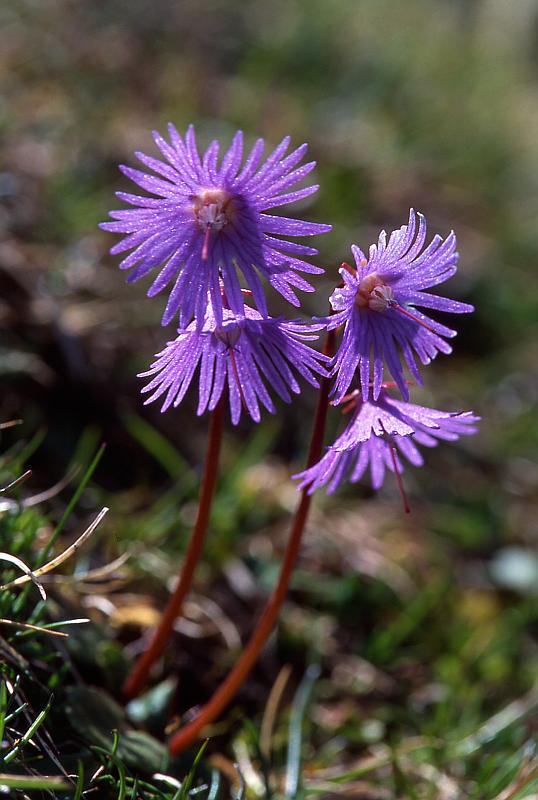
Soldanella alpina, commonly known as the Alpine Snowbell, is a captivating perennial herbaceous plant belonging to the Primulaceae family. It is indigenous to the mountainous regions of central and southern Europe, specifically thriving in alpine meadows, rocky slopes, and near snowfields, typically at altitudes ranging from 1,500 to 3,000 meters across the Pyrenees and the Alps. This diminutive species rarely exceeds 15 cm in height, forming an attractive basal rosette of leathery, rounded to kidney-shaped leaves that are often evergreen, persisting through the harsh winter months. The foliage is characteristically dark green with slightly crenate margins.
In late spring to early summer, immediately following the snowmelt, Soldanella alpina produces its signature delicate, bell-shaped flowers that gracefully hang downwards. These blossoms typically display a beautiful shade of lilac-blue, though color variations can occur, and feature five distinct lobes that are often finely fringed or toothed at their apex, lending them a ruffled appearance. The inflorescence is a sparse cyme, bearing one to a few exquisite flowers on slender, erect scapes. Its fibrous and relatively shallow root system is expertly adapted to anchoring the plant in thin, nutrient-poor alpine soils.
Recognized as a pioneer species, the Alpine Snowbell often colonizes disturbed areas and contributes significantly to the early floral displays of the high-altitude landscape, showcasing its remarkable adaptation to cold, challenging environments. It is hardy to USDA zones 4-8 and UK zone 5.
Trusted Scientific References
1. Authoritative external sources for Soldanella alpina
1.1 Wikipedia — Soldanella alpina
1.2 Kew POWO (Plants of the World Online)
1.3 PubMed — peer-reviewed research
1.4 NCBI Taxonomy Browser
1.5 GBIF — Global Biodiversity
1.6Soldanella should be interpreted through verified botanical identity, practical care, and responsible safety language. This recovery note adds the missing context needed for a complete profile: match light to the plant's habit, use well-drained soil, water according to season, and avoid unsupported medicinal or edible claims. For publishing, the plant can be presented as a source-backed garden plant with clear care guidance, common problem diagnosis, and conservative safety wording.
1.1.Soldanella — Key Features
- ✓ <strong>Botanical Name</strong> — Soldanella alpina.
- ✓ <strong>Common Name</strong> — Alpine Snowbell.
- ✓ <strong>Family</strong> — Primulaceae (Primrose family).
- ✓ <strong>Native Range</strong> — Central and Southern European Alps, Pyrenees.
- ✓ <strong>Habitat</strong> — Alpine meadows, rocky slopes, near snowfields (1500-3000m altitude).
- ✓ <strong>Floral Display</strong> — Delicate lilac-blue, bell-shaped, fringed flowers blooming post-snowmelt.
- ✓ <strong>Medicinal Uses</strong> — Respiratory support, diuretic action, gentle laxative effect.
- ✓ <strong>Key Constituents</strong> — Saponins, flavonoids, and phenolic acids are primary active compounds.
- ✓ <strong>Cultivation</strong> — Prefers cool, moist, well-drained, semi-shaded conditions; sensitive to slugs.
- ✓ <strong>Conservation</strong> — Historically, its wild populations have become rare due to over-collection.
1.2.Soldanella — Quick Summary
- ✓ Alpine Snowbell (Soldanella alpina) is a delicate perennial native to European alpine regions.
- ✓ Traditionally valued for its respiratory, diuretic, and gentle laxative properties.
- ✓ Key compounds include saponins, flavonoids, and phenolic acids, contributing to its efficacy.
- ✓ Requires cool, moist, well-drained soil and semi-shade for successful cultivation.
- ✓ Primarily used as teas, decoctions, or tinctures for internal therapeutic applications.
- ✓ Exercise caution in pregnancy, lactation, and with pre-existing kidney/heart conditions or medications.
2.Soldanella — Scientific Identity
3.Soldanella — Quick Facts
4.Soldanella — Appearance & Identification
5.Soldanella — Native Habitat
6.Soldanella — Water Requirements
- ✓ Soil Requirements — Prefers well-drained, humus-rich soil with a neutral to slightly acidic pH (6.0-7.0), mimicking its natural alpine environment.
- ✓ Light & Aspect — Thrives in an open position with a cool aspect, requiring semi-shade or protection from intense midday sun, especially in warmer climates.
- ✓ Moisture Needs — Requires consistently moist soil but is intolerant of waterlogging; ensure excellent drainage to prevent root rot, particularly during winter.
- ✓ Winter Protection — In regions with heavy winter rainfall or extreme cold, provide some protection from excessive winter wet to prevent crown rot.
- ✓ Pest Management — Be vigilant against slugs, which can damage young flowering shoots, especially in early spring; consider organic slug control methods.
- ✓ Propagation by Seed — Sow fresh seeds directly after ripening in a cold greenhouse; seeds have limited viability, so prompt sowing is crucial for successful germination.
- ✓ Propagation by Division — Established clumps can be carefully divided in spring as new growth emerges, ensuring each division has a healthy root system and crown.
- ✓ Transplanting — Pot seedlings into individual containers and grow them in a greenhouse for their first winter before transplanting to their permanent outdoor location in late spring or early summer after the last frost.
Reviewed by the Flora Medical Global Botanical Review Panel
Multi-disciplinary editorial group · Botany · Ethnobotany · Herbal-medicine literature
Who reviewed this: This page was checked by the Flora Medical Global Botanical Review Panel — an in-house editorial group of botany graduates, ethnobotany researchers, and horticulture practitioners who collectively maintain our 7,000+ plant encyclopedia. Meet the team.
Our 4-step verification process
1. Taxonomic verification
Scientific names and synonyms cross-checked against Kew POWO, World Flora Online, and The Plant List.
2. Phytochemical & medicinal cross-reference
Active compounds, traditional uses, and reported activities are cross-referenced with PubMed, USDA Dr. Duke's database, and peer-reviewed ethnobotanical literature.
3. Conservation & distribution check
Distribution, ecology, and conservation status confirmed against GBIF occurrence records and the IUCN Red List.
4. Editorial & safety review
Every entry passes an editorial pass for clarity, originality, and safety notices (toxicity, contraindications, dosage caveats) before publication.
Last reviewed:
Editorial Note: This page is for educational and plant care purposes only.
Written by: Flora Medical Global Editorial Team
Reviewed by: Flora Medical Global Botanical Review Panel
Last Updated: June 15, 2026







Soldanella — Comments & Community Reviews
Rate this plant