
Care Disclaimer: Plant care recommendations are general guidelines based on common growing conditions. Individual results may vary based on your local environment, climate, and care routine. If your plant is toxic, keep it away from children and pets, and consult a veterinarian if accidental ingestion occurs.
1.Solidago Canadensis — Overview
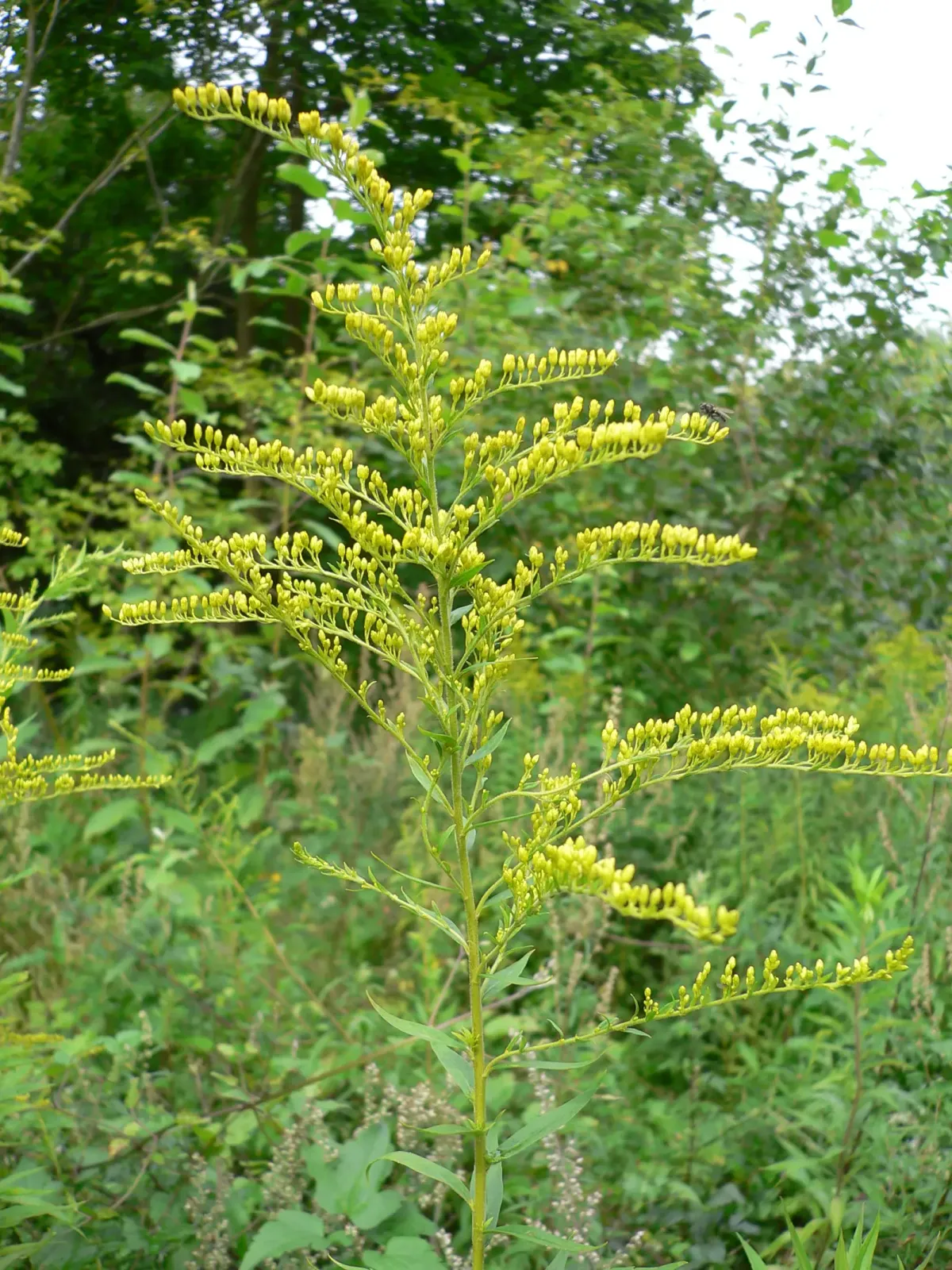
Solidago canadensis, commonly known as Canadian goldenrod, is a resilient perennial herbaceous plant belonging to the Asteraceae family, renowned for its vibrant yellow inflorescences. Native to North America, its extensive distribution spans across Canada and the northern United States, thriving in diverse environments from open fields and meadows to disturbed sites and roadsides. This species is characterized by its erect, often branched stems, typically reaching heights of 0.5 to 2 meters.
Its leaves are arranged alternately along the stem, presenting a lanceolate to ovate shape with distinct serrated margins and prominent venation. The most striking botanical feature is its dense, plume-like panicle of numerous small, bright yellow flower heads, which typically bloom from late summer through early autumn, specifically from July to October. Each composite flower head comprises both ray florets and disc florets, making it a highly attractive resource for a multitude of pollinators, including various species of bees, butterflies, and other insects.
While Solidago canadensis is sometimes perceived as an aggressive colonizer or weed due to its rapid spread via robust rhizomes and abundant seeds, it plays a vital ecological role in its native ecosystems, providing essential nectar and pollen for wildlife, contributing to soil stabilization, and supporting biodiversity. Its significant historical and ongoing use in traditional herbal medicine, particularly for its potent diuretic and anti-inflammatory properties, has spurred extensive phytochemical research into its therapeutic potential.
Trusted Scientific References
1. Authoritative external sources for Solidago Canadensis
1.1 Wikipedia — Solidago Canadensis
1.2 Kew POWO (Plants of the World Online)
1.3 PubMed — peer-reviewed research
1.4 NCBI Taxonomy Browser
1.5 GBIF — Global Biodiversity
1.6Solidago Canadensis should be interpreted through verified botanical identity, practical care, and responsible safety language. This recovery note adds the missing context needed for a complete profile: match light to the plant's habit, use well-drained soil, water according to season, and avoid unsupported medicinal or edible claims. For publishing, the plant can be presented as a source-backed garden plant with clear care guidance, common problem diagnosis, and conservative safety wording.
1.1.Solidago Canadensis — Key Features
- ✓ <strong>Botanical Name</strong> — Solidago canadensis, commonly known as Canadian Goldenrod.
- ✓ <strong>Family</strong> — Asteraceae, the daisy or sunflower family.
- ✓ <strong>Native Range</strong> — Widespread across North America, particularly Canada and northern USA.
- ✓ <strong>Medicinal Uses</strong> — Primarily diuretic, anti-inflammatory, antispasmodic, and anti-allergic.
- ✓ <strong>Phytochemical Richness</strong> — Contains beneficial flavonoids, saponins, phenolic acids, and essential oils.
- ✓ <strong>Ecological Role</strong> — Important pollinator plant, providing nectar and pollen for bees and butterflies.
- ✓ <strong>Traditional Applications</strong> — Used in indigenous North American and European herbalism for urinary and respiratory health.
- ✓ <strong>Growth Habit</strong> — Perennial herbaceous plant, reaching up to 2 meters, with dense yellow flower plumes.
- ✓ <strong>Adaptability</strong> — Thrives in diverse habitats, including fields, meadows, and disturbed areas.
- ✓ <strong>Harvest Time</strong> — Optimal medicinal potency when flowering tops and leaves are harvested during full bloom in late summer to early autumn.
1.2.Solidago Canadensis — Quick Summary
- ✓ Canadian goldenrod is a North American native perennial with bright yellow flowers.
- ✓ Renowned for its potent diuretic, anti-inflammatory, and antispasmodic properties.
- ✓ Traditionally used for urinary tract issues, seasonal allergies, colds, and muscle pain.
- ✓ Rich in flavonoids, saponins, and phenolic acids that confer its medicinal actions.
- ✓ Available as teas, tinctures, poultices, and infused oils for various applications.
- ✓ Exercise caution if allergic to Asteraceae or with pre-existing kidney/heart conditions.
2.Solidago Canadensis — Scientific Identity
3.Solidago Canadensis — Quick Facts
4.Solidago Canadensis — Appearance & Identification
5.Solidago Canadensis — Native Habitat
6.Solidago Canadensis — Water Requirements
- ✓ Site Selection — Choose a location with full sun exposure (at least 6 hours daily) and well-draining soil.
- ✓ Soil Requirements — Solidago canadensis tolerates a range of soil types but prefers moderately fertile, sandy or loamy soils with a pH between 6.0 and 7.0.
- ✓ Propagation — Can be grown from seeds (requiring cold stratification) or by dividing rhizomes in early spring or fall for faster establishment.
- ✓ Watering — Once established, Canadian goldenrod is drought-tolerant, but consistent moisture during dry periods will promote healthier growth and flowering.
- ✓ Spacing — Plant individual specimens about 18-24 inches (45-60 cm) apart to allow for mature spread and good air circulation.
- ✓ Pest and Disease Management — Generally robust, it is rarely bothered by serious pests or diseases. Monitor for powdery mildew in humid conditions.
- ✓ Harvesting — Harvest flowering tops and leaves when the plant is in full bloom, typically from late summer to early autumn, for optimal medicinal potency.
- ✓ Maintenance — Cut back spent flower stalks in late fall to prevent excessive self-seeding and encourage vigorous growth the following season.
Reviewed by the Flora Medical Global Botanical Review Panel
Multi-disciplinary editorial group · Botany · Ethnobotany · Herbal-medicine literature
Who reviewed this: This page was checked by the Flora Medical Global Botanical Review Panel — an in-house editorial group of botany graduates, ethnobotany researchers, and horticulture practitioners who collectively maintain our 7,000+ plant encyclopedia. Meet the team.
Our 4-step verification process
1. Taxonomic verification
Scientific names and synonyms cross-checked against Kew POWO, World Flora Online, and The Plant List.
2. Phytochemical & medicinal cross-reference
Active compounds, traditional uses, and reported activities are cross-referenced with PubMed, USDA Dr. Duke's database, and peer-reviewed ethnobotanical literature.
3. Conservation & distribution check
Distribution, ecology, and conservation status confirmed against GBIF occurrence records and the IUCN Red List.
4. Editorial & safety review
Every entry passes an editorial pass for clarity, originality, and safety notices (toxicity, contraindications, dosage caveats) before publication.
Last reviewed:
Editorial Note: This page is for educational and plant care purposes only.
Written by: Flora Medical Global Editorial Team
Reviewed by: Flora Medical Global Botanical Review Panel
Last Updated: June 15, 2026







Solidago Canadensis — Comments & Community Reviews
Rate this plant