
Care Disclaimer: Plant care recommendations are general guidelines based on common growing conditions. Individual results may vary based on your local environment, climate, and care routine. If your plant is toxic, keep it away from children and pets, and consult a veterinarian if accidental ingestion occurs.
1.Sorghastrum Nutans — Overview
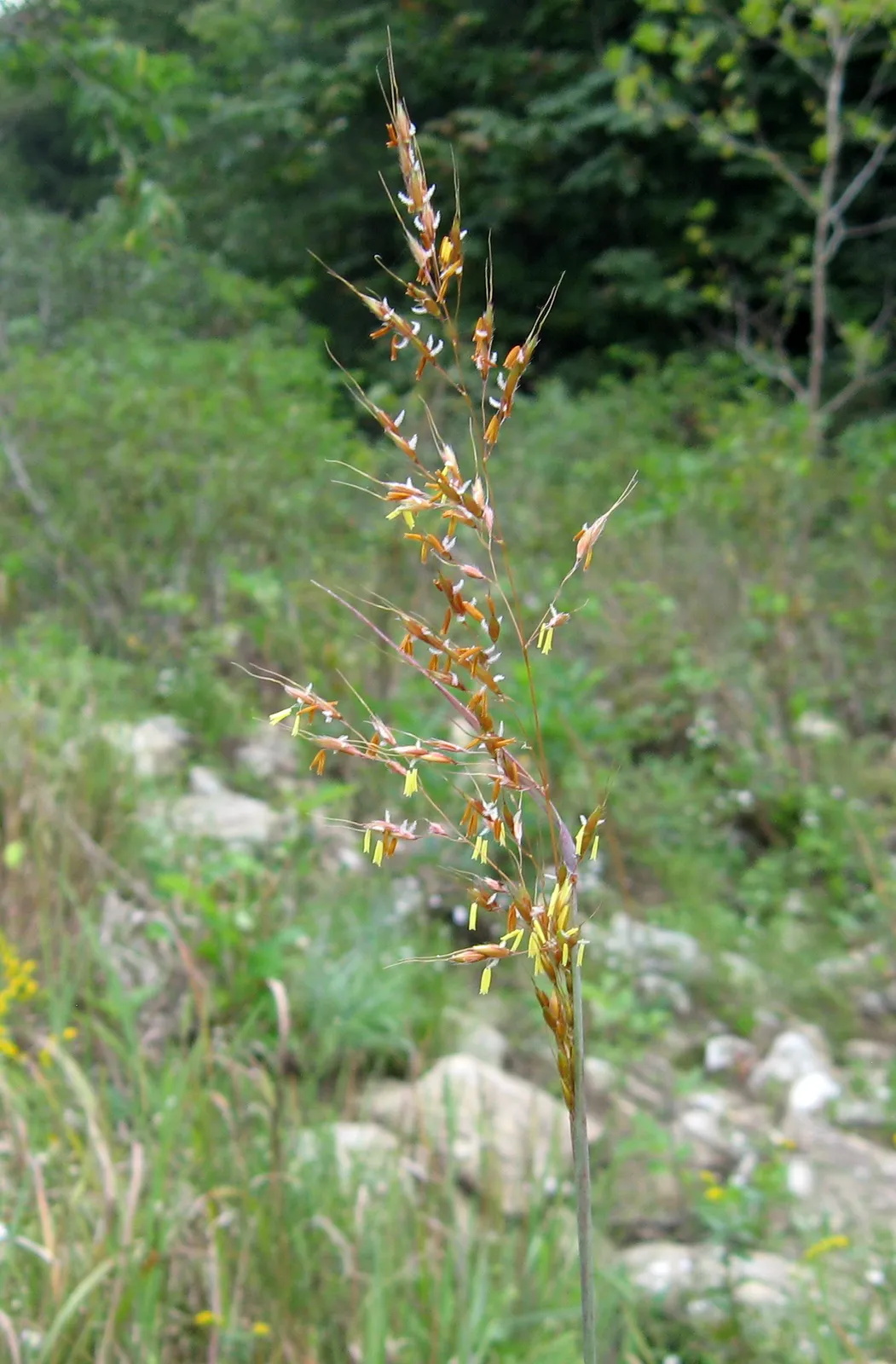
Sorghastrum nutans, commonly known as Indiangrass, stands as a quintessential perennial warm-season grass, a defining species of the iconic tallgrass prairie ecosystems across North America. Its native range extends broadly from the eastern United States, westward through the Dakotas, and south into Texas, with isolated populations found further west. This robust grass forms dense, upright clumps, typically achieving heights of 3 to 7 feet (90-210 cm), though it can occasionally exceed these dimensions under optimal growing conditions. The culms, or stems, are stout, smooth, and erect, often presenting a distinctive glaucous, or bluish-green, hue.
Its linear leaves are notably long and relatively wide, up to 1 cm, frequently displaying a vibrant bluish-green color when young, which gracefully transitions to attractive shades of bronze, gold, and orange in the autumn, imparting significant aesthetic value to natural landscapes. A crucial identifying feature is its 'rifle-sight' ligule—a V-shaped structure at the junction of the leaf blade and sheath, often likened to an inverted 'V' or crosshairs. The inflorescence is a narrow, open, plume-like panicle, typically measuring 6 to 12 inches (15-30 cm) long, adorned with delicate, golden-bronze spikelets. These spikelets are distinctively hairy and bear a single, well-developed, geniculate (bent) awn that is often twisted.
They are commonly arranged in pairs along the panicle branches, comprising one sessile, fertile spikelet and one pedicellate, sterile (or staminate) spikelet. The mature seeds are yellowish-brown and remain enclosed within persistent glumes. Indiangrass is characterized by an extensive, deep fibrous root system capable of penetrating the soil to depths of 6 to 10 feet (1.8-3 meters) or more, which is instrumental in promoting soil stability, enhancing drought resistance, and facilitating efficient nutrient cycling, allowing it to access water and nutrients from deeper soil profiles and making it highly resilient.
Trusted Scientific References
1. Authoritative external sources for Sorghastrum nutans
1.1 Wikipedia — Sorghastrum nutans
1.2 Kew POWO (Plants of the World Online)
1.3 PubMed — peer-reviewed research
1.4 NCBI Taxonomy Browser
1.5 GBIF — Global Biodiversity
1.1.Sorghastrum Nutans — Key Features
- ✓ <strong>Tallgrass Prairie Indicator</strong> — A signature species of healthy tallgrass prairie ecosystems.
- ✓ <strong>Deep Root System</strong> — Extensive fibrous roots provide exceptional drought tolerance and soil stabilization.
- ✓ <strong>Distinctive Ligule</strong> — Features a unique V-shaped 'rifle-sight' ligule, aiding in identification.
- ✓ <strong>Autumn Coloration</strong> — Foliage transforms into striking golden, bronze, and orange hues in fall.
- ✓ <strong>Plume</strong> — like Inflorescence — Bears attractive, narrow, open, plume-like panicles with golden spikelets.
- ✓ <strong>Wildlife Support</strong> — Offers crucial food (seeds) and cover for songbirds and small mammals.
- ✓ <strong>Adaptable Soil Tolerance</strong> — Thrives in a wide range of well-drained soils, including heavy clay.
- ✓ <strong>Full Sun Requirement</strong> — Requires ample sunlight for robust growth and flowering.
- ✓ <strong>Erosion Control</strong> — Highly effective for preventing soil erosion on slopes and disturbed areas.
- ✓ <strong>Salt Tolerant</strong> — Exhibits tolerance to saline conditions, making it suitable for certain roadside plantings.
1.2.Sorghastrum Nutans — Quick Summary
- ✓ North American Native — A dominant warm-season grass of tallgrass prairies.
- ✓ Ecological Keystone — Crucial for soil stabilization, erosion control, and wildlife habitat.
- ✓ Distinctive Features — Recognized by its 'rifle-sight' ligule, blue-green foliage, and golden autumn color.
- ✓ Low Maintenance — Drought-tolerant and adaptable to various well-drained soils once established.
- ✓ Non-Medicinal Use — Primarily valued for its ecological benefits and ornamental qualities, with no established human medicinal applications.
- ✓ Biodiversity Support — Essential for fostering healthy ecosystems and supporting diverse wildlife.
2.Sorghastrum Nutans — Scientific Identity
3.Sorghastrum Nutans — Quick Facts
4.Sorghastrum Nutans — Appearance & Identification
5.Sorghastrum Nutans — Native Habitat
6.Sorghastrum Nutans — Water Requirements
- ✓ Site Selection — Requires full sun exposure for optimal growth and flowering; partial shade can lead to leggy growth.
- ✓ Soil Preference — Adaptable to a wide range of well-drained soils, from dry to medium-wet conditions, including heavy clay.
- ✓ Soil Enrichment — Avoid overly rich, moist soils, as these can cause the plant to 'flop' or become less upright.
- ✓ Planting — Can be established from seed or plugs; seeds benefit from cold stratification for improved germination.
- ✓ Watering — Once established, Indiangrass is highly drought-tolerant due to its deep root system, requiring minimal supplemental watering.
- ✓ Maintenance — Low maintenance; cut back foliage in late winter or early spring before new growth emerges to maintain vigor and appearance.
- ✓ Naturalization — Readily naturalizes by self-seeding, making it suitable for prairie restoration and naturalized areas.
- ✓ Erosion Control — Excellent for planting on slopes and in areas prone to erosion due to its extensive root system.
Reviewed by the Flora Medical Global Botanical Review Panel
Multi-disciplinary editorial group · Botany · Ethnobotany · Herbal-medicine literature
Who reviewed this: This page was checked by the Flora Medical Global Botanical Review Panel — an in-house editorial group of botany graduates, ethnobotany researchers, and horticulture practitioners who collectively maintain our 7,000+ plant encyclopedia. Meet the team.
Our 4-step verification process
1. Taxonomic verification
Scientific names and synonyms cross-checked against Kew POWO, World Flora Online, and The Plant List.
2. Phytochemical & medicinal cross-reference
Active compounds, traditional uses, and reported activities are cross-referenced with PubMed, USDA Dr. Duke's database, and peer-reviewed ethnobotanical literature.
3. Conservation & distribution check
Distribution, ecology, and conservation status confirmed against GBIF occurrence records and the IUCN Red List.
4. Editorial & safety review
Every entry passes an editorial pass for clarity, originality, and safety notices (toxicity, contraindications, dosage caveats) before publication.
Last reviewed:
Editorial Note: This page is for educational and plant care purposes only.
Written by: Flora Medical Global Editorial Team
Reviewed by: Flora Medical Global Botanical Review Panel
Last Updated: June 15, 2026







Sorghastrum Nutans — Comments & Community Reviews
Rate this plant