

Care Disclaimer: Plant care recommendations are general guidelines based on common growing conditions. Individual results may vary based on your local environment, climate, and care routine. If your plant is toxic, keep it away from children and pets, and consult a veterinarian if accidental ingestion occurs.
1.Stewartia Pseudocamellia — Overview
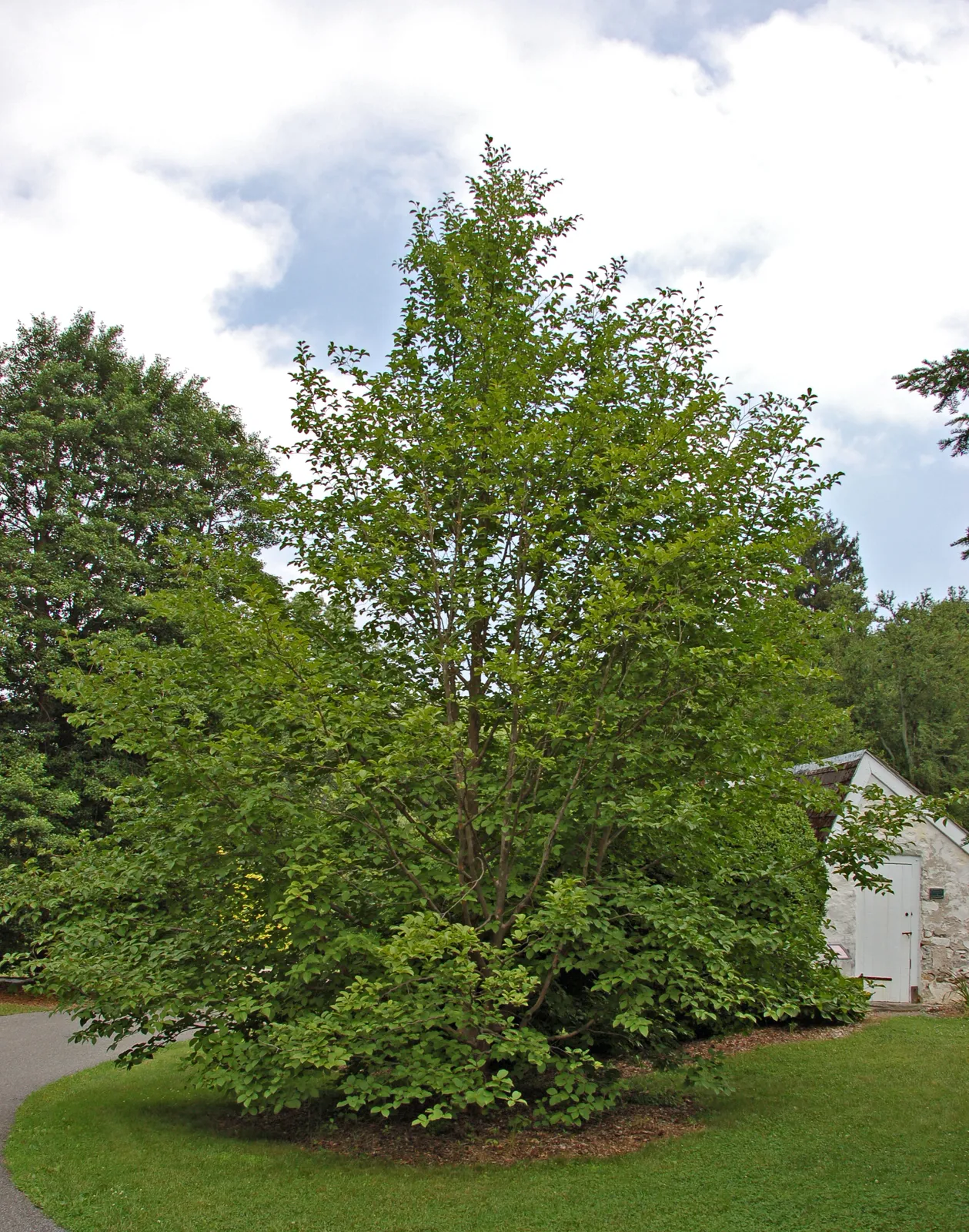
Stewartia pseudocamellia, commonly known as Japanese stewartia or common stewartia, is an exquisite deciduous tree belonging to the Theaceae family, native to the temperate forests of Japan and Korea. This elegant species is highly valued for its year-round ornamental appeal, which includes distinctive multi-seasonal characteristics. Morphologically, it typically grows as a small to medium-sized tree, reaching heights of 12 to 40 feet with a spread of 8 to 25 feet.
Its leaves are dark green, oval, and turn into vibrant hues of red, orange, and burgundy in autumn, offering a spectacular display. The most striking features are its camellia-like white flowers, often with prominent orange-yellow anthers, which bloom in early to late summer, and its unique exfoliating bark. The bark peels away in strips of gray, reddish-brown, and orange, creating an attractive mosaic pattern that provides considerable winter interest.
Taxonomically, Stewartia pseudocamellia falls within the genus Stewartia, which comprises about 10 species primarily found in East Asia and a few in North America. Its classification within Theaceae places it alongside other well-known genera like Camellia and Thea (tea plant), suggesting a shared biochemical heritage. It thrives in moist, well-drained, acidic to neutral soils and prefers full sun to partial shade, where it can be sheltered from intense afternoon heat.
Trusted Scientific References
1. Authoritative external sources for Stewartia pseudocamellia
1.1 Wikipedia — Stewartia pseudocamellia
1.2 Kew POWO (Plants of the World Online)
1.3 PubMed — peer-reviewed research
1.4 NCBI Taxonomy Browser
1.5 GBIF — Global Biodiversity
1.6Stewartia Pseudocamellia should be interpreted through verified botanical identity, practical care, and responsible safety language. This recovery note adds the missing context needed for a complete profile: match light to the plant's habit, use well-drained soil, water according to season, and avoid unsupported medicinal or edible claims. For publishing, the plant can be presented as a source-backed garden plant with clear care guidance, common problem diagnosis, and conservative safety wording.
1.1.Stewartia Pseudocamellia — Key Features
- ✓ <strong>Striking Exfoliating Bark</strong> — Provides year-round visual interest with a mosaic of gray, reddish-brown, and orange.
- ✓ <strong>Elegant White Flowers</strong> — Camellia-like blooms with prominent yellow anthers in summer.
- ✓ <strong>Vibrant Autumn Foliage</strong> — Leaves turn brilliant red, orange, and burgundy.
- ✓ <strong>Member of Theaceae Family</strong> — Related to tea and camellias, sharing some phytochemical profiles.
- ✓ <strong>Native to Japan and Korea</strong> — Thrives in temperate climates.
- ✓ <strong>Source of Tannins and Flavonoids</strong> — Imparting theoretical medicinal properties.
- ✓ <strong>Moderate Size</strong> — Suitable for smaller landscapes as a specimen tree.
- ✓ <strong>Low Maintenance</strong> — Once established, requires minimal pruning.
- ✓ <strong>Slow Growing</strong> — Develops character over many years.
- ✓ <strong>Adaptable to Acidic Soils</strong> — Prefers well-drained, moist conditions.
1.2.Stewartia Pseudocamellia — Quick Summary
- ✓ Ornamental deciduous tree from Theaceae family.
- ✓ Rich in antioxidants, tannins, and anti-inflammatory compounds.
- ✓ Primarily used for theoretical topical benefits like astringent and skin support.
- ✓ Internal use is not recommended due to lack of established safety and research.
- ✓ Requires moist, acidic soil and partial shade for optimal growth.
- ✓ Known for beautiful exfoliating bark and camellia-like white flowers.
2.Stewartia Pseudocamellia — Scientific Identity
3.Stewartia Pseudocamellia — Quick Facts
4.Stewartia Pseudocamellia — Appearance & Identification
5.Stewartia Pseudocamellia — Native Habitat
6.Stewartia Pseudocamellia — Water Requirements
- ✓ Site Selection — Choose a location sheltered from harsh winds, ideally with morning sun and afternoon shade in warmer climates.
- ✓ Soil Requirements — Prefers moist, well-drained, fertile soil with a neutral to acidic pH (5.5-6.5).
- ✓ Watering — Requires consistent moisture, especially during the first year; water deeply weekly, and more during dry periods.
- ✓ Fertilization — Apply an acidifying organic granular fertilizer in spring during the plant's early growth years to support robust development.
- ✓ Pruning — Minimal pruning needed; remove dead, damaged, or crossing branches in winter or after flowering; prune lower limbs to expose ornamental bark.
- ✓ Propagation — Can be propagated by softwood cuttings in early summer or semi-hardwood cuttings in mid-to-late summer, though success rates can be challenging.
- ✓ Seed Propagation — Growing from seed is complex and slow, requiring specific temperature stratification (warm then cold then warm) over several months for germination.
- ✓ Winter Care — Once established, Japanese stewartia is hardy in USDA zones 5-8 and generally requires no special overwintering steps beyond initial protection.
Reviewed by the Flora Medical Global Botanical Review Panel
Multi-disciplinary editorial group · Botany · Ethnobotany · Herbal-medicine literature
Who reviewed this: This page was checked by the Flora Medical Global Botanical Review Panel — an in-house editorial group of botany graduates, ethnobotany researchers, and horticulture practitioners who collectively maintain our 7,000+ plant encyclopedia. Meet the team.
Our 4-step verification process
1. Taxonomic verification
Scientific names and synonyms cross-checked against Kew POWO, World Flora Online, and The Plant List.
2. Phytochemical & medicinal cross-reference
Active compounds, traditional uses, and reported activities are cross-referenced with PubMed, USDA Dr. Duke's database, and peer-reviewed ethnobotanical literature.
3. Conservation & distribution check
Distribution, ecology, and conservation status confirmed against GBIF occurrence records and the IUCN Red List.
4. Editorial & safety review
Every entry passes an editorial pass for clarity, originality, and safety notices (toxicity, contraindications, dosage caveats) before publication.
Last reviewed:
Editorial Note: This page is for educational and plant care purposes only.
Written by: Flora Medical Global Editorial Team
Reviewed by: Flora Medical Global Botanical Review Panel
Last Updated: June 15, 2026







Stewartia Pseudocamellia — Comments & Community Reviews
Rate this plant