
Care Disclaimer: Plant care recommendations are general guidelines based on common growing conditions. Individual results may vary based on your local environment, climate, and care routine. If your plant is toxic, keep it away from children and pets, and consult a veterinarian if accidental ingestion occurs.
1.Stokesia Laevis — Overview
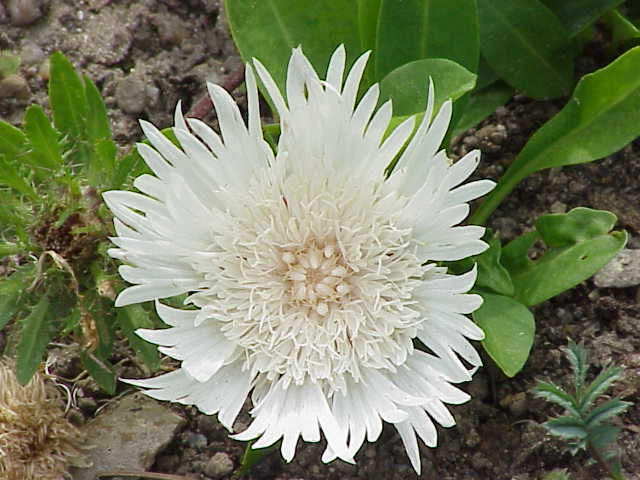
Stokesia laevis, commonly known as Stokes' aster or cornflower aster, is an exquisite perennial herbaceous plant indigenous to the southeastern United States. It is a proud member of the expansive Asteraceae family, recognized for its characteristic daisy-like inflorescences. This robust plant typically forms dense clumps of basal, lance-shaped leaves that remain evergreen in warmer climates, providing year-round visual interest.
From this verdant base, sturdy, upright stems emerge, culminating in large, strikingly showy flower heads. The blooms, which grace the landscape from early summer well into the fall, are most frequently observed in shades of lavender-blue, although horticultural cultivars offer a spectrum from pristine white to vibrant pink and deep purple. Each individual flower head can span an impressive diameter of up to 4 inches, featuring distinctive fringed ray florets encircling a central disk composed of numerous smaller, fertile florets.
Beyond its aesthetic appeal, Stokes' aster is a highly favored selection for garden beds, borders, and naturalized areas, celebrated for its extended blooming period, vivid coloration, and its undeniable allure to a diverse array of pollinators. It thrives optimally in conditions of full sun exposure and well-drained soil, effortlessly infusing any cultivated or wild landscape with a touch of untamed beauty and ecological vitality.
Trusted Scientific References
1. Authoritative external sources for Stokesia Laevis
1.1 Wikipedia — Stokesia Laevis
1.2 Kew POWO (Plants of the World Online)
1.3 PubMed — peer-reviewed research
1.4 NCBI Taxonomy Browser
1.5 GBIF — Global Biodiversity
1.6Stokesia Laevis should be interpreted through verified botanical identity, practical care, and responsible safety language. This recovery note adds the missing context needed for a complete profile: match light to the plant's habit, use well-drained soil, water according to season, and avoid unsupported medicinal or edible claims. For publishing, the plant can be presented as a source-backed garden plant with clear care guidance, common problem diagnosis, and conservative safety wording.
1.1.Stokesia Laevis — Key Features
- ✓ <strong>Native Perennial</strong> — Indigenous to the southeastern United States, returning reliably year after year.
- ✓ <strong>Showy Flowers</strong> — Produces large (up to 4 inches), fringed, lavender-blue daisy-like blooms.
- ✓ <strong>Long Blooming Period</strong> — Flowers prolifically from early summer through fall, providing extended color.
- ✓ <strong>Pollinator Magnet</strong> — Highly attractive to a wide range of pollinators, including bees and butterflies.
- ✓ <strong>Low Maintenance</strong> — Requires minimal care, making it an easy-to-grow garden plant.
- ✓ <strong>Drought</strong> — Tolerant — Once established, it can withstand periods of dry weather.
- ✓ <strong>Evergreen Foliage</strong> — Maintains its lance-shaped basal leaves throughout the winter in warmer climates.
- ✓ <strong>Adaptable</strong> — Tolerates various soil types as long as they are well-drained.
- ✓ <strong>Garden Versatility</strong> — Excellent for borders, mass plantings, naturalized areas, and cut flower arrangements.
1.2.Stokesia Laevis — Quick Summary
- ✓ Stokes' aster is a native perennial from the southeastern US, primarily valued for its ornamental beauty.
- ✓ It features showy, long-blooming lavender-blue flowers that are highly attractive to pollinators.
- ✓ This plant is exceptionally low-maintenance, drought-tolerant, and thrives in full sun with well-drained soil.
- ✓ There is no documented traditional or scientific medicinal use for *Stokesia laevis*.
- ✓ Potential benefits are speculative, based on general phytochemistry of the Asteraceae family, but lack specific research.
- ✓ Recommended solely for gardening, landscaping, and supporting local ecosystems.
2.Stokesia Laevis — Scientific Identity
3.Stokesia Laevis — Quick Facts
4.Stokesia Laevis — Appearance & Identification
5.Stokesia Laevis — Native Habitat
6.Stokesia Laevis — Water Requirements
- ✓ Sun Exposure — Stokes' aster thrives in full sun (at least 6 hours of direct sunlight daily) to part shade conditions, offering flexibility in garden placement.
- ✓ Soil Requirements — Prefers well-drained soil; it tolerates various soil types, including sandy or clay, as long as drainage is adequate.
- ✓ Watering — Once established (typically after the first year), *Stokesia laevis* is remarkably drought-tolerant, requiring minimal supplemental irrigation.
- ✓ Maintenance — This perennial is considered super low maintenance, needing little care to flourish and return year after year from the same rootstock.
- ✓ Planting — Best planted in spring or fall. Space plants appropriately to allow for mature clump formation, typically 12-18 inches apart.
- ✓ Fertilization — Generally does not require heavy fertilization; a light application of balanced slow-release fertilizer in spring can be beneficial in poor soils.
- ✓ Pruning — Deadhead spent flowers to encourage continuous blooming and prevent self-seeding, though some may prefer to leave seed heads for winter interest.
Reviewed by the Flora Medical Global Botanical Review Panel
Multi-disciplinary editorial group · Botany · Ethnobotany · Herbal-medicine literature
Who reviewed this: This page was checked by the Flora Medical Global Botanical Review Panel — an in-house editorial group of botany graduates, ethnobotany researchers, and horticulture practitioners who collectively maintain our 7,000+ plant encyclopedia. Meet the team.
Our 4-step verification process
1. Taxonomic verification
Scientific names and synonyms cross-checked against Kew POWO, World Flora Online, and The Plant List.
2. Phytochemical & medicinal cross-reference
Active compounds, traditional uses, and reported activities are cross-referenced with PubMed, USDA Dr. Duke's database, and peer-reviewed ethnobotanical literature.
3. Conservation & distribution check
Distribution, ecology, and conservation status confirmed against GBIF occurrence records and the IUCN Red List.
4. Editorial & safety review
Every entry passes an editorial pass for clarity, originality, and safety notices (toxicity, contraindications, dosage caveats) before publication.
Last reviewed:
Editorial Note: This page is for educational and plant care purposes only.
Written by: Flora Medical Global Editorial Team
Reviewed by: Flora Medical Global Botanical Review Panel
Last Updated: June 15, 2026







Stokesia Laevis — Comments & Community Reviews
Rate this plant