

Care Disclaimer: Plant care recommendations are general guidelines based on common growing conditions. Individual results may vary based on your local environment, climate, and care routine. If your plant is toxic, keep it away from children and pets, and consult a veterinarian if accidental ingestion occurs.
1.Strawberry — Overview
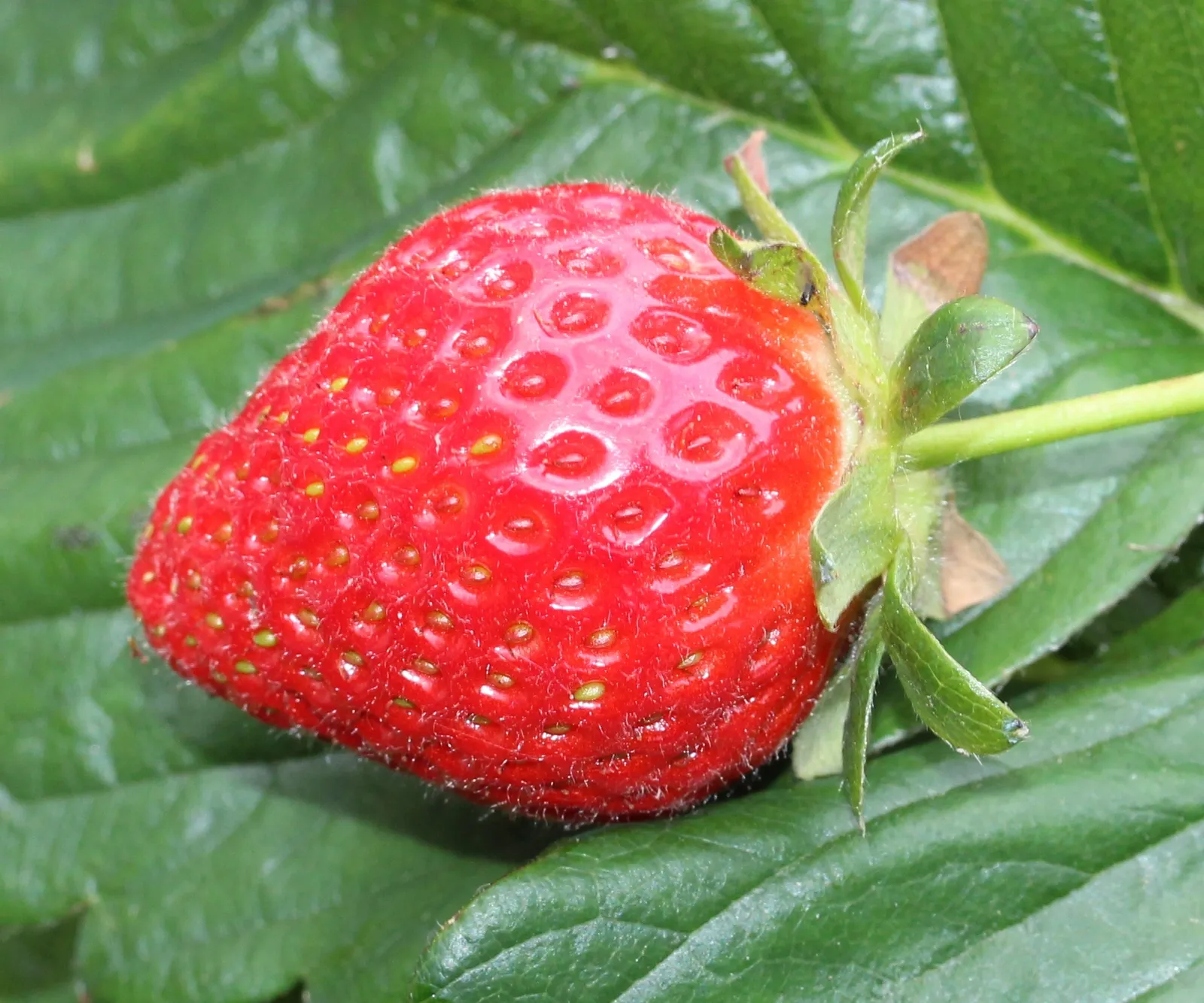
Fragaria × ananassa, commonly known as the garden strawberry, is a remarkable herbaceous perennial belonging to the Rosaceae family. This globally cultivated hybrid species is celebrated for its delectable, bright red fruit. Typically growing to a height of 15-30 cm, the plant forms a lush ground cover with basal rosettes from which its characteristic trifoliate leaves emerge. Each leaf features serrated margins, a vibrant green hue, and is often covered in fine, protective hairs.
The flowers of the garden strawberry are usually white, possessing five distinct petals, and are borne on slender, upright stalks. These flowers are hermaphroditic, meaning they contain both male and female reproductive organs, facilitating efficient self-pollination, though insect-mediated cross-pollination can enhance fruit development and size. Botanically, the strawberry fruit is classified as an aggregate accessory fruit, meaning the fleshy, edible part develops from the receptacle, not the ovary, and bears numerous tiny, true fruits called achenes on its surface, each containing a seed. Propagation occurs both sexually via seeds from the achenes and vegetatively through stolons, or 'runners,' which are horizontal stems that root and produce new plants, contributing to its widespread ease of cultivation.
This species originated in Brittany, France, in the 1750s, resulting from a cross between two American species: Fragaria virginiana from eastern North America and Fragaria chiloensis from the Pacific coast. Its adaptability and highly desirable fruit characteristics have cemented its status as one of the most economically significant berry crops worldwide.
Trusted Scientific References
1. Authoritative external sources for Fragaria × ananassa
1.1 Wikipedia — Fragaria × ananassa
1.2 Kew POWO (Plants of the World Online)
1.3 PubMed — peer-reviewed research
1.4 NCBI Taxonomy Browser
1.5 GBIF — Global Biodiversity
1.6Strawberry should be interpreted through verified botanical identity, practical care, and responsible safety language. This recovery note adds the missing context needed for a complete profile: match light to the plant's habit, use well-drained soil, water according to season, and avoid unsupported medicinal or edible claims. For publishing, the plant can be presented as a source-backed garden plant with clear care guidance, common problem diagnosis, and conservative safety wording.
1.1.Strawberry — Key Features
- ✓ <strong>Hybrid Perennial Plant</strong> — Fragaria × ananassa is a cultivated hybrid species, a perennial that returns year after year.
- ✓ <strong>Aggregate Accessory Fruit</strong> — The edible 'fruit' is botanically an enlarged receptacle bearing true fruits (achenes) on its surface.
- ✓ <strong>Rich in Vitamin C</strong> — An excellent source of Vitamin C, crucial for immune health and collagen synthesis.
- ✓ <strong>High in Anthocyanins</strong> — Contains potent pigments that give the fruit its red color and contribute to its antioxidant properties.
- ✓ <strong>Spreads by Runners (Stolons)</strong> — Reproduces vegetatively through horizontal stems that root to form new plants.
- ✓ <strong>Sweet and Aromatic Flavor</strong> — Highly prized for its distinctive sweet taste and fragrant aroma.
- ✓ <strong>Global Cultivation</strong> — One of the most widely grown and economically important berry crops worldwide.
- ✓ <strong>Rosaceae Family Member</strong> — Belongs to the rose family, sharing characteristics with other fruits like apples and raspberries.
- ✓ <strong>Anti</strong> — inflammatory Properties — Contains various phytochemicals that contribute to its anti-inflammatory effects.
- ✓ <strong>Good Source of Dietary Fiber</strong> — Aids digestion and contributes to feelings of fullness and gut health.
1.2.Strawberry — Quick Summary
- ✓ Nutrient-Dense Fruit — Strawberries are packed with Vitamin C, manganese, fiber, and a wide array of antioxidants.
- ✓ Powerful Antioxidant Source — Rich in anthocyanins and ellagic acid, offering robust protection against oxidative stress.
- ✓ Supports Heart & Immunity — Contributes to cardiovascular health, blood sugar regulation, and boosts immune function.
- ✓ Versatile Culinary Use — Enjoyed fresh, in preserves, smoothies, and various desserts worldwide.
- ✓ Generally Safe — Well-tolerated by most, with primary concerns being allergies and pesticide residues.
- ✓ Hybrid Origin — A modern hybrid (Fragaria × ananassa) with significant global economic importance.
2.Strawberry — Scientific Identity
3.Strawberry — Quick Facts
4.Strawberry — Appearance & Identification
5.Strawberry — Native Habitat
6.Strawberry — Water Requirements
- ✓ Soil Preparation — Garden strawberries thrive in well-draining, slightly acidic soil (pH 5.5-6.5) rich in organic matter. Amend with compost or aged manure prior to planting.
- ✓ Light Requirements — Plant in a location that receives full sun, ideally 6-8 hours of direct sunlight daily, for optimal fruit production and sweetness.
- ✓ Watering — Requires consistent moisture, especially during flowering and fruiting. Water deeply when the top inch of soil feels dry, avoiding overhead watering to prevent fungal diseases.
- ✓ Planting — Space plants about 30-45 cm apart in rows, allowing ample room for runners to spread. Plant with the crown at soil level, ensuring roots are covered and the crown is not buried.
- ✓ Fertilization — Apply a balanced fertilizer in early spring before new growth begins and again after the harvest, or use a slow-release organic option.
- ✓ Pest and Disease Management — Monitor for common pests like slugs, birds, and aphids, and diseases such as powdery mildew and botrytis. Use netting for birds and organic pest control methods.
- ✓ Mulching — Apply a layer of straw or wood chips around plants to conserve moisture, suppress weeds, keep fruits clean, and provide winter protection.
- ✓ Runner Management — Allow runners to root for new plants or prune them to encourage larger fruit production on the mother plant, depending on cultivation goals.
Reviewed by the Flora Medical Global Botanical Review Panel
Multi-disciplinary editorial group · Botany · Ethnobotany · Herbal-medicine literature
Who reviewed this: This page was checked by the Flora Medical Global Botanical Review Panel — an in-house editorial group of botany graduates, ethnobotany researchers, and horticulture practitioners who collectively maintain our 7,000+ plant encyclopedia. Meet the team.
Our 4-step verification process
1. Taxonomic verification
Scientific names and synonyms cross-checked against Kew POWO, World Flora Online, and The Plant List.
2. Phytochemical & medicinal cross-reference
Active compounds, traditional uses, and reported activities are cross-referenced with PubMed, USDA Dr. Duke's database, and peer-reviewed ethnobotanical literature.
3. Conservation & distribution check
Distribution, ecology, and conservation status confirmed against GBIF occurrence records and the IUCN Red List.
4. Editorial & safety review
Every entry passes an editorial pass for clarity, originality, and safety notices (toxicity, contraindications, dosage caveats) before publication.
Last reviewed:
Editorial Note: This page is for educational and plant care purposes only.
Written by: Flora Medical Global Editorial Team
Reviewed by: Flora Medical Global Botanical Review Panel
Last Updated: June 15, 2026







Strawberry — Comments & Community Reviews
Rate this plant