

Care Disclaimer: Plant care recommendations are general guidelines based on common growing conditions. Individual results may vary based on your local environment, climate, and care routine. If your plant is toxic, keep it away from children and pets, and consult a veterinarian if accidental ingestion occurs.
1.Stylophorum Diphyllum — Overview
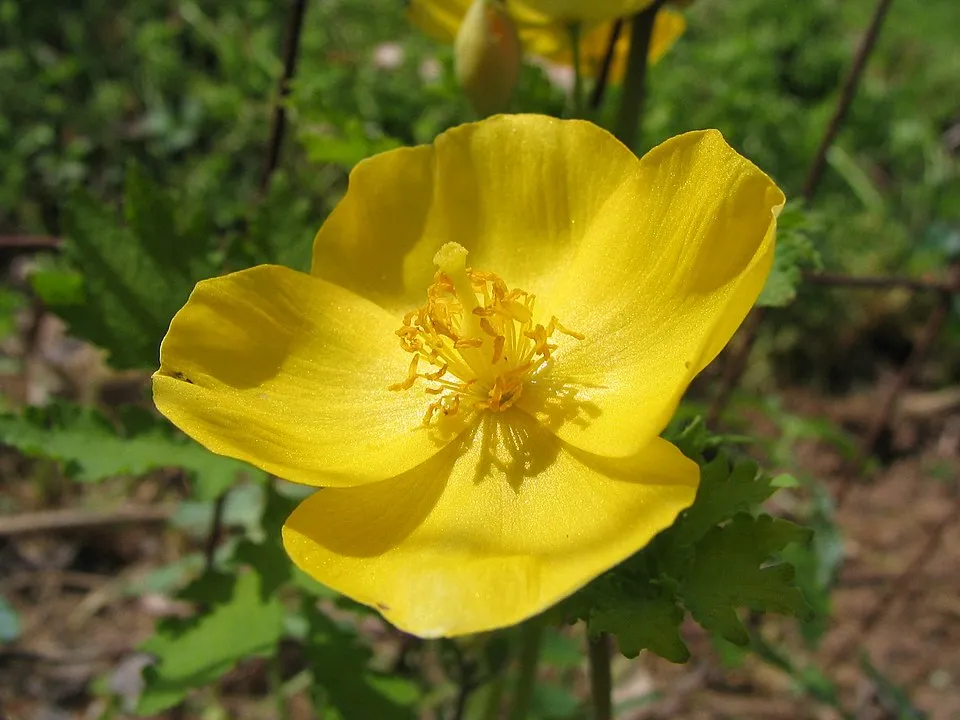
Stylophorum diphyllum, widely recognized as Celandine Poppy or Wood Poppy, is an enchanting herbaceous perennial belonging to the Papaveraceae (Poppy Family), indigenous to the moist, deciduous woodlands of eastern North America. Typically growing to a height of 1 to 1.5 feet and spreading up to a foot, this plant is characterized by its vibrant, cup-shaped yellow to yellow-orange flowers, each bearing four petal-like sepals, which unfurl in small clusters during early spring and intermittently through summer if deadheaded. Its deeply lobed, pinnate leaves exhibit a distinctive bluish-green hue, with basal leaves reaching up to 6 inches long and featuring conspicuously hairy petioles and a silvery, finely-haired underside.
A hallmark of the poppy family, S. diphyllum exudes a bright orange-yellow sap when its stems or leaves are broken, which can stain. The plant develops pendant, ovoid, fuzzy fruits approximately one inch long, containing shiny, dark brown to black seeds, each equipped with a white, fatty appendage (elaiosome) facilitating ant dispersal.
It thrives in USDA hardiness zones 4-9, favoring dappled shade and rich, humus-filled soils. While sharing a common name, it is distinct from the European Greater Celandine (Chelidonium majus), which is a biennial with smaller flowers and different growth habits. Stylophorum diphyllum plays a role in woodland ecosystems but is vulnerable to habitat loss and invasive species like garlic mustard.
Trusted Scientific References
1. Authoritative external sources for Stylophorum Diphyllum
1.1 Wikipedia — Stylophorum Diphyllum
1.2 Kew POWO (Plants of the World Online)
1.3 PubMed — peer-reviewed research
1.4 NCBI Taxonomy Browser
1.5 GBIF — Global Biodiversity
1.6Stylophorum Diphyllum should be interpreted through verified botanical identity, practical care, and responsible safety language. This recovery note adds the missing context needed for a complete profile: match light to the plant's habit, use well-drained soil, water according to season, and avoid unsupported medicinal or edible claims. For publishing, the plant can be presented as a source-backed garden plant with clear care guidance, common problem diagnosis, and conservative safety wording.
1.1.Stylophorum Diphyllum — Key Features
- ✓ <strong>Native Perennial</strong> — Indigenous to eastern North American moist deciduous woodlands.
- ✓ <strong>Bright Yellow Flowers</strong> — Showy, cup-shaped yellow to yellow-orange blossoms in spring.
- ✓ <strong>Distinctive Orange Sap</strong> — Exudes a toxic orange-yellow latex when broken, a hallmark of the poppy family.
- ✓ <strong>Rich in Alkaloids</strong> — Contains potent isoquinoline alkaloids, including berberine, sanguinarine, chelidonine, and protopine.
- ✓ <strong>Traditional Topical Use</strong> — Historically used topically for wart removal and skin irritations by Native Americans.
- ✓ <strong>Highly Toxic Internally</strong> — Internal consumption is extremely dangerous and strictly prohibited.
- ✓ <strong>Shade</strong> — Loving Ornamental — Adaptable and attractive plant for shaded garden beds and naturalized areas.
- ✓ <strong>Deer Resistant</strong> — Its toxic foliage deters browsing by deer and other mammalian herbivores.
- ✓ <strong>Self</strong> — Seeding — Readily self-seeds, forming colonies over time but not considered aggressive.
- ✓ <strong>Unique Foliage</strong> — Deeply lobed, bluish-green leaves with hairy petioles and a silvery underside.
1.2.Stylophorum Diphyllum — Quick Summary
- ✓ Celandine Poppy is a native North American woodland perennial with bright yellow spring flowers.
- ✓ It produces a distinctive orange-yellow sap rich in toxic isoquinoline alkaloids like berberine and sanguinarine.
- ✓ Traditionally used topically for warts and skin irritations, analogous to European Greater Celandine.
- ✓ Internal consumption is highly toxic and strictly contraindicated due to severe health risks.
- ✓ Thrives in moist, shaded environments and is valued for its ornamental beauty and deer resistance.
- ✓ Requires careful handling due to its potent and staining sap.
2.Stylophorum Diphyllum — Scientific Identity
3.Stylophorum Diphyllum — Quick Facts
4.Stylophorum Diphyllum — Appearance & Identification
5.Stylophorum Diphyllum — Native Habitat
6.Stylophorum Diphyllum — Water Requirements
- ✓ Site Selection — Plant Celandine Poppy in partial to full shade, ideally where it receives early spring sun before deciduous trees leaf out, followed by dappled shade for the rest of the season.
- ✓ Soil Requirements — It thrives in moist, well-drained soil that is rich in organic matter and humus, mimicking its native woodland habitat. Amend heavy soils with compost.
- ✓ Watering — Requires consistent moisture, especially during dry periods, to maintain lush foliage and continuous blooming. While drought-tolerant once established, it may go dormant in prolonged dry conditions.
- ✓ Propagation by Seed — Seeds require moist stratification to germinate. Sow fresh seeds directly in the fall for spring germination, or stratify in a refrigerator for several weeks before sowing in early spring.
- ✓ Propagation by Division — Established clumps can be divided in early spring as new growth emerges. Ensure each division includes a portion of the woody caudex and healthy roots.
- ✓ Hardiness — This perennial is hardy in USDA zones 4 through 9, tolerating a wide range of temperate climates.
- ✓ Maintenance — Deadhead spent flowers to encourage reblooming throughout the summer. While it self-seeds, it is not aggressively invasive, and unwanted seedlings are easily managed.
- ✓ Pest and Disease Resistance — Celandine Poppy is generally resistant to deer and other mammalian herbivores due to its toxic foliage, and it rarely suffers from serious insect or disease problems, though slugs may occasionally be attracted.
Reviewed by the Flora Medical Global Botanical Review Panel
Multi-disciplinary editorial group · Botany · Ethnobotany · Herbal-medicine literature
Who reviewed this: This page was checked by the Flora Medical Global Botanical Review Panel — an in-house editorial group of botany graduates, ethnobotany researchers, and horticulture practitioners who collectively maintain our 7,000+ plant encyclopedia. Meet the team.
Our 4-step verification process
1. Taxonomic verification
Scientific names and synonyms cross-checked against Kew POWO, World Flora Online, and The Plant List.
2. Phytochemical & medicinal cross-reference
Active compounds, traditional uses, and reported activities are cross-referenced with PubMed, USDA Dr. Duke's database, and peer-reviewed ethnobotanical literature.
3. Conservation & distribution check
Distribution, ecology, and conservation status confirmed against GBIF occurrence records and the IUCN Red List.
4. Editorial & safety review
Every entry passes an editorial pass for clarity, originality, and safety notices (toxicity, contraindications, dosage caveats) before publication.
Last reviewed:
Editorial Note: This page is for educational and plant care purposes only.
Written by: Flora Medical Global Editorial Team
Reviewed by: Flora Medical Global Botanical Review Panel
Last Updated: June 15, 2026







Stylophorum Diphyllum — Comments & Community Reviews
Rate this plant