
Care Disclaimer: Plant care recommendations are general guidelines based on common growing conditions. Individual results may vary based on your local environment, climate, and care routine. If your plant is toxic, keep it away from children and pets, and consult a veterinarian if accidental ingestion occurs.
1.Styrax Japonicus — Overview
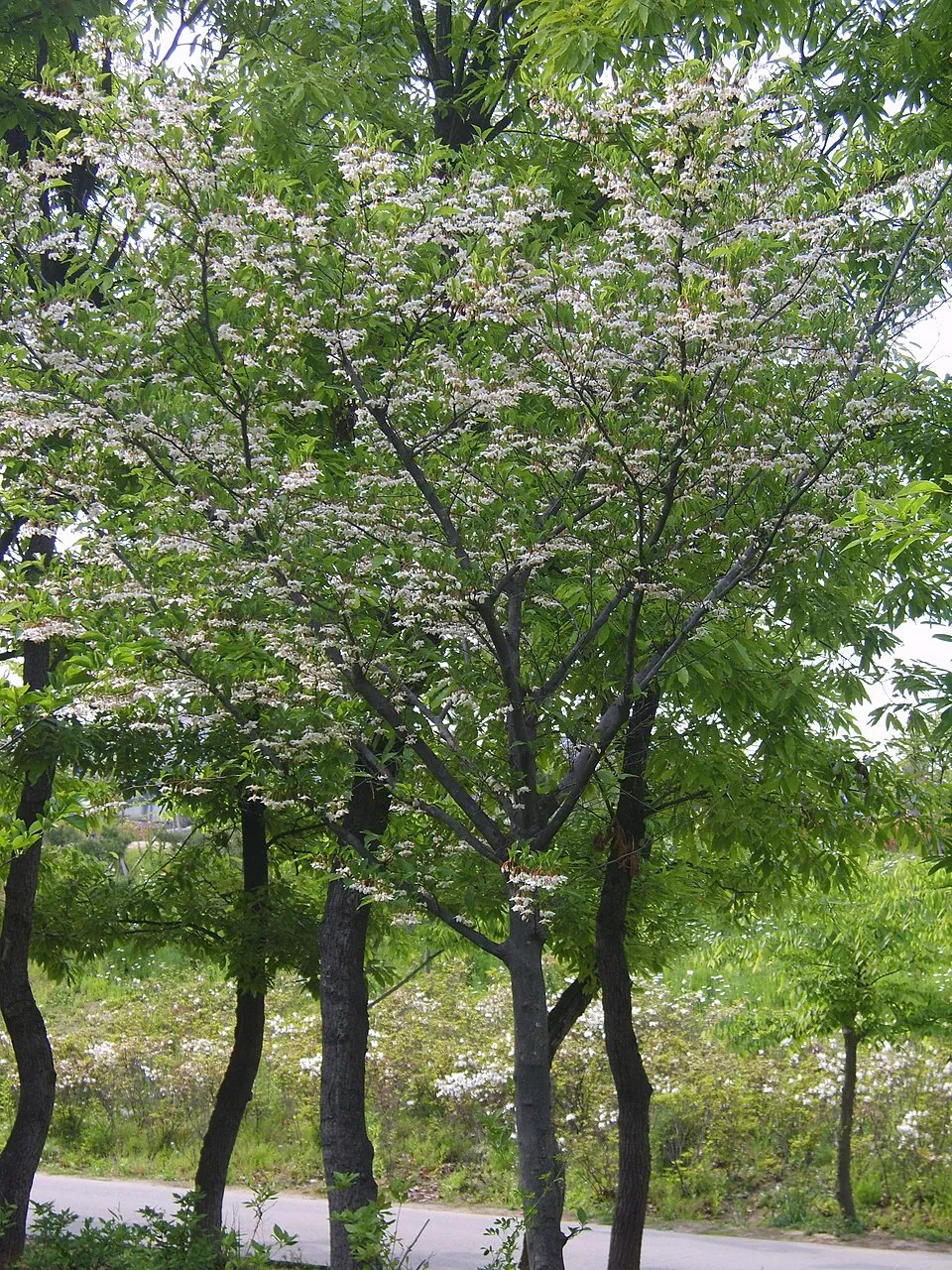
Styrax japonicus, commonly known as Japanese Snowbell or Fragrant Snowbell, is a graceful deciduous tree belonging to the Styracaceae family. Native to the temperate forests of East Asia, specifically Japan, Korea, and parts of China, it thrives in well-drained, moist, and slightly acidic woodland environments. This small to medium-sized tree typically reaches heights of 20 to 30 feet with a similar spread, forming an elegant, often multi-stemmed structure with distinctive horizontal branches that create a layered effect.
Its ovate to elliptic leaves are a vibrant dark green, glossy on the upper surface, and finely serrated along the margins, turning attractive shades of yellow, orange, or reddish-purple in autumn before shedding. The most striking feature of Styrax japonicus is its abundant display of fragrant, bell-shaped white or sometimes pale pink flowers. These pendulous blossoms, measuring about three-quarters of an inch, hang in delicate clusters below the foliage from late spring to early summer, creating a 'snowbell' effect.
Following the bloom, small, hard, olive-green drupes develop, adding interest into the autumn. The bark is smooth and gray when young, gradually developing shallow fissures with age, enhancing its winter appeal. While highly valued for its ornamental attributes, it is crucial to note that Styrax japonicus is primarily cultivated for its aesthetic beauty and is not traditionally or commercially recognized for significant medicinal properties, unlike some of its resin-producing congeners.
Trusted Scientific References
1. Authoritative external sources for Styrax japonicus
1.1 Wikipedia — Styrax japonicus
1.2 Kew POWO (Plants of the World Online)
1.3 PubMed — peer-reviewed research
1.4 NCBI Taxonomy Browser
1.5 GBIF — Global Biodiversity
1.6Styrax Japonicus should be interpreted through verified botanical identity, practical care, and responsible safety language. This recovery note adds the missing context needed for a complete profile: match light to the plant's habit, use well-drained soil, water according to season, and avoid unsupported medicinal or edible claims. For publishing, the plant can be presented as a source-backed garden plant with clear care guidance, common problem diagnosis, and conservative safety wording.
1.1.Styrax Japonicus — Key Features
- ✓ <strong>Elegant, pendulous white or pink bell</strong> — shaped flowers.
- ✓ <strong>Fragrant blooms appearing</strong> — Fragrant blooms appearing in late spring to early summer.
- ✓ <strong>Attractive dark green</strong> — Attractive dark green foliage with vibrant yellow or reddish-purple autumn color.
- ✓ <strong>Graceful, spreading habit</strong> — Graceful, spreading habit often developing distinctive horizontal branches.
- ✓ <strong>Smooth, gray bark</strong> — Smooth, gray bark that develops subtle fissures with maturity.
- ✓ <strong>Moderately sized deciduous</strong> — Moderately sized deciduous tree, ideal for small to medium-sized gardens.
- ✓ <strong>High resistance to</strong> — High resistance to most common garden pests and plant diseases.
- ✓ <strong>Adaptable to a range of soil types, preferring well</strong> — drained, acidic conditions.
- ✓ <strong>Valued primarily for</strong> — Valued primarily for its ornamental and aesthetic contributions to landscapes.
- ✓ <strong>Native to East</strong> — Native to East Asia, including its namesake Japan, and Korea.
1.2.Styrax Japonicus — Quick Summary
- ✓ Japanese Snowbell (Styrax japonicus) is a deciduous ornamental tree known for its elegant, fragrant white or pink bell-shaped flowers.
- ✓ Primarily valued for its aesthetic beauty in landscapes, offering dappled shade and attracting beneficial pollinators.
- ✓ It is not recognized for significant medicinal uses, distinguishing it from other resin-producing Styrax species.
- ✓ Thrives in well-drained, consistently moist, acidic soil with full sun to partial shade in USDA Zones 5-9.
- ✓ Generally low-maintenance, pest, and disease resistant once established, making it an excellent garden choice.
- ✓ Specific chemical constituents for medicinal applications are not extensively documented for this particular species.
2.Styrax Japonicus — Scientific Identity
3.Styrax Japonicus — Quick Facts
4.Styrax Japonicus — Appearance & Identification
5.Styrax Japonicus — Native Habitat
6.Styrax Japonicus — Water Requirements
- ✓ Site Selection — Plant in a location sheltered from high winds, providing full sun to partial shade for optimal growth and abundant flowering.
- ✓ Soil Requirements — Thrives best in humus-rich, well-drained loam with a slightly acidic to neutral pH (5.5-6.5), tolerating both clay and sandy soils.
- ✓ Watering — Requires consistent moisture, especially when newly planted; irrigate deeply weekly during the first year, then as needed during dry periods, avoiding waterlogging.
- ✓ Fertilization — Optional; apply a balanced, water-soluble fertilizer in early spring for established trees, or a higher phosphorus formula to encourage more profuse blooms.
- ✓ Pruning — Minimal pruning is needed; perform in late winter or early spring before buds appear to remove dead, diseased, or crossing branches and to shape the canopy every few years.
- ✓ Mulching — Apply a 3- to 4-inch layer of organic mulch around the base to retain soil moisture, suppress competing weeds, and protect roots from temperature extremes in colder climates.
- ✓ Hardiness Zones — Best suited for USDA hardiness zones 5 through 9, with some varieties tolerating temperature fluctuations if adequately protected.
- ✓ Pest and Disease Resistance — Generally resistant to most common pests and diseases, though weakened plants may occasionally attract Ambrosia beetles.
Reviewed by the Flora Medical Global Botanical Review Panel
Multi-disciplinary editorial group · Botany · Ethnobotany · Herbal-medicine literature
Who reviewed this: This page was checked by the Flora Medical Global Botanical Review Panel — an in-house editorial group of botany graduates, ethnobotany researchers, and horticulture practitioners who collectively maintain our 7,000+ plant encyclopedia. Meet the team.
Our 4-step verification process
1. Taxonomic verification
Scientific names and synonyms cross-checked against Kew POWO, World Flora Online, and The Plant List.
2. Phytochemical & medicinal cross-reference
Active compounds, traditional uses, and reported activities are cross-referenced with PubMed, USDA Dr. Duke's database, and peer-reviewed ethnobotanical literature.
3. Conservation & distribution check
Distribution, ecology, and conservation status confirmed against GBIF occurrence records and the IUCN Red List.
4. Editorial & safety review
Every entry passes an editorial pass for clarity, originality, and safety notices (toxicity, contraindications, dosage caveats) before publication.
Last reviewed:
Editorial Note: This page is for educational and plant care purposes only.
Written by: Flora Medical Global Editorial Team
Reviewed by: Flora Medical Global Botanical Review Panel
Last Updated: June 15, 2026







Styrax Japonicus — Comments & Community Reviews
Rate this plant