
Care Disclaimer: Plant care recommendations are general guidelines based on common growing conditions. Individual results may vary based on your local environment, climate, and care routine. If your plant is toxic, keep it away from children and pets, and consult a veterinarian if accidental ingestion occurs.
1.Sunflower Teddy Bear — Overview
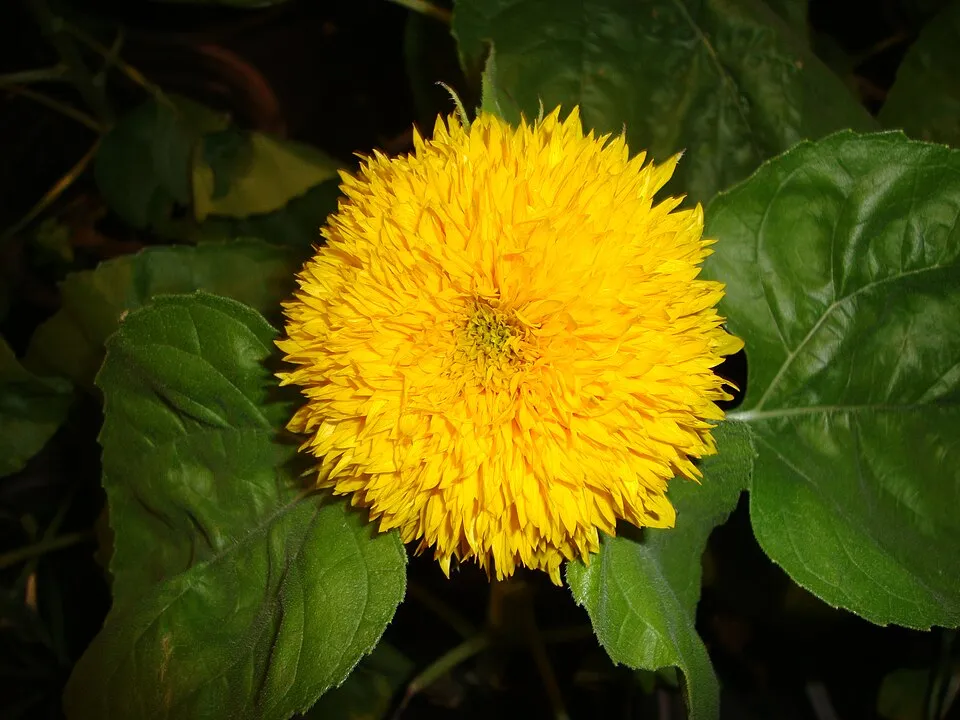
The Sunflower 'Teddy Bear' (Helianthus annuus 'Teddy') is a charming annual cultivar of the widespread common sunflower, primarily celebrated for its distinctive ornamental appeal. Unlike the towering, single-headed classic sunflowers, 'Teddy Bear' typically reaches a compact height of 2 to 3 feet, making it an ideal choice for smaller gardens, containers, and decorative borders. Its most striking feature is its fully double, golden-yellow blooms, which are entirely composed of densely packed ray florets, creating a fluffy, pom-pom-like appearance that truly evokes the warmth of a 'teddy bear'.
These delightful flowers, usually 4 to 6 inches in diameter, lack a visible central disk, contributing to their unique, shaggy texture. Originating from the broader Helianthus annuus species native to North America and Mexico, this cultivar retains the hardy, sun-loving characteristics of its wild ancestors. It is a prolific bloomer, producing multiple flowers from mid-summer until the first hard frost, attracting a variety of pollinators such as bees and butterflies, and providing excellent material for cut flower arrangements.
While 'Teddy Bear' is cultivated for its aesthetic value, the parent species, Helianthus annuus, has a rich ethnobotanical history, with its seeds, leaves, and roots traditionally utilized across various cultures for their nutritional and medicinal properties.
Trusted Scientific References
1. Authoritative external sources for Helianthus annuus Teddy
1.1 Wikipedia — Helianthus annuus Teddy
1.2 Kew POWO (Plants of the World Online)
1.3 PubMed — peer-reviewed research
1.4 NCBI Taxonomy Browser
1.5 GBIF — Global Biodiversity
1.6Sunflower Teddy Bear should be interpreted through verified botanical identity, practical care, and responsible safety language. This recovery note adds the missing context needed for a complete profile: match light to the plant's habit, use well-drained soil, water according to season, and avoid unsupported medicinal or edible claims. For publishing, the plant can be presented as a source-backed garden plant with clear care guidance, common problem diagnosis, and conservative safety wording.
1.1.Sunflower Teddy Bear — Key Features
- ✓ <strong>Unique 'Teddy Bear'</strong> — Unique 'Teddy Bear' cultivar of *Helianthus annuus*.
- ✓ <strong>Distinctive fully double, golden</strong> — yellow, pom-pom-like blooms.
- ✓ <strong>Compact, dwarf growth habit, typically 2</strong> — 3 feet tall.
- ✓ <strong>Prolific bloomer, producing multiple flowers from mid</strong> — summer until first frost.
- ✓ <strong>Excellent ornamental plant</strong> — Excellent ornamental plant for gardens, containers, and cut flower arrangements.
- ✓ <strong>Attracts a variety</strong> — Attracts a variety of pollinators, including bees and butterflies.
- ✓ <strong>Seeds (from H.</strong> — Seeds (from *H. annuus* species) are highly nutritious, rich in healthy fats, vitamins, and minerals.
- ✓ <strong>Supports cardiovascular, immune,</strong> — Supports cardiovascular, immune, and skin health (species benefits).
- ✓ <strong>Exhibits good resistance</strong> — Exhibits good resistance to common pests and diseases for a sunflower cultivar.
- ✓ <strong>Versatile plant, offering</strong> — Versatile plant, offering both aesthetic appeal and significant health benefits from its species.
1.2.Sunflower Teddy Bear — Quick Summary
- ✓ Helianthus annuus 'Teddy Bear' is a unique dwarf ornamental sunflower cultivar.
- ✓ Features distinctive fluffy, fully double, golden-yellow, pom-pom-like blooms.
- ✓ The broader *Helianthus annuus* species is a nutritional powerhouse, especially its seeds and oil.
- ✓ Rich in healthy fats, Vitamin E, B vitamins, and essential minerals like magnesium, selenium, and zinc.
- ✓ Offers significant medicinal benefits for cardiovascular health, immune support, and skin nourishment.
- ✓ An easy-to-grow annual plant, it thrives in full sun and attracts beneficial pollinators.
2.Sunflower Teddy Bear — Scientific Identity
3.Sunflower Teddy Bear — Quick Facts
4.Sunflower Teddy Bear — Appearance & Identification
5.Sunflower Teddy Bear — Native Habitat
6.Sunflower Teddy Bear — Water Requirements
- ✓ Site Selection — Choose a location with full sun exposure, receiving at least 6-8 hours of direct sunlight daily.
- ✓ Soil Preparation — Plant in moderately fertile, well-draining sandy loam soil with a pH between 6.0 and 6.8. Amend with compost to enrich fertility.
- ✓ Sowing Seeds — Direct sow 'Teddy Bear' sunflower seeds outdoors after the last frost, when soil temperatures consistently reach 60-85°F (15-29°C).
- ✓ Planting Depth and Spacing — Plant seeds 1/2 inch deep and 2 inches apart. Once seedlings emerge and are sturdy, thin them to 18 inches apart to allow for proper growth.
- ✓ Watering — Provide approximately one inch of water per week, adjusting for rainfall. Water deeply when the top 2 inches of soil feel dry, ensuring soil is moist to 6 inches deep, but avoid overwatering to prevent root rot.
- ✓ Fertilization — Before planting, incorporate compost or a balanced NPK 10-10-10 fertilizer. For sustained growth, a monthly application of liquid fertilizer can be beneficial, especially in less fertile soils or for container-grown plants.
- ✓ Deadheading — Regularly remove spent blooms (deadhead) to encourage the plant to produce more flowers throughout the growing season, extending its beautiful display until the first frost.
Reviewed by the Flora Medical Global Botanical Review Panel
Multi-disciplinary editorial group · Botany · Ethnobotany · Herbal-medicine literature
Who reviewed this: This page was checked by the Flora Medical Global Botanical Review Panel — an in-house editorial group of botany graduates, ethnobotany researchers, and horticulture practitioners who collectively maintain our 7,000+ plant encyclopedia. Meet the team.
Our 4-step verification process
1. Taxonomic verification
Scientific names and synonyms cross-checked against Kew POWO, World Flora Online, and The Plant List.
2. Phytochemical & medicinal cross-reference
Active compounds, traditional uses, and reported activities are cross-referenced with PubMed, USDA Dr. Duke's database, and peer-reviewed ethnobotanical literature.
3. Conservation & distribution check
Distribution, ecology, and conservation status confirmed against GBIF occurrence records and the IUCN Red List.
4. Editorial & safety review
Every entry passes an editorial pass for clarity, originality, and safety notices (toxicity, contraindications, dosage caveats) before publication.
Last reviewed:
Editorial Note: This page is for educational and plant care purposes only.
Written by: Flora Medical Global Editorial Team
Reviewed by: Flora Medical Global Botanical Review Panel
Last Updated: June 15, 2026







Sunflower Teddy Bear — Comments & Community Reviews
Rate this plant