


Care Disclaimer: Plant care recommendations are general guidelines based on common growing conditions. Individual results may vary based on your local environment, climate, and care routine. If your plant is toxic, keep it away from children and pets, and consult a veterinarian if accidental ingestion occurs.
1.Tecoma Stans — Overview
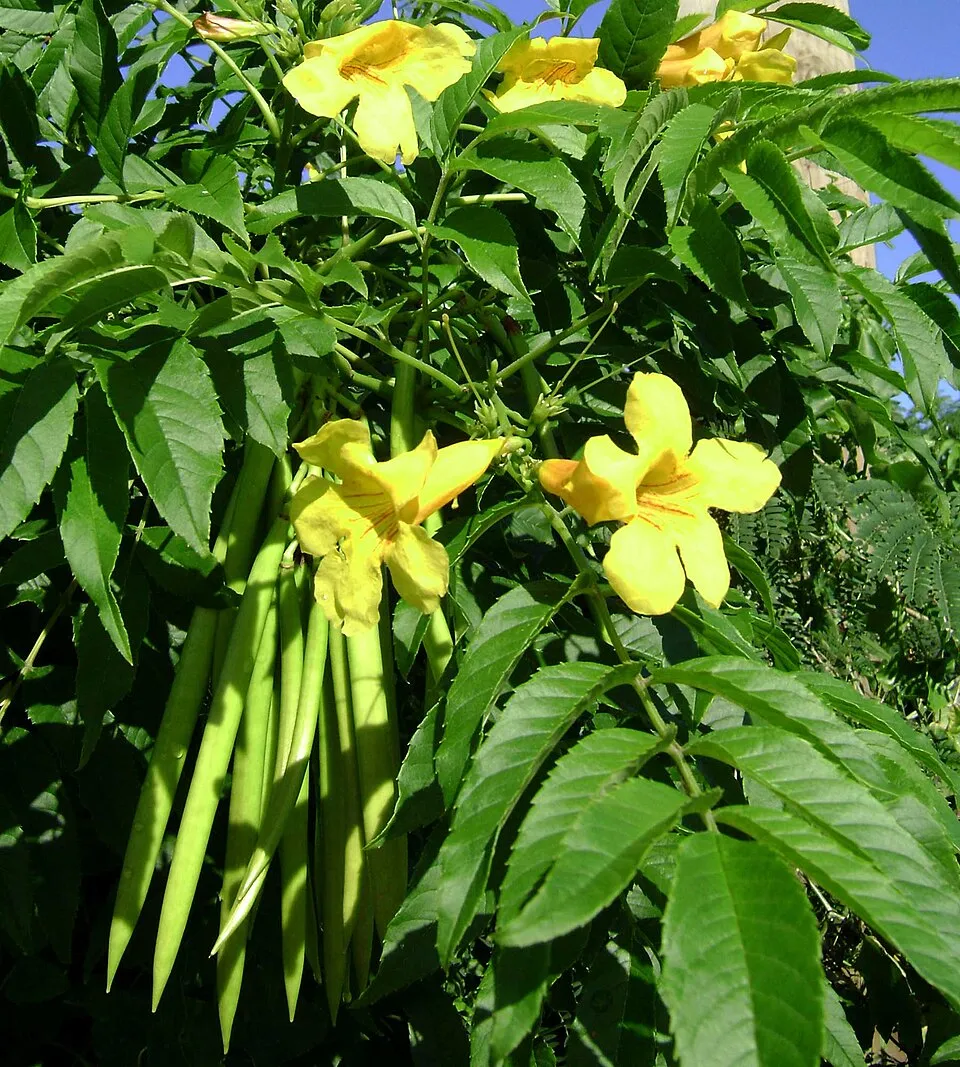
Tecoma stans, widely recognized as Yellow Bells, Yellow Trumpetbush, or Esperanza, is a highly ornamental and resilient shrub or small tree belonging to the Bignoniaceae family. Native to a vast range spanning the Americas, from the southwestern United States (specifically Tecoma stans var. angustata being more cold and drought-tolerant) through Mexico and Central America, extending into South America and the Caribbean, this plant is celebrated for its spectacular floral displays.
It typically attains a height of 3 to 9 feet in its native shrub form, though more tropical varieties can grow taller. Its striking clusters of bright yellow, trumpet-shaped flowers bloom profusely from spring through autumn, often persisting into winter in warmer, frost-free regions, creating a vibrant spectacle. The foliage consists of pinnately compound leaves with distinctively serrated leaflets, providing an attractive backdrop to the abundant blooms.
Following flowering, it produces elongated, slender seed pods that resemble thin beans. Tecoma stans is highly valued in horticulture for its adaptability, drought tolerance once established, and its ability to thrive in full sun, making it an excellent choice for xeriscaping, garden borders, and as a specimen plant. Beyond its aesthetic appeal, it plays an ecological role by attracting various pollinators, including bees and hummingbirds, enriching biodiversity in its growing environments.
Trusted Scientific References
1. Authoritative external sources for Tecoma stans
1.1 Wikipedia — Tecoma stans
1.2 Kew POWO (Plants of the World Online)
1.3 PubMed — peer-reviewed research
1.4 NCBI Taxonomy Browser
1.5 GBIF — Global Biodiversity
1.6Tecoma Stans should be interpreted through verified botanical identity, practical care, and responsible safety language. This recovery note adds the missing context needed for a complete profile: match light to the plant's habit, use well-drained soil, water according to season, and avoid unsupported medicinal or edible claims. For publishing, the plant can be presented as a source-backed garden plant with clear care guidance, common problem diagnosis, and conservative safety wording.
1.1.Tecoma Stans — Key Features
- ✓ <strong>Common Names</strong> — Yellow Bells, Esperanza, Yellow Trumpetbush, Yellow Trumpetflower.
- ✓ <strong>Botanical Family</strong> — Bignoniaceae, known for showy, trumpet-shaped flowers.
- ✓ <strong>Native Range</strong> — Extensive distribution across the Americas, from SW US to Argentina.
- ✓ <strong>Floral Display</strong> — Produces abundant clusters of bright yellow, trumpet-shaped flowers.
- ✓ <strong>Medicinal Uses</strong> — Traditional applications for diabetes, fevers, and gastrointestinal ailments.
- ✓ <strong>Key Phytochemicals</strong> — Contains iridoid glycosides (tecomin), alkaloids (tecomanine), and flavonoids.
- ✓ <strong>Ecological Role</strong> — Attracts important pollinators like bees and hummingbirds.
- ✓ <strong>Cultivation</strong> — Highly adaptable, drought-tolerant, and prefers full sun.
- ✓ <strong>Growth Habit</strong> — Can be grown as a shrub or small tree, reaching varying heights.
- ✓ <strong>Traditional Significance</strong> — Holds a long history in Central and South American folk medicine.
1.2.Tecoma Stans — Quick Summary
- ✓ Vibrant ornamental shrub known as Yellow Bells or Esperanza, native to the Americas.
- ✓ Traditionally utilized for managing diabetes, digestive issues, and skin conditions.
- ✓ Rich in active phytochemicals including iridoid glycosides, alkaloids, and flavonoids.
- ✓ Exhibits notable hypoglycemic, anti-inflammatory, and antimicrobial properties.
- ✓ A resilient, drought-tolerant plant thriving in full sun, attracting pollinators.
- ✓ Requires careful consideration due to potential drug interactions and blood sugar lowering effects.
2.Tecoma Stans — Scientific Identity
3.Tecoma Stans — Quick Facts
4.Tecoma Stans — Appearance & Identification
5.Tecoma Stans — Native Habitat
6.Tecoma Stans — Water Requirements
- ✓ Sunlight — Thrives best in full sun exposure, requiring at least 6-8 hours of direct sunlight daily for optimal flowering and growth.
- ✓ Soil — Prefers well-draining soil, adaptable to a variety of soil types including sandy, loamy, or clay, with a slightly acidic to neutral pH (6.0-7.5).
- ✓ Watering — Drought-tolerant once established, but young plants require regular watering. Mature plants benefit from occasional deep watering, especially during prolonged dry periods.
- ✓ Temperature & Hardiness — Best suited for USDA Zones 8-11, tolerating warm, tropical, and subtropical climates. Some varieties, like _T. stans_ var. _angustata_, show increased cold tolerance.
- ✓ Propagation — Can be propagated easily from seeds, which require light for germination, or from semi-hardwood cuttings taken during the warmer months.
- ✓ Fertilization — Generally low-maintenance. A balanced slow-release fertilizer can be applied in spring to encourage vigorous growth and abundant blooms, though often not strictly necessary.
- ✓ Pruning — Prune to maintain desired shape, remove dead or damaged branches, and encourage bushier growth and more prolific flowering, typically after the main bloom cycle.
- ✓ Pests & Diseases — Relatively pest-free; occasional issues might include aphids or spider mites, which can be managed with organic pest control methods.
Reviewed by the Flora Medical Global Botanical Review Panel
Multi-disciplinary editorial group · Botany · Ethnobotany · Herbal-medicine literature
Who reviewed this: This page was checked by the Flora Medical Global Botanical Review Panel — an in-house editorial group of botany graduates, ethnobotany researchers, and horticulture practitioners who collectively maintain our 7,000+ plant encyclopedia. Meet the team.
Our 4-step verification process
1. Taxonomic verification
Scientific names and synonyms cross-checked against Kew POWO, World Flora Online, and The Plant List.
2. Phytochemical & medicinal cross-reference
Active compounds, traditional uses, and reported activities are cross-referenced with PubMed, USDA Dr. Duke's database, and peer-reviewed ethnobotanical literature.
3. Conservation & distribution check
Distribution, ecology, and conservation status confirmed against GBIF occurrence records and the IUCN Red List.
4. Editorial & safety review
Every entry passes an editorial pass for clarity, originality, and safety notices (toxicity, contraindications, dosage caveats) before publication.
Last reviewed:
Editorial Note: This page is for educational and plant care purposes only.
Written by: Flora Medical Global Editorial Team
Reviewed by: Flora Medical Global Botanical Review Panel
Last Updated: June 15, 2026







Tecoma Stans — Comments & Community Reviews
Rate this plant