
Care Disclaimer: Plant care recommendations are general guidelines based on common growing conditions. Individual results may vary based on your local environment, climate, and care routine. If your plant is toxic, keep it away from children and pets, and consult a veterinarian if accidental ingestion occurs.
1.Trimezia Steyermarkii — Overview
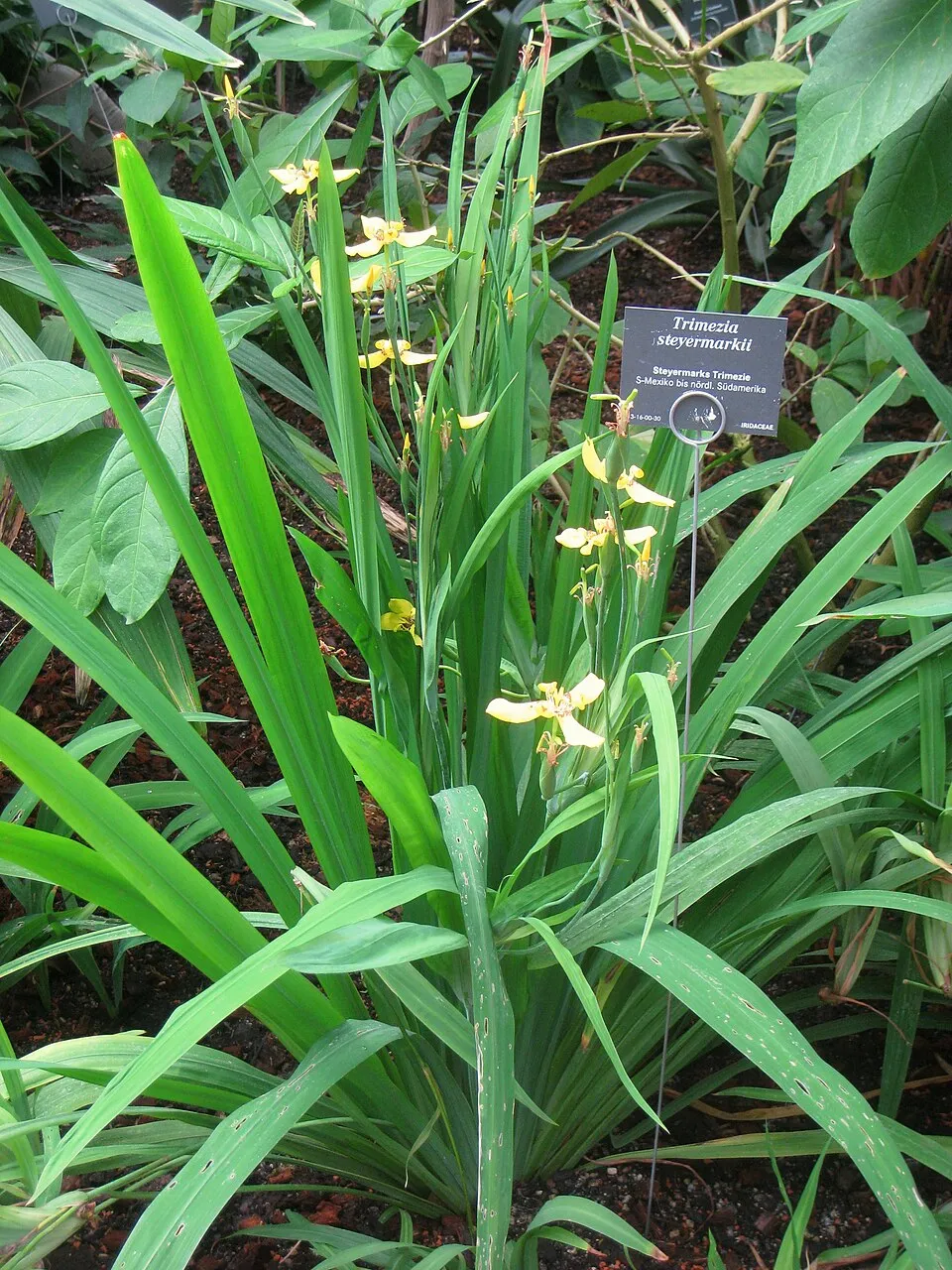
Trimezia Steyermarkii, commonly recognized as Steyermark's Yellow Iris or the Tropical Starflower, is an exquisite perennial herbaceous plant that forms part of the diverse Iridaceae family, though its specific placement highlights unique evolutionary traits. This elegant species is typically found flourishing in the moist, semi-shaded undergrowth of tropical and subtropical regions, predominantly across South and Central America, including its native Venezuela. The plant often develops into dense clumps, reaching a mature height of 45 to 90 centimeters, characterized by its upright, sword-shaped, basal leaves that can extend up to 60 cm in length. The foliage presents a rich, glossy green hue, creating a lush backdrop for its captivating inflorescence.
Trimezia Steyermarkii produces delicate, vibrant yellow to pale orange flowers, each approximately 5-7 cm in diameter, borne on slender, erect scapes. These ephemeral blooms, reminiscent of small irises or orchids, typically unfurl in succession during the morning and gracefully fade by late afternoon, with peak flowering occurring from late spring through early autumn. Its unique 'walking' characteristic refers to its propagation via plantlets that form on the flower stalks, which eventually root when they touch the ground. The plant thrives in well-drained, humus-rich soils and a humid environment, often colonizing forest margins, stream banks, or open clearings.
Its rhizomatous root system facilitates gradual spread and contributes to soil stabilization, playing an ecological role in its natural habitats. Beyond its ornamental appeal, its botanical significance lies in its distinct characteristics within the broader Trimezia genus.
Trusted Scientific References
1. Authoritative external sources for Trimezia Steyermarkii
1.1 Wikipedia — Trimezia Steyermarkii
1.2 Kew POWO (Plants of the World Online)
1.3 PubMed — peer-reviewed research
1.4 NCBI Taxonomy Browser
1.5 GBIF — Global Biodiversity
1.6Trimezia Steyermarkii should be interpreted through verified botanical identity, practical care, and responsible safety language. This recovery note adds the missing context needed for a complete profile: match light to the plant's habit, use well-drained soil, water according to season, and avoid unsupported medicinal or edible claims. For publishing, the plant can be presented as a source-backed garden plant with clear care guidance, common problem diagnosis, and conservative safety wording.
1.1.Trimezia Steyermarkii — Key Features
- ✓ <strong>Common Names</strong> — Steyermark's Yellow Iris, Yellow Walking Iris, Tropical Starflower.
- ✓ <strong>Botanical Family</strong> — Iridaceae, known for its iris-like flowers.
- ✓ <strong>Native Range</strong> — Tropical and subtropical regions of South and Central America, notably Venezuela.
- ✓ <strong>Flower Color</strong> — Striking vibrant yellow to pale orange, with ephemeral blooms.
- ✓ <strong>Leaf Morphology</strong> — Distinctive sword-shaped, glossy green basal leaves.
- ✓ <strong>Growth Habit</strong> — Forms dense, clump-forming perennials, typically 45-90 cm tall.
- ✓ <strong>Propagation Method</strong> — Unique 'walking' behavior via plantlets that develop on inflorescences.
- ✓ <strong>Medicinal Potential</strong> — Suggested anti-inflammatory, antioxidant, and digestive support properties.
- ✓ <strong>Key Compounds</strong> — Contains beneficial flavonoids, terpenoids, and various polyphenols.
- ✓ <strong>Ornamental Value</strong> — Highly prized for its aesthetic appeal in tropical and subtropical gardens.
1.2.Trimezia Steyermarkii — Quick Summary
- ✓ Ornamental perennial with vibrant yellow to pale orange flowers, known as Yellow Walking Iris.
- ✓ Native to tropical South and Central America, thriving in humid, semi-shaded environments.
- ✓ Potential medicinal properties include anti-inflammatory, antioxidant, and digestive support.
- ✓ Rich in diverse phytochemicals such as flavonoids, terpenoids, and polyphenolic compounds.
- ✓ Unique 'walking' propagation method through plantlets forming on flower stalks.
- ✓ Requires moderate care, preferring warmth, consistent moisture, and well-drained soil.
2.Trimezia Steyermarkii — Scientific Identity
3.Trimezia Steyermarkii — Quick Facts
4.Trimezia Steyermarkii — Appearance & Identification
5.Trimezia Steyermarkii — Native Habitat
6.Trimezia Steyermarkii — Water Requirements
- ✓ Light Requirements — Trimezia Steyermarkii thrives in bright, indirect light to part shade; direct, intense sunlight can scorch its delicate leaves.
- ✓ Soil Preferences — Prefers well-drained, humus-rich soils, but is adaptable to various soil types, including low-nutrient and a wide pH range.
- ✓ Watering Schedule — Requires moderate watering; allow the soil to dry slightly between watering sessions, though it tolerates waterlogged conditions once established.
- ✓ Temperature & Humidity — Best grown in warm temperatures between 60°F and 75°F (15°C and 24°C) with moderate to high humidity levels.
- ✓ Propagation Methods — Can be effectively propagated by division of its rhizomatous clumps or by planting the unique off-sets (plantlets) that develop from its spent inflorescences.
- ✓ Fertilization & Pruning — Needs regular feeding with a balanced fertilizer during its active growing season (spring to fall), reducing or stopping during dormancy; remove dead or damaged leaves as needed, and cut back foliage to the ground after it dies back in fall.
- ✓ Hardiness Zones — Not frost-tolerant, this plant is best suited for outdoor cultivation in USDA hardiness zones 8 through 11.
Reviewed by the Flora Medical Global Botanical Review Panel
Multi-disciplinary editorial group · Botany · Ethnobotany · Herbal-medicine literature
Who reviewed this: This page was checked by the Flora Medical Global Botanical Review Panel — an in-house editorial group of botany graduates, ethnobotany researchers, and horticulture practitioners who collectively maintain our 7,000+ plant encyclopedia. Meet the team.
Our 4-step verification process
1. Taxonomic verification
Scientific names and synonyms cross-checked against Kew POWO, World Flora Online, and The Plant List.
2. Phytochemical & medicinal cross-reference
Active compounds, traditional uses, and reported activities are cross-referenced with PubMed, USDA Dr. Duke's database, and peer-reviewed ethnobotanical literature.
3. Conservation & distribution check
Distribution, ecology, and conservation status confirmed against GBIF occurrence records and the IUCN Red List.
4. Editorial & safety review
Every entry passes an editorial pass for clarity, originality, and safety notices (toxicity, contraindications, dosage caveats) before publication.
Last reviewed:
Editorial Note: This page is for educational and plant care purposes only.
Written by: Flora Medical Global Editorial Team
Reviewed by: Flora Medical Global Botanical Review Panel
Last Updated: June 15, 2026







Trimezia Steyermarkii — Comments & Community Reviews
Rate this plant