
Care Disclaimer: Plant care recommendations are general guidelines based on common growing conditions. Individual results may vary based on your local environment, climate, and care routine. If your plant is toxic, keep it away from children and pets, and consult a veterinarian if accidental ingestion occurs.
1.Verbascum — Overview
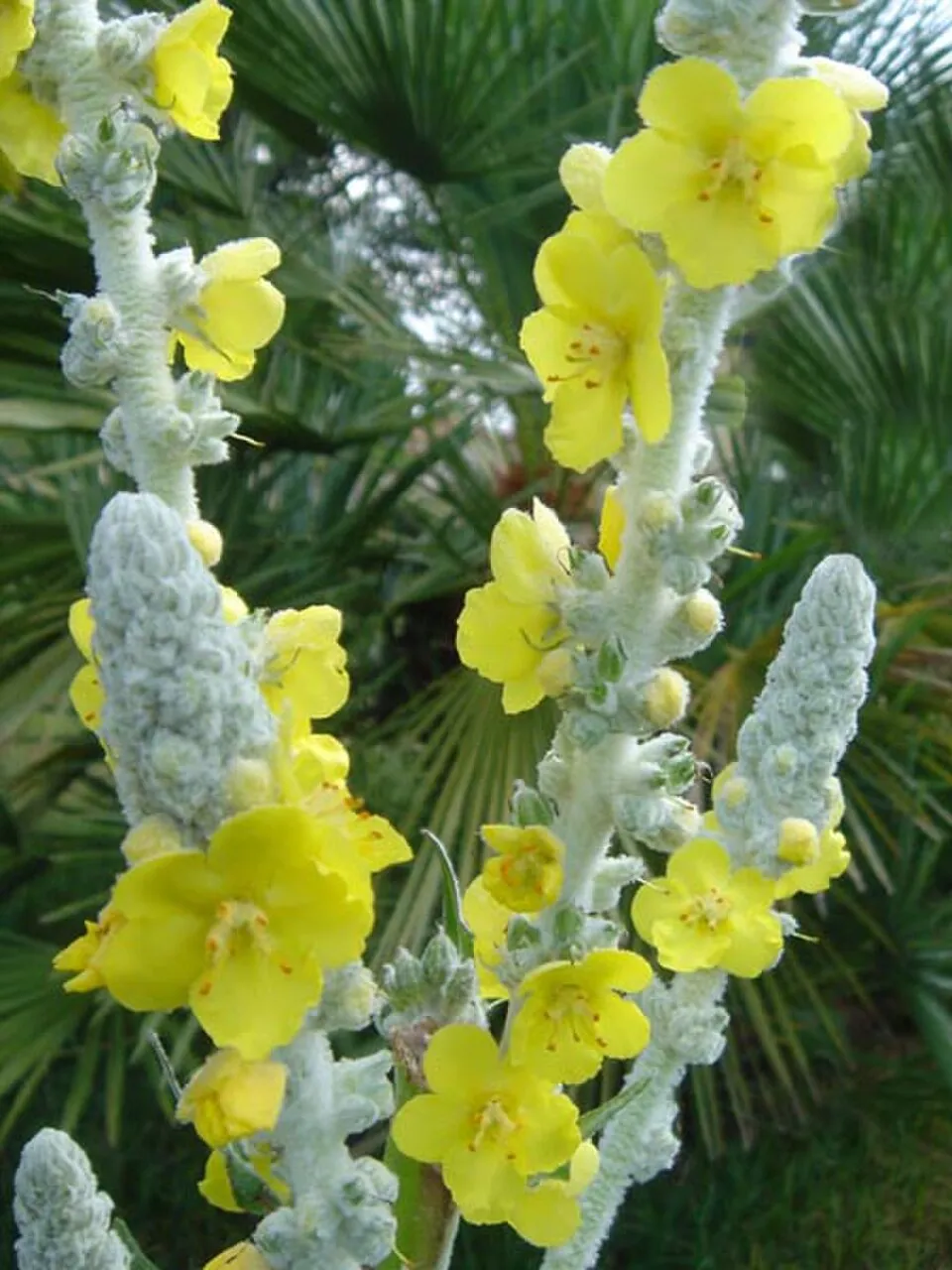
Verbascum bombyciferum, widely recognized as Silk Mullein or Turkish Mullein, is a majestic biennial or short-lived perennial belonging to the Scrophulariaceae family, though it's sometimes classified under Plantaginaceae. Native to the Mediterranean basin, particularly Turkey and surrounding regions, this species is highly valued for its striking architectural form. In its inaugural year, it establishes a substantial basal rosette of large, ovate to oblong leaves, which are densely covered in soft, silvery-grey hairs, imparting a distinctive felted or silken texture—hence its common name.
This thick indumentum serves a critical ecological role, protecting the plant from intense solar radiation, minimizing water loss through transpiration, and deterring herbivory. During its second year, Verbascum bombyciferum produces an impressive, towering floral spike, capable of reaching heights of up to 2 meters (6.5 feet) or more. This robust spike is adorned with a profusion of bright yellow to golden-yellow flowers, each featuring five rounded petals and prominent stamens often tipped with purple or brownish anthers.
The flowers, typically 2-3 cm in diameter, open sequentially from the base upwards, ensuring an extended blooming period from late spring through summer. The vibrant yellow blossoms create a stunning contrast against the plant's silvery foliage, making it a focal point in any garden. It thrives in full sun and well-drained, neutral to slightly alkaline soils, demonstrating excellent drought tolerance once established, making it ideal for xeriscapes, rock gardens, and borders.
Trusted Scientific References
1. Authoritative external sources for Verbascum bombyciferum
1.1 Wikipedia — Verbascum bombyciferum
1.2 Kew POWO (Plants of the World Online)
1.3 PubMed — peer-reviewed research
1.4 NCBI Taxonomy Browser
1.5 GBIF — Global Biodiversity
1.6Verbascum should be interpreted through verified botanical identity, practical care, and responsible safety language. This recovery note adds the missing context needed for a complete profile: match light to the plant's habit, use well-drained soil, water according to season, and avoid unsupported medicinal or edible claims. For publishing, the plant can be presented as a source-backed garden plant with clear care guidance, common problem diagnosis, and conservative safety wording.
1.1.Verbascum — Key Features
- ✓ <strong>Striking Architectural Form</strong> — Impressive height and dramatic flower spikes.
- ✓ <strong>Silvery, Felted Foliage</strong> — Dense hairs provide unique texture and drought protection.
- ✓ <strong>Biennial Growth Habit</strong> — Forms a rosette in year one, flowers in year two.
- ✓ <strong>Bright Yellow Flowers</strong> — Abundant, sequential blooms attract pollinators.
- ✓ <strong>Drought</strong> — Tolerant — Ideal for xeriscapes and low-water gardens.
- ✓ <strong>Mediterranean Native</strong> — Adapted to sunny, well-drained, often poor soils.
- ✓ <strong>Pollinator Magnet</strong> — Attracts bees and other beneficial insects.
- ✓ <strong>Medicinal Potential</strong> — Shares many traditional uses with common mullein species.
- ✓ <strong>Low Maintenance</strong> — Easy to grow once established, requiring minimal care.
- ✓ <strong>Self</strong> — Seeding — Can readily self-propagate in favorable conditions.
1.2.Verbascum — Quick Summary
- ✓ Verbascum bombyciferum: Ornamental Mullein with medicinal properties.
- ✓ Known for large, silvery, felted leaves and tall yellow flower spikes.
- ✓ Traditional uses for respiratory health, earaches, and skin issues.
- ✓ Rich in mucilage, saponins, and anti-inflammatory flavonoids.
- ✓ Thrives in full sun and well-drained, alkaline soils.
- ✓ Generally safe, but caution advised for pregnancy and ear applications.
2.Verbascum — Scientific Identity
3.Verbascum — Quick Facts
4.Verbascum — Appearance & Identification
5.Verbascum — Native Habitat
6.Verbascum — Water Requirements
- ✓ Seed Sowing — Easily grown from seed; sow in autumn or early spring directly or in trays for transplanting.
- ✓ Soil Preference — Prefers well-drained, sandy or loamy soils with a neutral to slightly alkaline pH; tolerates poor soil.
- ✓ Sunlight Requirements — Thrives in full sun, requiring at least 6 hours of direct sunlight daily for optimal growth and flowering.
- ✓ Spacing — Space plants 18–24 inches apart to accommodate their large basal rosette and tall flower spikes.
- ✓ Watering — Drought-tolerant once established; water moderately when young, avoiding overwatering to prevent root rot.
- ✓ Fertilization — Generally not required, especially in fertile soils; excessive nitrogen can lead to lush foliage but fewer flowers.
- ✓ Deadheading — Remove spent flower spikes to encourage a second flush of blooms, though some prefer to leave them for seed collection or winter interest.
- ✓ Propagation — While self-seeding is common, specific cultivars can be propagated by root cuttings taken in autumn.
Reviewed by the Flora Medical Global Botanical Review Panel
Multi-disciplinary editorial group · Botany · Ethnobotany · Herbal-medicine literature
Who reviewed this: This page was checked by the Flora Medical Global Botanical Review Panel — an in-house editorial group of botany graduates, ethnobotany researchers, and horticulture practitioners who collectively maintain our 7,000+ plant encyclopedia. Meet the team.
Our 4-step verification process
1. Taxonomic verification
Scientific names and synonyms cross-checked against Kew POWO, World Flora Online, and The Plant List.
2. Phytochemical & medicinal cross-reference
Active compounds, traditional uses, and reported activities are cross-referenced with PubMed, USDA Dr. Duke's database, and peer-reviewed ethnobotanical literature.
3. Conservation & distribution check
Distribution, ecology, and conservation status confirmed against GBIF occurrence records and the IUCN Red List.
4. Editorial & safety review
Every entry passes an editorial pass for clarity, originality, and safety notices (toxicity, contraindications, dosage caveats) before publication.
Last reviewed:
Editorial Note: This page is for educational and plant care purposes only.
Written by: Flora Medical Global Editorial Team
Reviewed by: Flora Medical Global Botanical Review Panel
Last Updated: June 15, 2026







Verbascum — Comments & Community Reviews
Rate this plant