
Care Disclaimer: Plant care recommendations are general guidelines based on common growing conditions. Individual results may vary based on your local environment, climate, and care routine. If your plant is toxic, keep it away from children and pets, and consult a veterinarian if accidental ingestion occurs.
1.Verbena Garden — Overview
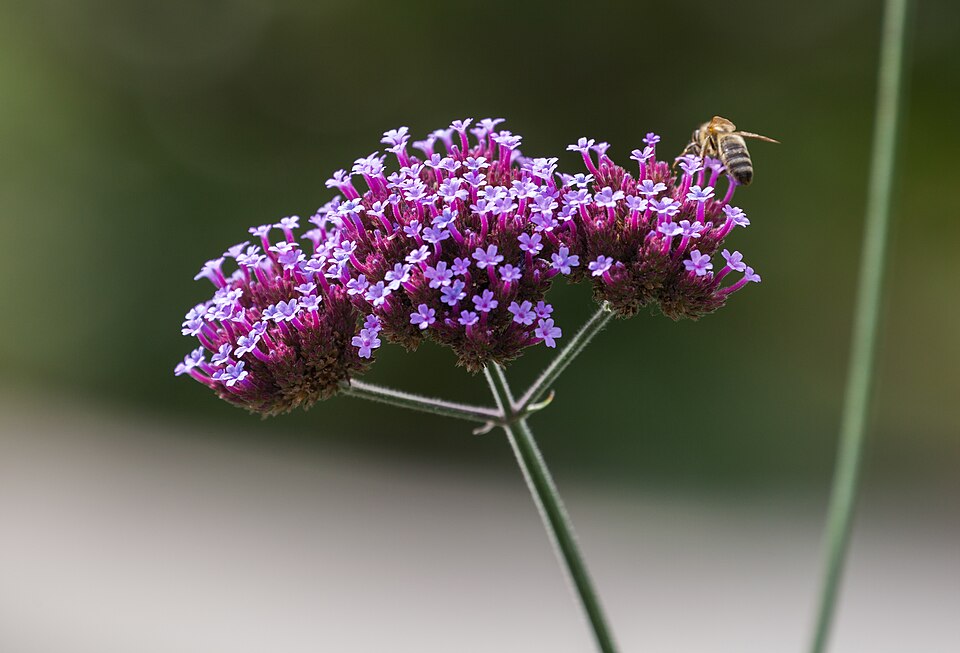
Verbena bonariensis, widely recognized as Purpletop Vervain or Tall Verbena, is an exquisite, slender perennial originating from the diverse landscapes of South America, specifically Brazil and Argentina, where its specific name hints at its presence near Buenos Aires. This member of the Verbenaceae family is characterized by its distinctively airy and transparent growth habit, making it a favorite for 'see-through' planting in garden designs. Its morphology features long, wiry, rough, and square stems that can reach heights of 3 to 6 feet, topped with delicate clusters of small, vibrant purple to rosy-lavender florets.
The deep green, lance-shaped, serrated leaves are primarily concentrated in a basal rosette, with sparse foliage along the upper stems, contributing to its ethereal appearance. Verbena bonariensis blooms profusely from mid-summer until the first frost, offering continuous color and acting as a powerful magnet for butterflies, bees, and other beneficial pollinators, thereby enriching ecological biodiversity in cultivated spaces. Its upright, clump-forming nature ensures it rarely requires staking despite its height, and it spreads gracefully, often self-seeding to establish new generations.
Trusted Scientific References
1. Authoritative external sources for Verbena bonariensis
1.1 Wikipedia — Verbena bonariensis
1.2 Kew POWO (Plants of the World Online)
1.3 PubMed — peer-reviewed research
1.4 NCBI Taxonomy Browser
1.5 GBIF — Global Biodiversity
1.6Verbena Garden should be interpreted through verified botanical identity, practical care, and responsible safety language. This recovery note adds the missing context needed for a complete profile: match light to the plant's habit, use well-drained soil, water according to season, and avoid unsupported medicinal or edible claims. For publishing, the plant can be presented as a source-backed garden plant with clear care guidance, common problem diagnosis, and conservative safety wording.
1.1.Verbena Garden — Key Features
- ✓ <strong>Tall, airy, and upright growth habit, reaching 3</strong> — 6 feet.
- ✓ <strong>Distinctive clusters of small, vibrant purple to rosy</strong> — lavender flowers.
- ✓ <strong>Exceptionally attractive to</strong> — Exceptionally attractive to butterflies, bees, and other pollinators.
- ✓ <strong>Long blooming period, from mid</strong> — summer until the first frost.
- ✓ <strong>Excellent for 'see</strong> — through' planting, adding vertical interest without visual obstruction.
- ✓ <strong>Relatively low maintenance and drought</strong> — tolerant once established.
- ✓ <strong>Readily self</strong> — seeds, contributing to naturalized garden aesthetics.
- ✓ <strong>Strong, wiry stems</strong> — Strong, wiry stems that generally do not require staking.
- ✓ <strong>Native to South</strong> — Native to South America, adapted to various garden conditions.
- ✓ <strong>Valued as a</strong> — Valued as a cut flower for its unique form and extended vase life.
1.2.Verbena Garden — Quick Summary
- ✓ Verbena bonariensis is a tall, airy ornamental perennial known for its vibrant purple flowers.
- ✓ It is a significant attractor for butterflies and other pollinators, enhancing garden ecosystems.
- ✓ Primarily cultivated for its aesthetic and ecological value, blooming from summer into autumn.
- ✓ While other Verbena species have traditional medicinal uses, Verbena bonariensis lacks extensive specific documentation for these benefits.
- ✓ Its unique transparent growth habit makes it ideal for 'see-through' garden designs.
- ✓ Thrives in full sun and well-drained soil, often self-seeding to propagate naturally.
2.Verbena Garden — Scientific Identity
3.Verbena Garden — Quick Facts
4.Verbena Garden — Appearance & Identification
5.Verbena Garden — Native Habitat
6.Verbena Garden — Water Requirements
- ✓ Full Sun Exposure — Verbena bonariensis thrives in full sun, requiring at least 6-8 hours of direct sunlight daily for robust growth and abundant flowering.
- ✓ Well-Drained Soil — Prefers well-draining, sandy or loamy soil with a slightly acidic to neutral pH (6.0-7.5); avoid heavy, waterlogged conditions.
- ✓ Moderate Irrigation — While drought-tolerant once established, regular but moderate watering is beneficial, especially during dry spells and for young plants.
- ✓ Planting Spacing — Space plants 12-18 inches apart in the garden to allow for adequate air circulation and growth, or 10-12 inches in a checkerboard pattern for greenhouse cultivation.
- ✓ Timing for Planting — In warmer zones (8-11), plant in fall for early spring blooms or spring for summer flowers; in cooler zones (7 and below), transplant after the last frost.
- ✓ Optional Pinching — Pinching back young plants 2-3 weeks after planting can encourage bushier growth and more flower stems, though it can also be left to its natural open form.
- ✓ Self-Seeding — This plant readily self-seeds, often producing new plants each season; avoid disturbing soil too much in spring if volunteers are desired.
- ✓ Pest and Disease Management — Ensure good air circulation to prevent powdery mildew; scout for aphids, whiteflies, and spider mites, treating promptly with appropriate controls.
Reviewed by the Flora Medical Global Botanical Review Panel
Multi-disciplinary editorial group · Botany · Ethnobotany · Herbal-medicine literature
Who reviewed this: This page was checked by the Flora Medical Global Botanical Review Panel — an in-house editorial group of botany graduates, ethnobotany researchers, and horticulture practitioners who collectively maintain our 7,000+ plant encyclopedia. Meet the team.
Our 4-step verification process
1. Taxonomic verification
Scientific names and synonyms cross-checked against Kew POWO, World Flora Online, and The Plant List.
2. Phytochemical & medicinal cross-reference
Active compounds, traditional uses, and reported activities are cross-referenced with PubMed, USDA Dr. Duke's database, and peer-reviewed ethnobotanical literature.
3. Conservation & distribution check
Distribution, ecology, and conservation status confirmed against GBIF occurrence records and the IUCN Red List.
4. Editorial & safety review
Every entry passes an editorial pass for clarity, originality, and safety notices (toxicity, contraindications, dosage caveats) before publication.
Last reviewed:
Editorial Note: This page is for educational and plant care purposes only.
Written by: Flora Medical Global Editorial Team
Reviewed by: Flora Medical Global Botanical Review Panel
Last Updated: June 15, 2026







Verbena Garden — Comments & Community Reviews
Rate this plant