
Care Disclaimer: Plant care recommendations are general guidelines based on common growing conditions. Individual results may vary based on your local environment, climate, and care routine. If your plant is toxic, keep it away from children and pets, and consult a veterinarian if accidental ingestion occurs.
1.Veronica Longifolia — Overview
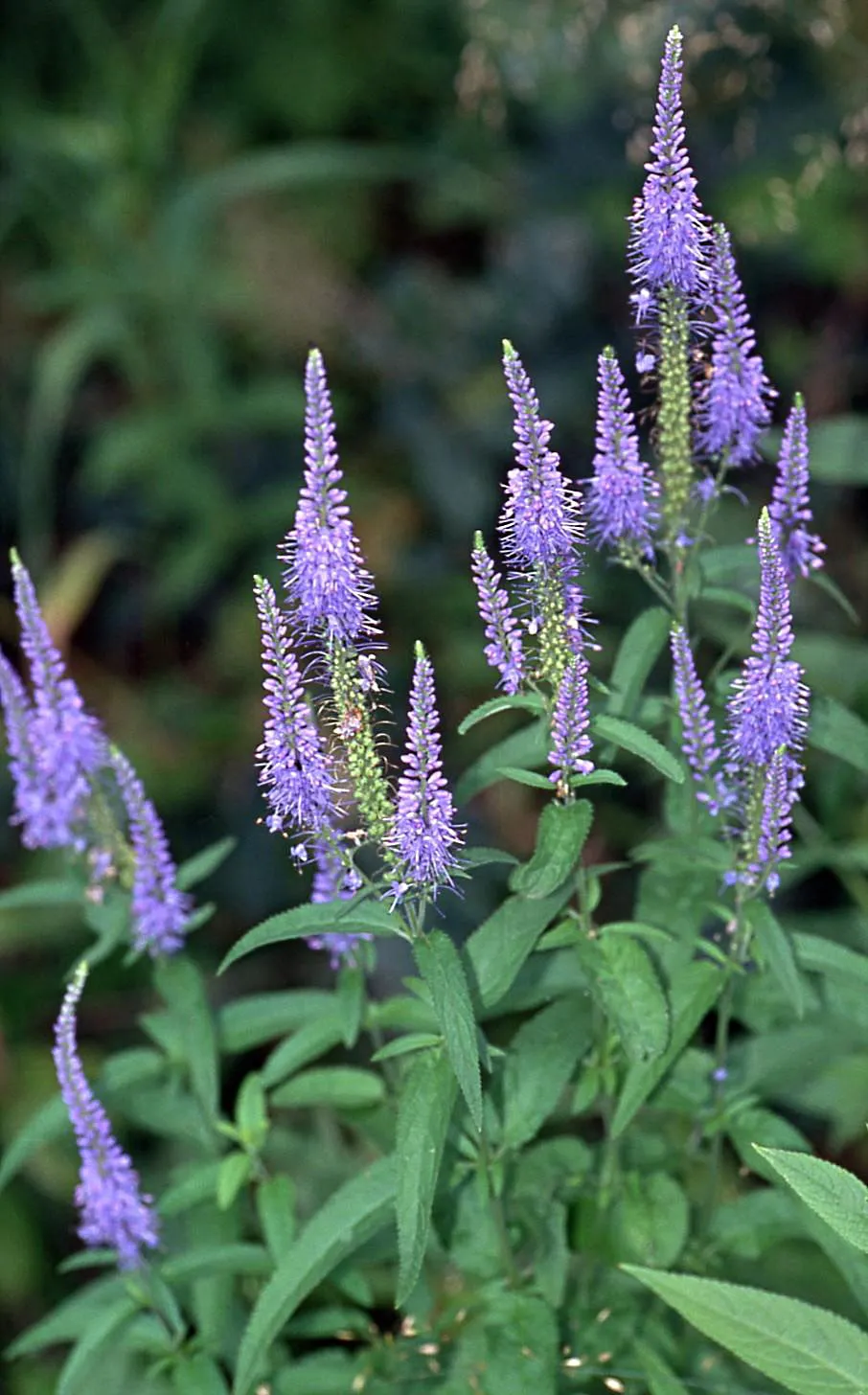
Veronica longifolia, commonly known as Longleaf Speedwell or Garden Speedwell, is an elegant herbaceous perennial belonging to the Plantaginaceae family, though historically it was often classified under Scrophulariaceae. This striking species is indigenous to a broad expanse of Europe and Asia, thriving in diverse habitats from moist meadows to open woodlands. Renowned for its distinctive, upright spire-like flower stalks, Veronica longifolia imparts a strong vertical accent in garden designs and naturalized settings.
The plant typically features lance-shaped to narrowly ovate leaves, arranged in whorls of 3 to 5 along its rigid, unbranched stems. These vibrant green leaves, often with subtly toothed margins, generally range from 5 to 10 cm in length. The true spectacle lies in its magnificent inflorescences, which are dense, terminal racemes extending 15-30 cm.
These racemes are densely packed with numerous small, four-petaled flowers, presenting a rich palette of blue, purple, pink, or white hues, depending on the specific cultivar. Blooming profusely from early summer through late summer, the flowers open sequentially from the base upwards, ensuring a prolonged and captivating display of color. Beyond its aesthetic appeal, Veronica longifolia is a highly valuable pollinator magnet, drawing bees, butterflies, and other beneficial insects, making it an excellent choice for ecological gardening, borders, cottage gardens, and meadow plantings, contributing both beauty and biodiversity.
Trusted Scientific References
1. Authoritative external sources for Veronica longifolia
1.1 Wikipedia — Veronica longifolia
1.2 Kew POWO (Plants of the World Online)
1.3 PubMed — peer-reviewed research
1.4 NCBI Taxonomy Browser
1.5 GBIF — Global Biodiversity
1.6Veronica Longifolia should be interpreted through verified botanical identity, practical care, and responsible safety language. This recovery note adds the missing context needed for a complete profile: match light to the plant's habit, use well-drained soil, water according to season, and avoid unsupported medicinal or edible claims. For publishing, the plant can be presented as a source-backed garden plant with clear care guidance, common problem diagnosis, and conservative safety wording.
1.1.Veronica Longifolia — Key Features
- ✓ <strong>Stately Perennial</strong> — A robust herbaceous perennial with a strong vertical growth habit.
- ✓ <strong>Elegant Inflorescences</strong> — Features dense, spire-like racemes of blue, purple, pink, or white flowers.
- ✓ <strong>Native to Europe & Asia</strong> — Widely distributed across temperate regions of these continents.
- ✓ <strong>Pollinator Magnet</strong> — Highly attractive to bees, butterflies, and other beneficial insects.
- ✓ <strong>Traditional Medicinal Uses</strong> — Historically employed for respiratory, skin, and inflammatory conditions.
- ✓ <strong>Rich Phytochemistry</strong> — Contains beneficial iridoid glycosides, flavonoids, and phenolic compounds.
- ✓ <strong>Moderate Growth Rate</strong> — Establishes well and grows at a moderate pace under optimal conditions.
- ✓ <strong>Adaptable to Gardens</strong> — Suitable for borders, cottage gardens, and meadow plantings.
- ✓ <strong>Low Maintenance</strong> — Generally resistant to major pests and diseases with proper care.
- ✓ <strong>Herbal Expectorant & Diuretic</strong> — Noted for its traditional roles in supporting lung and urinary health.
1.2.Veronica Longifolia — Quick Summary
- ✓ Veronica longifolia is a perennial herb from Europe and Asia, known for its elegant flower spikes.
- ✓ Traditionally used for respiratory health, wound healing, and anti-inflammatory support.
- ✓ Rich in iridoid glycosides, flavonoids, and phenolic acids, contributing to its medicinal properties.
- ✓ Cultivated for its beauty and ecological benefits as a pollinator plant.
- ✓ Generally safe for topical use, but caution advised for internal use, especially during pregnancy or with medications.
- ✓ A valuable addition to herbal medicine cabinets for its diverse therapeutic potential.
2.Veronica Longifolia — Scientific Identity
3.Veronica Longifolia — Quick Facts
4.Veronica Longifolia — Appearance & Identification
5.Veronica Longifolia — Native Habitat
6.Veronica Longifolia — Water Requirements
- ✓ Site Selection — Choose a location with full sun to partial shade for optimal flowering and growth.
- ✓ Soil Preparation — Plant in fertile, well-draining soil enriched with organic matter; a good garden loam is ideal.
- ✓ Watering Regimen — Water regularly during the growing season, maintaining consistently moist but not waterlogged soil.
- ✓ Temperature & Hardiness — Thrives in temperatures between 10–28°C; minimum tolerance around -25°C, suitable for USDA Zones 4-8.
- ✓ Fertilization — Apply a balanced liquid fertilizer monthly during the active growing season to support robust growth and abundant blooms.
- ✓ Propagation — Easily propagated by seed (sow at 18–22°C, germination 1–8 weeks) or by division of clumps in spring or autumn.
- ✓ Pest & Disease Management — Generally low maintenance with no major pest or disease issues; ensure good air circulation to prevent fungal problems.
- ✓ Mulching — Apply a layer of organic mulch around the base to retain soil moisture, regulate soil temperature, and suppress weeds.
Reviewed by the Flora Medical Global Botanical Review Panel
Multi-disciplinary editorial group · Botany · Ethnobotany · Herbal-medicine literature
Who reviewed this: This page was checked by the Flora Medical Global Botanical Review Panel — an in-house editorial group of botany graduates, ethnobotany researchers, and horticulture practitioners who collectively maintain our 7,000+ plant encyclopedia. Meet the team.
Our 4-step verification process
1. Taxonomic verification
Scientific names and synonyms cross-checked against Kew POWO, World Flora Online, and The Plant List.
2. Phytochemical & medicinal cross-reference
Active compounds, traditional uses, and reported activities are cross-referenced with PubMed, USDA Dr. Duke's database, and peer-reviewed ethnobotanical literature.
3. Conservation & distribution check
Distribution, ecology, and conservation status confirmed against GBIF occurrence records and the IUCN Red List.
4. Editorial & safety review
Every entry passes an editorial pass for clarity, originality, and safety notices (toxicity, contraindications, dosage caveats) before publication.
Last reviewed:
Editorial Note: This page is for educational and plant care purposes only.
Written by: Flora Medical Global Editorial Team
Reviewed by: Flora Medical Global Botanical Review Panel
Last Updated: June 15, 2026







Veronica Longifolia — Comments & Community Reviews
Rate this plant