

Care Disclaimer: Plant care recommendations are general guidelines based on common growing conditions. Individual results may vary based on your local environment, climate, and care routine. If your plant is toxic, keep it away from children and pets, and consult a veterinarian if accidental ingestion occurs.
1.Winterberry — Overview
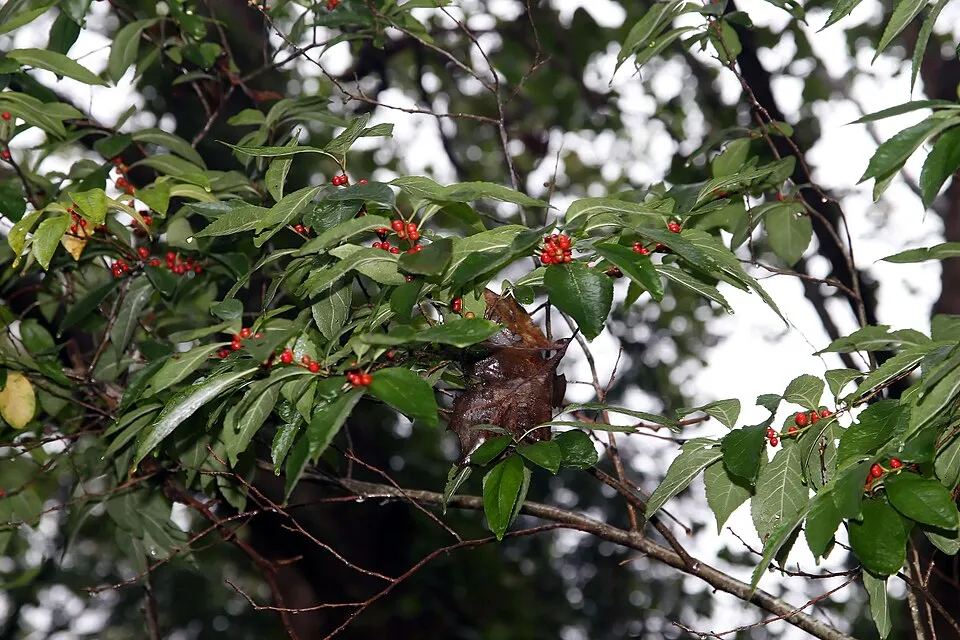
Winterberry, or Ilex verticillata, is an elegant deciduous shrub within the Aquifoliaceae family, native to the eastern regions of North America, spanning from eastern Canada down to the Florida panhandle. This resilient plant typically reaches heights of 1 to 4 meters (3 to 12 feet) with a distinctive upright and often arching growth habit. Its ovate to elliptical leaves, measuring 2.5 to 7.5 cm (1 to 3 inches) in length, feature a lustrous dark green adaxial surface and prominently serrated margins, contributing to its textural appeal. In late spring to early summer, Ilex verticillata produces inconspicuous clusters of small, creamy white, campanulate flowers in the leaf axils.
These blossoms, while subtle, are crucial for attracting native pollinators, predominantly bees, which facilitate subsequent fruit development. Following successful pollination, female plants become adorned with an abundance of vibrant, glossy red drupes by late summer. These striking berries are the plant's most celebrated feature, persisting on the bare branches throughout autumn and well into winter, offering a vital and visually stunning food source for various avian species when other sustenance is scarce. The bark of the Winterberry is smooth and typically a subtle gray hue, providing refined aesthetic interest during the dormant season.
Ilex verticillata is dioecious, meaning individual plants are either male or female; thus, both sexes must be present within proximity for successful fruit set on female plants. It thrives in a diverse array of moist to wet, acidic soils, commonly found in wetland environments such as swamps, marshes, bogs, and along riverbanks, showcasing its remarkable adaptability to saturated conditions.
Trusted Scientific References
1. Authoritative external sources for Ilex verticillata
1.1 Wikipedia — Ilex verticillata
1.2 Kew POWO (Plants of the World Online)
1.3 PubMed — peer-reviewed research
1.4 NCBI Taxonomy Browser
1.5 GBIF — Global Biodiversity
1.6Winterberry should be interpreted through verified botanical identity, practical care, and responsible safety language. This recovery note adds the missing context needed for a complete profile: match light to the plant's habit, use well-drained soil, water according to season, and avoid unsupported medicinal or edible claims. For publishing, the plant can be presented as a source-backed garden plant with clear care guidance, common problem diagnosis, and conservative safety wording.
1.1.Winterberry — Key Features
- ✓ <strong>Deciduous Holly</strong> — Unique among hollies for shedding its leaves in winter, revealing vibrant berries.
- ✓ <strong>Striking Winter Berries</strong> — Abundant, glossy red drupes persist on bare branches throughout the cold season.
- ✓ <strong>Native to Eastern North America</strong> — Well-adapted to regional climates and ecosystems.
- ✓ <strong>Wetland Habitat Adaptability</strong> — Thrives in moist to wet, acidic soils, common in swamps and along waterways.
- ✓ <strong>Dioecious Nature</strong> — Requires separate male and female plants for successful fruit set.
- ✓ <strong>Crucial Bird Food Source</strong> — Berries provide vital sustenance for various bird species in winter.
- ✓ <strong>Pollinator Attractor</strong> — Small, nectar-rich flowers support native bees, butterflies, and moths.
- ✓ <strong>Deer Resistant</strong> — Generally not browsed heavily by deer or rabbits.
- ✓ <strong>Low Maintenance</strong> — Easy to grow once established, tolerating a range of conditions.
- ✓ <strong>Ornamental Value</strong> — Highly prized in landscaping for its dramatic winter display and ecological benefits.
1.2.Winterberry — Quick Summary
- ✓ Deciduous holly native to Eastern North America.
- ✓ Known for its striking, persistent red berries in winter.
- ✓ Crucial food source for birds and attracts pollinators.
- ✓ Dioecious species, requiring both male and female plants for berry production.
- ✓ All parts, especially berries, are toxic to humans and pets if ingested.
- ✓ Primarily valued for its ornamental and ecological benefits.
2.Winterberry — Scientific Identity
3.Winterberry — Quick Facts
4.Winterberry — Appearance & Identification
5.Winterberry — Native Habitat
6.Winterberry — Water Requirements
- ✓ Soil Requirements — Winterberry thrives in moist, well-drained, acidic soils, but can tolerate occasional standing water or wet conditions, and even some dry periods once established.
- ✓ Light Exposure — Optimal growth and abundant fruiting occur in full sun (6+ hours daily) to part sun (4-6 hours daily); flowering and fruiting are diminished in full shade.
- ✓ Water Needs — This shrub has average to abundant water needs, requiring consistent moisture, especially during establishment and dry spells, to prevent foliage browning.
- ✓ Fertilization Schedule — If desired, fertilize in early spring after the ground thaws with a granular rose fertilizer, with an optional second application in late spring/early summer.
- ✓ Winterization — Apply a 2-3 inch layer of shredded bark mulch around the base in late fall to protect shallow roots and conserve moisture, ensuring plants are well-watered before winter.
- ✓ Pruning Guidelines — Female plants should be minimally pruned to avoid impacting flowering and fruiting; only remove dead wood and, for mature plants, one or two of the oldest stems annually to encourage vigorous new growth.
- ✓ Pollination Requirement — As a dioecious species, both a male and female plant must be present within 50 feet for successful pollination and berry production on female shrubs.
Reviewed by the Flora Medical Global Botanical Review Panel
Multi-disciplinary editorial group · Botany · Ethnobotany · Herbal-medicine literature
Who reviewed this: This page was checked by the Flora Medical Global Botanical Review Panel — an in-house editorial group of botany graduates, ethnobotany researchers, and horticulture practitioners who collectively maintain our 7,000+ plant encyclopedia. Meet the team.
Our 4-step verification process
1. Taxonomic verification
Scientific names and synonyms cross-checked against Kew POWO, World Flora Online, and The Plant List.
2. Phytochemical & medicinal cross-reference
Active compounds, traditional uses, and reported activities are cross-referenced with PubMed, USDA Dr. Duke's database, and peer-reviewed ethnobotanical literature.
3. Conservation & distribution check
Distribution, ecology, and conservation status confirmed against GBIF occurrence records and the IUCN Red List.
4. Editorial & safety review
Every entry passes an editorial pass for clarity, originality, and safety notices (toxicity, contraindications, dosage caveats) before publication.
Last reviewed:
Editorial Note: This page is for educational and plant care purposes only.
Written by: Flora Medical Global Editorial Team
Reviewed by: Flora Medical Global Botanical Review Panel
Last Updated: June 15, 2026







Winterberry — Comments & Community Reviews
Rate this plant