

Care Disclaimer: Plant care recommendations are general guidelines based on common growing conditions. Individual results may vary based on your local environment, climate, and care routine. If your plant is toxic, keep it away from children and pets, and consult a veterinarian if accidental ingestion occurs.
1.Xerochrysum Bracteatum — Overview
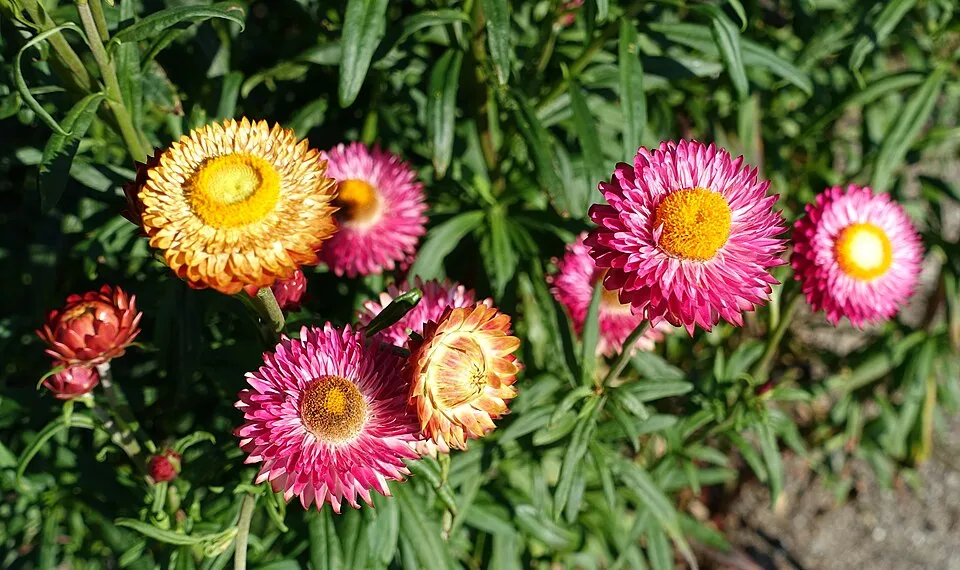
Xerochrysum bracteatum, commonly known as the Strawflower or Everlasting Daisy, is a captivating herbaceous plant belonging to the Asteraceae family. Native to the diverse landscapes of Australia, it thrives in a variety of open, often dry, and sunny habitats across the continent. This species is celebrated for its distinctive daisy-like inflorescences, which are not true petals but rather stiff, papery bracts that radiate around a central disk of florets.
These bracts come in an astonishing spectrum of colors, including vivid yellows, oranges, reds, pinks, and pristine whites, maintaining their structural integrity and brilliant hue long after being cut and dried. Growing as an upright, bushy annual or a short-lived perennial in warmer climates (USDA Zones 8-11), Xerochrysum bracteatum typically reaches heights of 1 to 3 feet (30-90 cm) with a spread of 6 to 18 inches (15-45 cm). Its stems are generally sturdy, supporting lance-shaped to linear leaves that are often slightly hairy.
The unique, almost straw-like texture of its flowers is a key morphological feature that distinguishes it and contributes to its popularity in the floristry and ornamental gardening industries worldwide.
Trusted Scientific References
1. Authoritative external sources for Xerochrysum Bracteatum
1.1 Wikipedia — Xerochrysum Bracteatum
1.2 Kew POWO (Plants of the World Online)
1.3 PubMed — peer-reviewed research
1.4 NCBI Taxonomy Browser
1.5 GBIF — Global Biodiversity
1.6Xerochrysum Bracteatum should be interpreted through verified botanical identity, practical care, and responsible safety language. This recovery note adds the missing context needed for a complete profile: match light to the plant's habit, use well-drained soil, water according to season, and avoid unsupported medicinal or edible claims. For publishing, the plant can be presented as a source-backed garden plant with clear care guidance, common problem diagnosis, and conservative safety wording.
1.1.Xerochrysum Bracteatum — Key Features
- ✓ <strong>Botanical Name</strong> — Xerochrysum bracteatum
- ✓ <strong>Common Name</strong> — Strawflower, Everlasting Daisy, Golden Everlasting
- ✓ <strong>Family</strong> — Asteraceae
- ✓ <strong>Native Region</strong> — Australia
- ✓ <strong>Flower Characteristics</strong> — Papery, vibrant, daisy-like bracts
- ✓ <strong>Longevity</strong> — Excellent for dried floral arrangements
- ✓ <strong>Growth Habit</strong> — Upright, bushy annual or short-lived perennial
- ✓ <strong>Sun Requirement</strong> — Full sun preferred
- ✓ <strong>Soil Preference</strong> — Well-drained, sandy-rocky soil
- ✓ <strong>Drought Tolerance</strong> — High once established
1.2.Xerochrysum Bracteatum — Quick Summary
- ✓ Ornamental Everlasting Daisy
- ✓ Native to Australia, Asteraceae Family
- ✓ Papery Flowers Retain Color When Dried
- ✓ Low Maintenance, Drought-Tolerant
- ✓ Primarily Decorative, Limited Documented Medicinal Use
- ✓ Thrives in Full Sun and Well-Drained Soil
2.Xerochrysum Bracteatum — Scientific Identity
3.Xerochrysum Bracteatum — Quick Facts
4.Xerochrysum Bracteatum — Appearance & Identification
5.Xerochrysum Bracteatum — Native Habitat
6.Xerochrysum Bracteatum — Water Requirements
- ✓ Optimal Light Conditions — Xerochrysum bracteatum thrives in full sun exposure, requiring at least 6-8 hours daily to ensure prolific blooming and prevent leggy growth.
- ✓ Soil and pH Requirements — Prefers well-drained, sandy to rocky soil with a mildly acidic to neutral pH range of 5.5 to 6.5; heavy, rich soils should be avoided to prevent root rot.
- ✓ Watering Practices — Water regularly until established, then the Strawflower becomes remarkably drought-tolerant, needing approximately one inch of water per week during dry spells.
- ✓ Temperature and Hardiness — Best suited for warm climates with daytime temperatures between 65-70°F (18-21°C) and nighttime lows around 60°F (15°C); typically grown as an annual outside USDA zones 8-11.
- ✓ Fertilization Schedule — While not a heavy feeder, a monthly application of a balanced flower fertilizer or a bi-weekly feed for container-grown plants can support continuous, vibrant blooms.
- ✓ Propagation from Seed — Start seeds indoors 6-8 weeks before the last frost, pressing them lightly onto moist soil surface as light aids germination; transplant outdoors after hardening off and when night temperatures consistently reach 60°F (15°C).
- ✓ Maintenance and Pruning — Deadhead spent flowers regularly to encourage new blooms and prevent self-seeding; pinch back young plants to promote bushier growth and more flowers.
Reviewed by the Flora Medical Global Botanical Review Panel
Multi-disciplinary editorial group · Botany · Ethnobotany · Herbal-medicine literature
Who reviewed this: This page was checked by the Flora Medical Global Botanical Review Panel — an in-house editorial group of botany graduates, ethnobotany researchers, and horticulture practitioners who collectively maintain our 7,000+ plant encyclopedia. Meet the team.
Our 4-step verification process
1. Taxonomic verification
Scientific names and synonyms cross-checked against Kew POWO, World Flora Online, and The Plant List.
2. Phytochemical & medicinal cross-reference
Active compounds, traditional uses, and reported activities are cross-referenced with PubMed, USDA Dr. Duke's database, and peer-reviewed ethnobotanical literature.
3. Conservation & distribution check
Distribution, ecology, and conservation status confirmed against GBIF occurrence records and the IUCN Red List.
4. Editorial & safety review
Every entry passes an editorial pass for clarity, originality, and safety notices (toxicity, contraindications, dosage caveats) before publication.
Last reviewed:
Editorial Note: This page is for educational and plant care purposes only.
Written by: Flora Medical Global Editorial Team
Reviewed by: Flora Medical Global Botanical Review Panel
Last Updated: June 15, 2026







Xerochrysum Bracteatum — Comments & Community Reviews
Rate this plant