

Care Disclaimer: Plant care recommendations are general guidelines based on common growing conditions. Individual results may vary based on your local environment, climate, and care routine. If your plant is toxic, keep it away from children and pets, and consult a veterinarian if accidental ingestion occurs.
1.Yarrow Garden — Overview
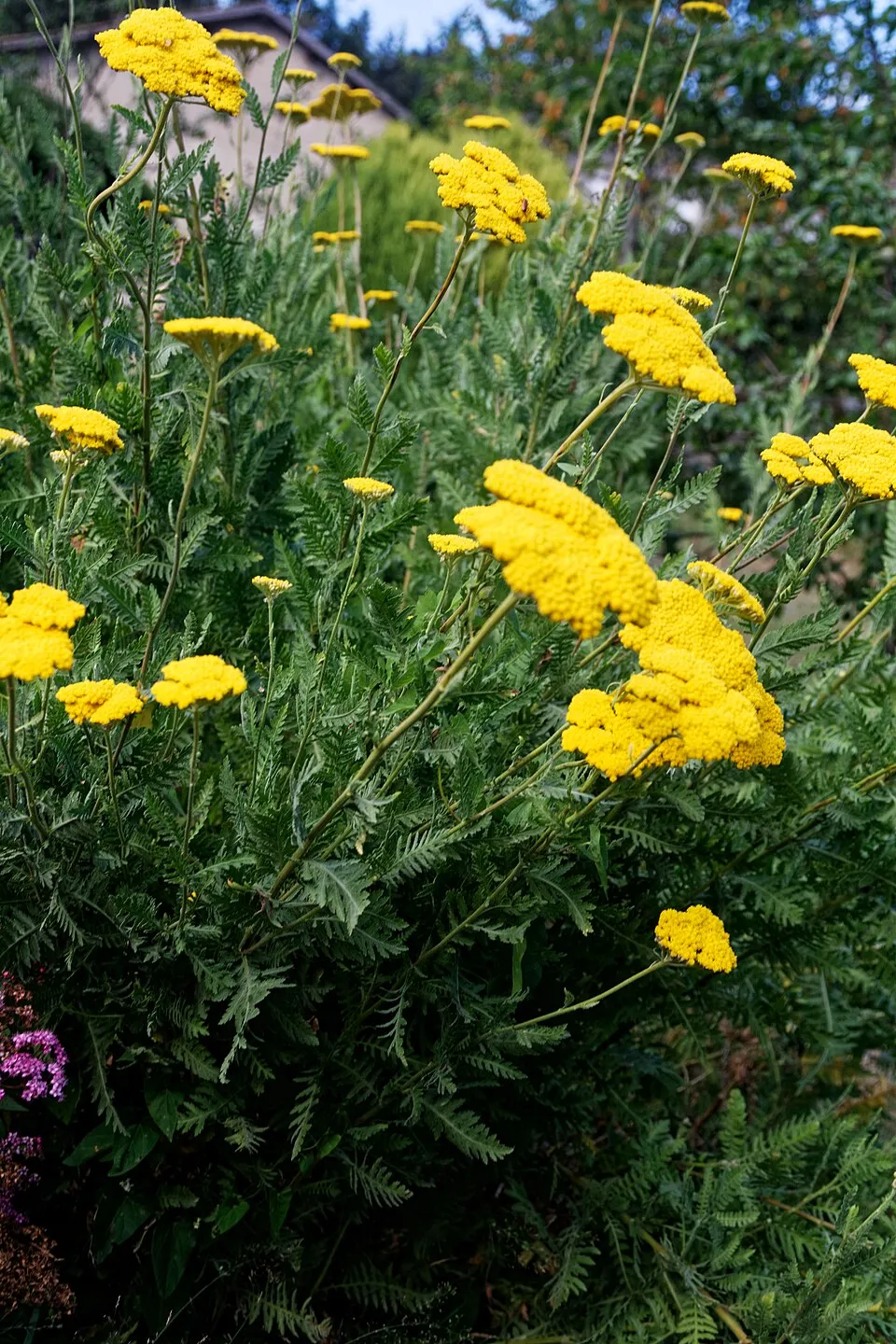
Achillea filipendulina, commonly known as Fernleaf Yarrow or Golden Yarrow, is a striking herbaceous perennial originating from the diverse landscapes of Eurasia. This robust member of the Asteraceae family is distinguished by its upright, sturdy stems that typically reach heights of 2 to 4 feet, creating a pronounced vertical accent in the garden.
Its foliage is a key identifier: finely dissected, fern-like, and a distinctive grayish-green, exuding a pleasant, aromatic scent when bruised. These leaves are arranged alternately along the stem, contributing to the plant's dense, clumping habit.
From early summer through to late autumn, Achillea filipendulina produces a spectacular display of vibrant, golden-yellow flowers. These tiny florets are densely packed into large, flat-topped clusters known as corymbs, which can span several inches across. The brilliant color and broad surface of these inflorescences make them highly attractive to a wide array of pollinators, including bees and butterflies, enhancing biodiversity in its environment.
While its close relative, Achillea millefolium (common yarrow), is more widely recognized for its medicinal applications, Achillea filipendulina shares many similar botanical characteristics and chemical constituents, suggesting a degree of overlapping therapeutic potential. It thrives naturally in full sun and well-drained, often lean, soils, adapting remarkably well to various conditions, from rocky slopes to open meadows, underscoring its resilience and widespread distribution across its native range.
Trusted Scientific References
1. Authoritative external sources for Achillea filipendulina
1.1 Wikipedia — Achillea filipendulina
1.2 Kew POWO (Plants of the World Online)
1.3 PubMed — peer-reviewed research
1.4 NCBI Taxonomy Browser
1.5 GBIF — Global Biodiversity
1.6Yarrow Garden should be interpreted through verified botanical identity, practical care, and responsible safety language. This recovery note adds the missing context needed for a complete profile: match light to the plant's habit, use well-drained soil, water according to season, and avoid unsupported medicinal or edible claims. For publishing, the plant can be presented as a source-backed garden plant with clear care guidance, common problem diagnosis, and conservative safety wording.
1.1.Yarrow Garden — Key Features
- ✓ <strong>Striking Golden</strong> — Yellow Flowers — Large, flat-topped corymbs provide vibrant color from summer to fall.
- ✓ <strong>Aromatic Fern</strong> — like Foliage — Grayish-green, finely dissected leaves release a pleasant scent.
- ✓ <strong>Pollinator Magnet</strong> — Attracts bees, butterflies, and other beneficial insects to the garden.
- ✓ <strong>Drought</strong> — Tolerant Perennial — Once established, it requires minimal watering, making it ideal for xeriscaping.
- ✓ <strong>Low Maintenance</strong> — Easy to grow in full sun and well-drained soil, tolerating various conditions.
- ✓ <strong>Traditional Medicinal Uses</strong> — Historically valued for its astringent, anti-inflammatory, and diaphoretic properties.
- ✓ <strong>Robust & Resilient</strong> — Forms sturdy clumps, resisting many common garden pests and diseases.
- ✓ <strong>Versatile Landscape Plant</strong> — Excellent for borders, cottage gardens, native plantings, and cut flower arrangements.
- ✓ <strong>Shares Constituents with Common Yarrow</strong> — Suggests similar, though less studied, therapeutic potential.
- ✓ <strong>Native to Eurasia</strong> — Adapted to a wide range of climates and soil types within its natural habitat.
1.2.Yarrow Garden — Quick Summary
- ✓ Achillea filipendulina, or Golden Yarrow, is a Eurasian perennial known for its bright yellow flowers and fern-like foliage.
- ✓ Traditionally used as an astringent, anti-inflammatory, and for fevers and digestive issues.
- ✓ Rich in flavonoids, sesquiterpene lactones, and essential oils, contributing to its potential therapeutic actions.
- ✓ Thrives in full sun and well-drained soil, requiring minimal water once established.
- ✓ Potential side effects include allergic reactions and photosensitivity; contraindicated in pregnancy and with certain medications.
- ✓ A beautiful and resilient plant with a history of herbal use, offering both ornamental and traditional medicinal value.
2.Yarrow Garden — Scientific Identity
3.Yarrow Garden — Quick Facts
4.Yarrow Garden — Appearance & Identification
5.Yarrow Garden — Native Habitat
6.Yarrow Garden — Water Requirements
- ✓ Site Selection — Choose a location receiving at least 6-8 hours of full sun daily for optimal growth and flowering.
- ✓ Soil Preparation — Plant in lean, well-drained soil; excessive fertility can lead to leggy growth and flopping. Amend heavy clay soils with organic matter to improve drainage.
- ✓ Planting Time — Best planted in spring after the last frost, or in fall at least six weeks before the first hard frost to allow root establishment.
- ✓ Watering — Once established, Yarrow Garden is highly drought-tolerant. Water sparingly, allowing the soil to dry out completely between waterings to prevent root rot.
- ✓ Fertilization — Requires little to no supplemental fertilizer. A thin layer of compost applied around the base in spring is usually sufficient.
- ✓ Pruning & Deadheading — Deadhead spent flowers regularly to encourage continuous blooming throughout the season. Cut back by up to half after the main flush of blooms for a potential rebloom.
- ✓ Division — Divide clumps every 3-4 years in early spring or fall to maintain plant vigor and prevent overcrowding.
- ✓ Pest & Disease Resistance — Generally resistant to most pests and diseases, particularly when grown in appropriate conditions.
Reviewed by the Flora Medical Global Botanical Review Panel
Multi-disciplinary editorial group · Botany · Ethnobotany · Herbal-medicine literature
Who reviewed this: This page was checked by the Flora Medical Global Botanical Review Panel — an in-house editorial group of botany graduates, ethnobotany researchers, and horticulture practitioners who collectively maintain our 7,000+ plant encyclopedia. Meet the team.
Our 4-step verification process
1. Taxonomic verification
Scientific names and synonyms cross-checked against Kew POWO, World Flora Online, and The Plant List.
2. Phytochemical & medicinal cross-reference
Active compounds, traditional uses, and reported activities are cross-referenced with PubMed, USDA Dr. Duke's database, and peer-reviewed ethnobotanical literature.
3. Conservation & distribution check
Distribution, ecology, and conservation status confirmed against GBIF occurrence records and the IUCN Red List.
4. Editorial & safety review
Every entry passes an editorial pass for clarity, originality, and safety notices (toxicity, contraindications, dosage caveats) before publication.
Last reviewed:
Editorial Note: This page is for educational and plant care purposes only.
Written by: Flora Medical Global Editorial Team
Reviewed by: Flora Medical Global Botanical Review Panel
Last Updated: June 15, 2026







Yarrow Garden — Comments & Community Reviews
Rate this plant