
Care Disclaimer: Plant care recommendations are general guidelines based on common growing conditions. Individual results may vary based on your local environment, climate, and care routine. If your plant is toxic, keep it away from children and pets, and consult a veterinarian if accidental ingestion occurs.
1.Zantedeschia Aethiopica — Overview
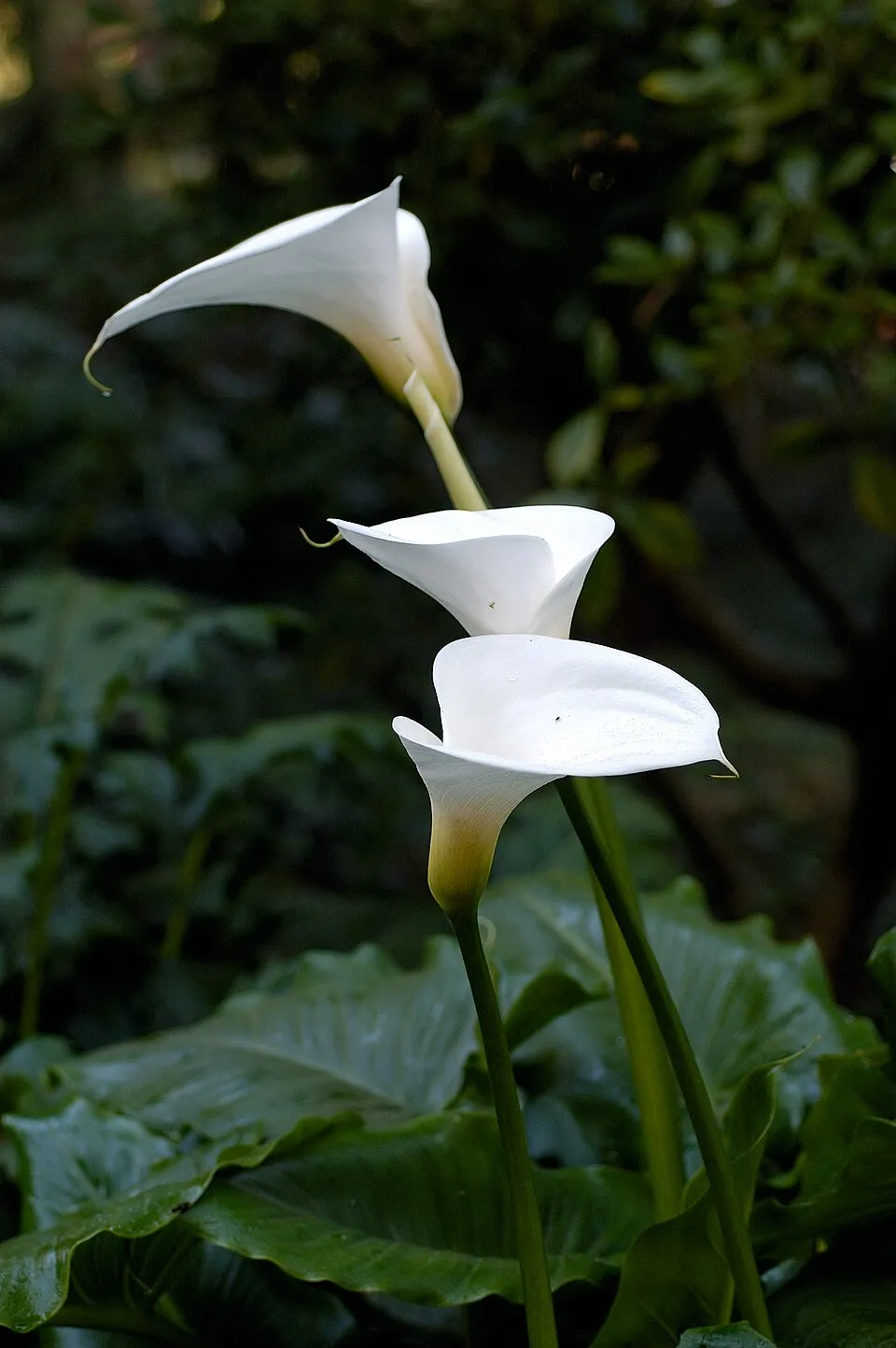
Zantedeschia aethiopica, commonly known as the Calla Lily or Arum Lily, is a striking perennial herbaceous plant belonging to the Araceae family. Native to the marshy regions and riverbanks of southern Africa, including Lesotho, Eswatini, and various provinces of South Africa, it has also naturalized in parts of southern and western Europe. This elegant plant is renowned for its distinctive morphology, featuring a large, showy, trumpet-shaped spathe, typically pure white, that gracefully envelops a vibrant yellow spadix, which bears its true, tiny flowers.
Its foliage consists of lush, glossy green, arrow-shaped leaves that can persist year-round in milder climates, contributing to its evergreen appeal. The plant typically grows to about 1 meter (3 feet 3 inches) in height and 0.6 meters (2 feet) in width, thriving in moist, rich soils and full sun to partial shade. While primarily appreciated for its ornamental beauty, its botanical characteristics include its monoecious nature, with both male and female flowers present on the same spadix, pollinated mainly by insects.
Its preference for wet habitats makes it a common sight in bog gardens and pond margins.
Trusted Scientific References
1. Authoritative external sources for Zantedeschia aethiopica
1.1 Wikipedia — Zantedeschia aethiopica
1.2 Kew POWO (Plants of the World Online)
1.3 PubMed — peer-reviewed research
1.4 NCBI Taxonomy Browser
1.5 GBIF — Global Biodiversity
1.6Zantedeschia Aethiopica should be interpreted through verified botanical identity, practical care, and responsible safety language. This recovery note adds the missing context needed for a complete profile: match light to the plant's habit, use well-drained soil, water according to season, and avoid unsupported medicinal or edible claims. For publishing, the plant can be presented as a source-backed garden plant with clear care guidance, common problem diagnosis, and conservative safety wording.
1.7Zantedeschia Aethiopica (Zantedeschia aethiopica) is maintained in this recovery file as a complete garden profile with practical care, safety, and identification context. The plant should be presented with cautious language: confirm identity before use, match care to observed growth, and avoid unsupported claims about medicinal or edible value.
1.1.Zantedeschia Aethiopica — Key Features
- ✓ <strong>Elegant ornamental plant with iconic white, trumpet</strong> — shaped spathes.
- ✓ <strong>Native to Southern</strong> — Native to Southern Africa, thriving in moist and wetland environments.
- ✓ <strong>Contains high levels</strong> — Contains high levels of calcium oxalate, rendering all raw parts toxic.
- ✓ <strong>Perennial herbaceous plant,</strong> — Perennial herbaceous plant, evergreen in suitable climates.
- ✓ <strong>Adaptable to various</strong> — Adaptable to various soil types, preferring rich, wet conditions.
- ✓ <strong>Historically used topically</strong> — Historically used topically in traditional medicine, but not scientifically validated.
- ✓ <strong>Can be grown</strong> — Can be grown in full sun to partial shade.
- ✓ <strong>Popular choice for</strong> — Popular choice for cut flower arrangements and landscaping.
- ✓ <strong>Requires frost protection</strong> — Requires frost protection in colder climates.
1.2.Zantedeschia Aethiopica — Quick Summary
- ✓ Zantedeschia aethiopica, or Calla Lily, is an elegant perennial native to Southern Africa.
- ✓ Known for its distinctive white spathe and yellow spadix, often cultivated ornamentally.
- ✓ Contains calcium oxalate crystals, making all raw parts highly toxic and irritant upon ingestion or contact.
- ✓ Historically used externally for skin issues, but modern internal medicinal use is strictly contraindicated.
- ✓ Young leaves can be rendered edible only through extensive cooking to neutralize toxins.
2.Zantedeschia Aethiopica — Scientific Identity
3.Zantedeschia Aethiopica — Quick Facts
4.Zantedeschia Aethiopica — Appearance & Identification
5.Zantedeschia Aethiopica — Native Habitat
6.Zantedeschia Aethiopica — Water Requirements
- ✓ Soil Requirements — Zantedeschia aethiopica thrives in very rich, moist to wet, well-drained soils, tolerating light (sandy), medium (loamy), and heavy (clay) textures, with a pH range from mildly acid to mildly alkaline.
- ✓ Light Conditions — Optimal growth and flowering occur in full sun to partial shade; while it can tolerate shade, consistent sunlight generally promotes more vigorous blooms.
- ✓ Water Management — This species requires abundant moisture and can even be grown as an aquatic plant in water up to 30 cm deep, making it ideal for bog gardens, pond margins, or consistently damp areas.
- ✓ Hardiness and Frost Protection — Hardy in USDA zones 8-10 and UK zone 8, it is generally considered frost-tender. In colder regions, rhizomes should be lifted for winter storage or plants protected with a thick layer of mulch like bracken.
- ✓ Propagation — Can be propagated by seed, which should be sown ripe or pre-soaked if stored, preferably in a greenhouse. Division of rhizomes in spring is also effective, with smaller divisions potted until well-established.
- ✓ Container Growing — Calla Lilies adapt well to container cultivation, provided they receive sufficient moisture and a large enough pot to accommodate their root system, allowing for easy relocation during winter in colder climates.
- ✓ Landscape Use — Excellent for borders, specimen planting, naturalizing in wet areas, and as cut flowers, adding an elegant aesthetic to gardens, especially in pond or bog garden settings.
Reviewed by the Flora Medical Global Botanical Review Panel
Multi-disciplinary editorial group · Botany · Ethnobotany · Herbal-medicine literature
Who reviewed this: This page was checked by the Flora Medical Global Botanical Review Panel — an in-house editorial group of botany graduates, ethnobotany researchers, and horticulture practitioners who collectively maintain our 7,000+ plant encyclopedia. Meet the team.
Our 4-step verification process
1. Taxonomic verification
Scientific names and synonyms cross-checked against Kew POWO, World Flora Online, and The Plant List.
2. Phytochemical & medicinal cross-reference
Active compounds, traditional uses, and reported activities are cross-referenced with PubMed, USDA Dr. Duke's database, and peer-reviewed ethnobotanical literature.
3. Conservation & distribution check
Distribution, ecology, and conservation status confirmed against GBIF occurrence records and the IUCN Red List.
4. Editorial & safety review
Every entry passes an editorial pass for clarity, originality, and safety notices (toxicity, contraindications, dosage caveats) before publication.
Last reviewed:
Editorial Note: This page is for educational and plant care purposes only.
Written by: Flora Medical Global Editorial Team
Reviewed by: Flora Medical Global Botanical Review Panel
Last Updated: June 15, 2026







Zantedeschia Aethiopica — Comments & Community Reviews
Rate this plant