
Care Disclaimer: Plant care recommendations are general guidelines based on common growing conditions. Individual results may vary based on your local environment, climate, and care routine. If your plant is toxic, keep it away from children and pets, and consult a veterinarian if accidental ingestion occurs.
1.Zinnia Profusion — Overview
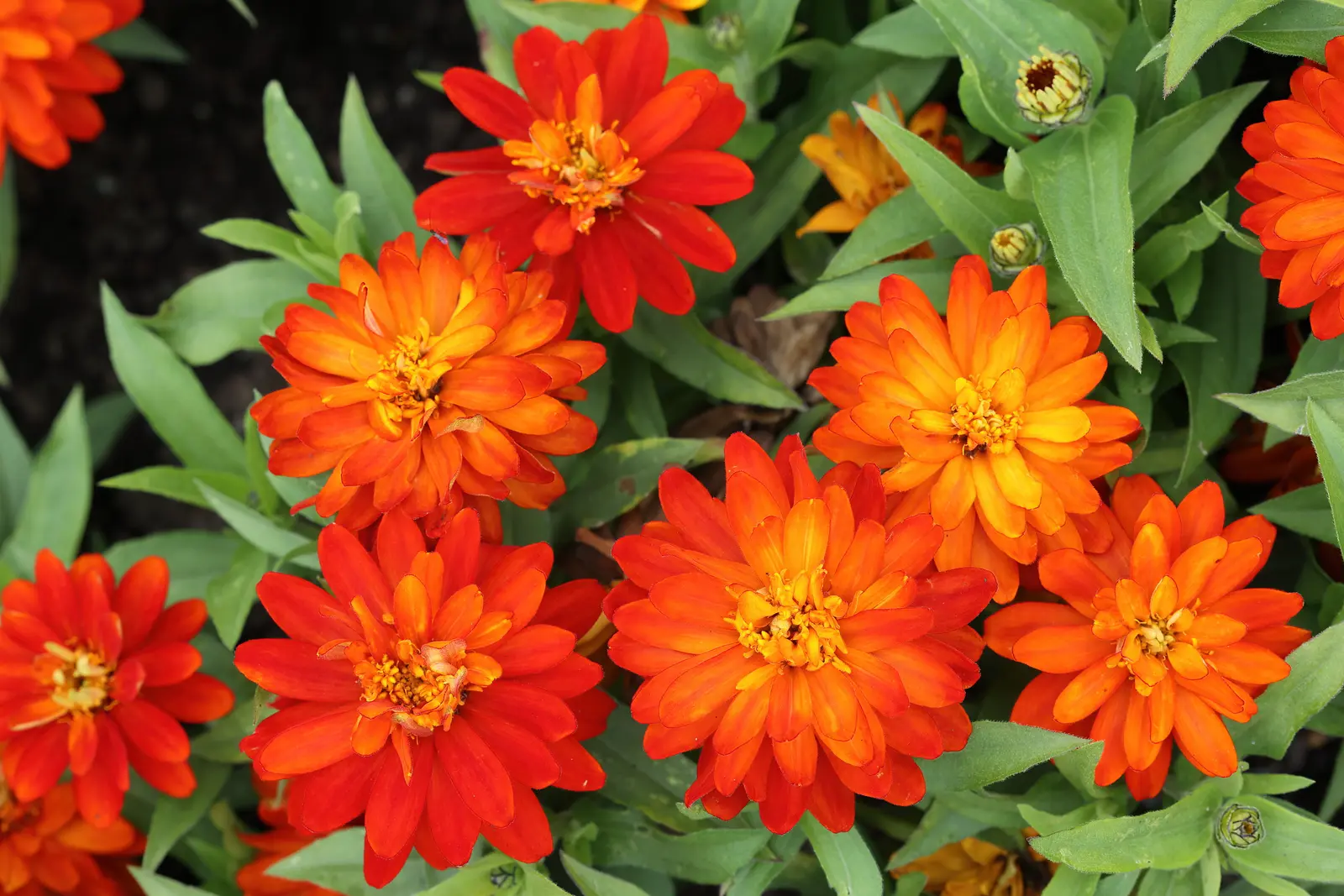
Zinnia Profusion (Zinnia hybrida) represents a distinguished series of hybrid zinnias, meticulously bred and celebrated for its remarkable horticultural attributes. These compact, mounding annuals typically reach a height of 20-45 cm (8-18 inches) and spread similarly, forming dense, floriferous mounds. Their morphology features sturdy, branching stems adorned with lance-shaped to ovate, dark green leaves.
The prolific blooms, appearing continuously from late spring through to the first hard frost, are small, daisy-like to semi-double or double, measuring approximately 4-6 cm (1.5-2.5 inches) in diameter. These vibrant inflorescences display a stunning palette of colors including white, yellow, orange, pink, and red, often with contrasting central discs. As hybrids, Zinnia Profusion plants are primarily cultivated ornamentally across diverse climates globally, excelling in garden beds, borders, containers, and mass plantings.
Their exceptional disease resistance, particularly to powdery mildew, and tolerance to heat and drought distinguish them within the Asteraceae family. While primarily valued for aesthetic and ecological contributions, such as attracting a wide array of pollinators, their phytochemical profile, rich in flavonoids and carotenoids, suggests potential bioactivity consistent with other members of the Asteraceae.
Trusted Scientific References
1. Authoritative external sources for Zinnia hybrida
1.1 Wikipedia — Zinnia hybrida
1.2 Kew POWO (Plants of the World Online)
1.3 PubMed — peer-reviewed research
1.4 NCBI Taxonomy Browser
1.5 GBIF — Global Biodiversity
1.6Zinnia Profusion should be interpreted through verified botanical identity, practical care, and responsible safety language. This recovery note adds the missing context needed for a complete profile: match light to the plant's habit, use well-drained soil, water according to season, and avoid unsupported medicinal or edible claims. For publishing, the plant can be presented as a source-backed garden plant with clear care guidance, common problem diagnosis, and conservative safety wording.
1.1.Zinnia Profusion — Key Features
- ✓ <strong>Prolific Bloomer</strong> — Produces an abundance of vibrant flowers continuously from late spring until frost.
- ✓ <strong>Disease Resistant</strong> — Exhibits exceptional tolerance to common Zinnia diseases, especially powdery mildew.
- ✓ <strong>Compact Growth Habit</strong> — Mounding and neat, making it ideal for borders, containers, and mass plantings.
- ✓ <strong>Attracts Pollinators</strong> — A magnet for butterflies, bees, and other beneficial insects, enhancing garden ecology.
- ✓ <strong>Low Maintenance</strong> — Easy to grow and care for, requiring minimal intervention once established.
- ✓ <strong>Drought Tolerant</strong> — Resilient in drier conditions after initial establishment, reducing watering needs.
- ✓ <strong>Wide Color Range</strong> — Offers a stunning spectrum of flower colors, providing versatile design options.
- ✓ <strong>Continuous Flowering</strong> — Many 'Profusion' varieties are self-cleaning, ensuring a non-stop floral display without constant deadheading.
- ✓ <strong>Heat Tolerant</strong> — Performs well in hot summer climates, maintaining bloom quality and plant vigor.
- ✓ <strong>Aesthetic Appeal</strong> — Significantly enhances garden beauty, contributing to mental well-being and visual delight.
1.2.Zinnia Profusion — Quick Summary
- ✓ Vibrant ornamental hybrid Zinnia known for prolific, continuous blooms.
- ✓ Exceptional resistance to common diseases like powdery mildew, ensuring easy care.
- ✓ Attracts a wide array of pollinators, enhancing garden biodiversity and ecosystem health.
- ✓ Contains beneficial phytochemicals such as flavonoids and carotenoids, offering potential antioxidant support.
- ✓ Primarily cultivated for its aesthetic and ecological value, with limited traditional direct medicinal uses.
- ✓ An ideal choice for low-maintenance, high-impact garden displays.
2.Zinnia Profusion — Scientific Identity
3.Zinnia Profusion — Quick Facts
4.Zinnia Profusion — Appearance & Identification
5.Zinnia Profusion — Native Habitat
6.Zinnia Profusion — Water Requirements
- ✓ Climate and Sun — Zinnia hybrida 'Profusion' series thrives in full sun, requiring a minimum of 6-8 hours of direct sunlight daily, and prefers warm climates with consistent temperatures above 16°C (60°F) for optimal growth and flowering.
- ✓ Soil Requirements — This hybrid necessitates well-drained, organically rich soil with a pH range of 5.5 to 7.5 (slightly acidic to neutral); heavy, waterlogged conditions must be avoided to prevent root rot and fungal issues.
- ✓ Watering Schedule — While mature plants exhibit drought tolerance, young Zinnia Profusion plants demand consistent moisture; water deeply at the base, allowing the top inch of soil to dry out between applications to prevent foliar diseases.
- ✓ Propagation — Primarily propagated from seeds, which can be direct-sown outdoors after the last frost (when soil temperatures reach 16-28°C) or started indoors 4-6 weeks prior for an earlier bloom and careful transplanting.
- ✓ Spacing — Plant seedlings or thin direct-sown plants 20-30 cm (8-12 inches) apart to ensure adequate air circulation, which is critical for preventing fungal diseases like powdery mildew.
- ✓ Fertilization — Benefits from a balanced, all-purpose liquid fertilizer applied sparingly every 4-6 weeks during the active growing season; excessive nitrogen should be avoided as it can promote lush foliage at the expense of floral production.
- ✓ Pests and Diseases — The Profusion series is notably resistant to common Zinnia diseases such as powdery mildew; however, gardeners should monitor for aphids, spider mites, or caterpillars, treating with horticultural oil or insecticidal soap if infestations occur.
- ✓ Deadheading — Regular deadheading of spent blooms is essential to encourage continuous flowering throughout the season and to maintain plant vigor, although Profusion series are often self-cleaning and require less manual deadheading.
Reviewed by the Flora Medical Global Botanical Review Panel
Multi-disciplinary editorial group · Botany · Ethnobotany · Herbal-medicine literature
Who reviewed this: This page was checked by the Flora Medical Global Botanical Review Panel — an in-house editorial group of botany graduates, ethnobotany researchers, and horticulture practitioners who collectively maintain our 7,000+ plant encyclopedia. Meet the team.
Our 4-step verification process
1. Taxonomic verification
Scientific names and synonyms cross-checked against Kew POWO, World Flora Online, and The Plant List.
2. Phytochemical & medicinal cross-reference
Active compounds, traditional uses, and reported activities are cross-referenced with PubMed, USDA Dr. Duke's database, and peer-reviewed ethnobotanical literature.
3. Conservation & distribution check
Distribution, ecology, and conservation status confirmed against GBIF occurrence records and the IUCN Red List.
4. Editorial & safety review
Every entry passes an editorial pass for clarity, originality, and safety notices (toxicity, contraindications, dosage caveats) before publication.
Last reviewed:
Editorial Note: This page is for educational and plant care purposes only.
Written by: Flora Medical Global Editorial Team
Reviewed by: Flora Medical Global Botanical Review Panel
Last Updated: June 15, 2026







Zinnia Profusion — Comments & Community Reviews
Rate this plant