
Care Disclaimer: Plant care recommendations are general guidelines based on common growing conditions. Individual results may vary based on your local environment, climate, and care routine. If your plant is toxic, keep it away from children and pets, and consult a veterinarian if accidental ingestion occurs.
1.Achimenes — Overview
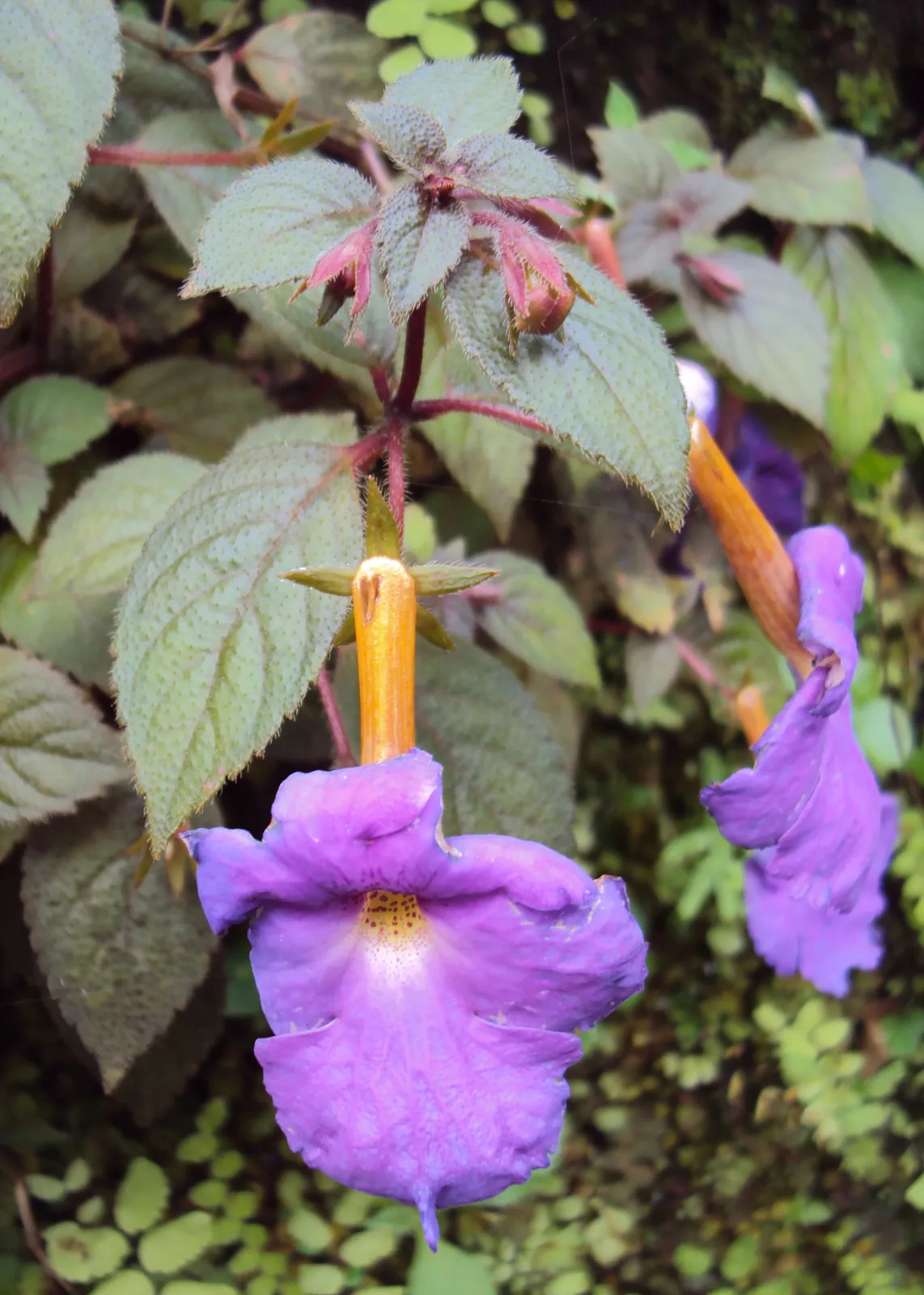
Achimenes longiflora, commonly known by its evocative names such as the 'Hot Water Plant,' 'Magic Flower,' 'Cupid's Bow,' and 'Orchid Pansy,' is a captivating perennial herbaceous species belonging to the Gesneriaceae family. This vibrant plant is indigenous to the tropical and subtropical regions of Central and South America, with its native range extending across Mexico, Guatemala, and Honduras. The genus name 'Achimenes' is derived from Greek, signifying 'not enduring the winter,' a nod to the plant's natural dormant cycle during cooler periods, while 'longiflora' aptly describes its distinctively long-tubed flowers. Achimenes longiflora thrives in environments characterized by high humidity and shade, frequently adopting an epiphytic or lithophytic growth habit—clinging to moss-covered rocks and tree trunks where it benefits from rich organic matter.
Morphologically, the plant develops scaly rhizomes, which function as crucial underground storage organs. From these rhizomes emerge erect or pendent stems, typically reaching lengths of 30 to 60 cm. Its leaves are ovate to lanceolate, presenting a deep green hue on the upper surface with finely serrated margins, and a contrasting reddish-purple underside often covered in fine hairs, imparting a soft, velvety texture. The most striking feature of Achimenes longiflora is its abundant display of vivid tubular flowers, usually appearing in royal purple or blue, though cultivated varieties showcase a spectrum of pink, white, and red shades, often adorned with intricate patterns or contrasting throats.
Each flower is characterized by a slender corolla tube that gracefully expands into five spreading lobes. The plant enjoys an extended blooming season, flourishing from late spring through summer and into early autumn, making it a highly cherished ornamental specimen. While primarily valued for its aesthetic appeal, preliminary research into Achimenes species, including A. longiflora, has revealed a rich phytochemical profile, particularly rich in flavonoids and phenolic acids, compounds recognized for their diverse biological activities.
Trusted Scientific References
1. Authoritative external sources for Achimenes longiflora
1.1 Wikipedia — Achimenes longiflora
1.2 Kew POWO (Plants of the World Online)
1.3 PubMed — peer-reviewed research
1.4 NCBI Taxonomy Browser
1.5 GBIF — Global Biodiversity
1.1.Achimenes — Key Features
- ✓ <strong>Botanical Name</strong> — Achimenes longiflora.
- ✓ <strong>Common Names</strong> — Hot Water Plant, Magic Flower, Cupid's Bow, Orchid Pansy.
- ✓ <strong>Plant Family</strong> — Gesneriaceae.
- ✓ <strong>Native Region</strong> — Tropical and subtropical Central and South America.
- ✓ <strong>Growth Habit</strong> — Perennial herbaceous plant, often epiphytic or lithophytic.
- ✓ <strong>Distinctive Flowers</strong> — Profuse, showy, long-tubed, typically purple or blue, with five spreading lobes.
- ✓ <strong>Storage Organs</strong> — Possesses scaly underground rhizomes for dormancy and propagation.
- ✓ <strong>Key Phytochemicals</strong> — Rich in flavonoids (e.g., anthocyanins) and phenolic acids (e.g., caffeic acid).
- ✓ <strong>Primary Current Use</strong> — Highly valued ornamental plant for indoor and shaded outdoor gardens.
- ✓ <strong>Environmental Preference</strong> — Requires high humidity, indirect light, and warm, frost-free conditions.
1.2.Achimenes — Quick Summary
- ✓ Achimenes longiflora, the 'Hot Water Plant,' is a vibrant perennial from the Gesneriaceae family, native to Central and South America.
- ✓ Renowned for its stunning, long-tubed, often purple or blue flowers and scaly rhizomes.
- ✓ Thrives in humid, shaded conditions, making it a popular ornamental houseplant.
- ✓ Contains promising phytochemicals like flavonoids and phenolic acids, suggesting potential antioxidant and anti-inflammatory benefits.
- ✓ Medicinal uses are largely undocumented and require extensive scientific research for validation.
- ✓ Requires specific care including indirect light, consistent moisture, and warm temperatures.
2.Achimenes — Scientific Identity
3.Achimenes — Quick Facts
4.Achimenes — Appearance & Identification
5.Achimenes — Native Habitat
6.Achimenes — Water Requirements
- ✓ Light Requirements — Achimenes longiflora thrives in bright, indirect light; direct sunlight can scorch its delicate leaves, while insufficient light reduces flowering.
- ✓ Soil Preference — Use a well-draining, fertile, and slightly acidic potting mix, such as a blend suitable for African violets, to ensure optimal growth and prevent root rot.
- ✓ Watering Schedule — Maintain consistently moist soil during the active growing season, but allow the top layer to dry slightly between waterings; reduce watering significantly during dormancy.
- ✓ Humidity Needs — High humidity is crucial for this tropical plant; consider misting regularly, using a pebble tray with water, or placing it in a humid environment like a bathroom or greenhouse.
- ✓ Temperature Range — Prefers warm temperatures, ideally between 18-24°C (65-75°F); temperatures below 10°C (50°F) can trigger dormancy or cause damage.
- ✓ Fertilization — Feed with a balanced liquid fertilizer every 2-4 weeks during its active growth and blooming period, diluting to half strength to avoid nutrient burn.
- ✓ Dormancy Care — As the plant enters dormancy in late autumn, cease watering and allow the foliage to die back; store the rhizomes dry in a cool, dark place (around 13-15°C or 55-60°F) until spring.
- ✓ Propagation — Easily propagated from its scaly rhizomes, which can be divided and replanted in spring, or from stem cuttings during the growing season.
Reviewed by the Flora Medical Global Botanical Review Panel
Multi-disciplinary editorial group · Botany · Ethnobotany · Herbal-medicine literature
Who reviewed this: This page was checked by the Flora Medical Global Botanical Review Panel — an in-house editorial group of botany graduates, ethnobotany researchers, and horticulture practitioners who collectively maintain our 7,000+ plant encyclopedia. Meet the team.
Our 4-step verification process
1. Taxonomic verification
Scientific names and synonyms cross-checked against Kew POWO, World Flora Online, and The Plant List.
2. Phytochemical & medicinal cross-reference
Active compounds, traditional uses, and reported activities are cross-referenced with PubMed, USDA Dr. Duke's database, and peer-reviewed ethnobotanical literature.
3. Conservation & distribution check
Distribution, ecology, and conservation status confirmed against GBIF occurrence records and the IUCN Red List.
4. Editorial & safety review
Every entry passes an editorial pass for clarity, originality, and safety notices (toxicity, contraindications, dosage caveats) before publication.
Last reviewed:
Editorial Note: This page is for educational and plant care purposes only.
Written by: Flora Medical Global Editorial Team
Reviewed by: Flora Medical Global Botanical Review Panel
Last Updated: June 15, 2026







Achimenes — Comments & Community Reviews
Rate this plant