


Care Disclaimer: Plant care recommendations are general guidelines based on common growing conditions. Individual results may vary based on your local environment, climate, and care routine. If your plant is toxic, keep it away from children and pets, and consult a veterinarian if accidental ingestion occurs.
1.Acorus — Overview
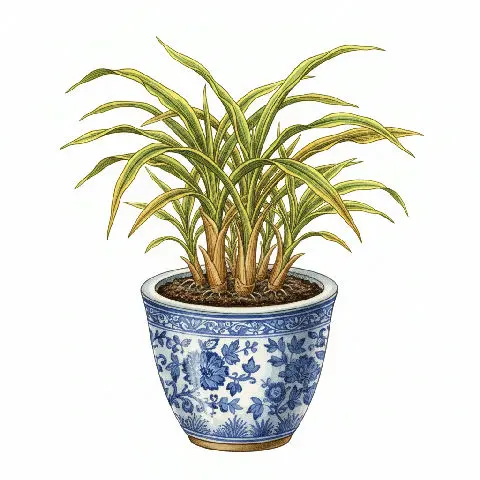
Acorus gramineus Ogon, widely known as Golden Sweet Flag or Dwarf Golden Rush, is a distinctive perennial aquatic to semi-aquatic herbaceous plant belonging to the Acoraceae family. This esteemed cultivar is primarily celebrated for its vibrant, variegated foliage, which displays striking golden-yellow stripes against a backdrop of rich green. It typically forms dense, ornamental tufted clumps, reaching a modest height of 15-30 cm (6-12 inches).
The leaves are characteristically linear and strap-like, maintaining their evergreen appeal in milder climates, thus offering continuous visual interest throughout the year. While its flowers are generally inconspicuous, appearing as small, yellowish-green spadices, the plant's aesthetic value is predominantly derived from its bright foliage, making it an extremely popular choice for ornamental horticulture, particularly in bog gardens, water features, and along waterside plantings.
Native to East Asia, with a strong presence in Japan, Acorus gramineus thrives naturally in wetland environments, marshes, and along the banks of rivers and streams. It demands consistently moist to wet soils and often flourishes when partially submerged. Its robust rhizomatous growth habit allows it to establish attractive colonies over time, serving not only as a decorative specimen but also proving useful for erosion control in suitable, damp landscapes.
Historically, the broader Acorus genus holds profound significance in ancient medical traditions, including Ayurveda and Traditional Chinese Medicine (TCM). The aromatic rhizomes of other Acorus species, notably Acorus calamus, have been revered for centuries for their therapeutic benefits, often associated with cognitive enhancement, digestive support, and calming effects. The close genetic relationship between Acorus gramineus and its more widely studied relatives suggests it may share similar properties, though specific research on this cultivar is still emerging.
Culturally, Acorus is frequently linked with purification, longevity, and protective qualities within Asian traditions, sometimes incorporated into ceremonial practices or household rituals.
Trusted Scientific References
1. Authoritative external sources for Acorus gramineus Ogon
1.1 Wikipedia — Acorus gramineus Ogon
1.2 Kew POWO (Plants of the World Online)
1.3 PubMed — peer-reviewed research
1.4 NCBI Taxonomy Browser
1.5 GBIF — Global Biodiversity
1.1.Acorus — Key Features
- ✓ <strong>Botanical Name</strong> — Acorus gramineus Ogon
- ✓ <strong>Common Names</strong> — Golden Sweet Flag, Dwarf Golden Rush, Japanese Rush, Shi Chang Pu (related species)
- ✓ <strong>Family</strong> — Acoraceae
- ✓ <strong>Distinctive Feature</strong> — Striking golden-yellow and green variegated, strap-like foliage.
- ✓ <strong>Growth Habit</strong> — Perennial, rhizomatous, forming dense, tufted clumps, typically 15-30 cm tall.
- ✓ <strong>Habitat Preference</strong> — Aquatic to semi-aquatic, thriving in consistently moist to wet soils, bog gardens, and watersides.
- ✓ <strong>Traditional Use (Genus</strong> — wide) — Cognitive enhancement, digestive support, calming, respiratory aid in TCM and Ayurveda.
- ✓ <strong>Key Chemical Constituents</strong> — Volatile oils (alpha-asarone, beta-asarone, eugenol, safrole), flavonoids, fatty acids.
- ✓ <strong>Ornamental Value</strong> — Highly prized for its vibrant foliage and ability to provide year-round interest in water gardens.
- ✓ <strong>Cultural Significance</strong> — Associated with purification, longevity, and protective qualities in East Asian traditions.
1.2.Acorus — Quick Summary
- ✓ Golden Sweet Flag (Acorus gramineus Ogon) is a striking ornamental and historically medicinal plant.
- ✓ Native to East Asia, it thrives in wetlands, admired for its variegated foliage.
- ✓ Traditionally used in TCM and Ayurveda for cognitive enhancement, digestive health, and calming effects.
- ✓ Contains volatile oils, including asarone isomers, which contribute to its pharmacological actions.
- ✓ Caution is advised due to potential toxicity associated with asarone, especially with high doses or prolonged use.
- ✓ Valued for both its vibrant aesthetic appeal and its deep roots in ancient herbal medicine.
2.Acorus — Scientific Identity
3.Acorus — Quick Facts
4.Acorus — Appearance & Identification
5.Acorus — Native Habitat
6.Acorus — Water Requirements
- ✓ Light Requirements — Thrives in partial shade to full sun; however, in hotter climates, some afternoon shade is beneficial to prevent leaf scorching.
- ✓ Soil and Moisture — Requires consistently moist to wet soil, ideally a rich, loamy substrate. It performs exceptionally well in boggy conditions or with its roots submerged in shallow water.
- ✓ Watering — Demands high water availability and should never be allowed to dry out. Regular watering is essential for container-grown plants.
- ✓ Temperature and Hardiness — Hardy in USDA zones 5-10, tolerating a range of temperatures but preferring mild climates. Protect from harsh winter winds in colder regions.
- ✓ Propagation — Primarily propagated by division of its rhizomes in spring or early autumn, ensuring each section has roots and foliage.
- ✓ Fertilization — Generally a light feeder; a balanced, slow-release aquatic plant fertilizer can be applied sparingly in spring for optimal growth.
- ✓ Pests and Diseases — Relatively pest and disease resistant, though occasionally susceptible to aphids or root rot in waterlogged, poorly aerated conditions.
- ✓ Maintenance — Low maintenance; simply trim back any dead or discolored foliage as needed to maintain its aesthetic appeal.
Reviewed by the Flora Medical Global Botanical Review Panel
Multi-disciplinary editorial group · Botany · Ethnobotany · Herbal-medicine literature
Who reviewed this: This page was checked by the Flora Medical Global Botanical Review Panel — an in-house editorial group of botany graduates, ethnobotany researchers, and horticulture practitioners who collectively maintain our 7,000+ plant encyclopedia. Meet the team.
Our 4-step verification process
1. Taxonomic verification
Scientific names and synonyms cross-checked against Kew POWO, World Flora Online, and The Plant List.
2. Phytochemical & medicinal cross-reference
Active compounds, traditional uses, and reported activities are cross-referenced with PubMed, USDA Dr. Duke's database, and peer-reviewed ethnobotanical literature.
3. Conservation & distribution check
Distribution, ecology, and conservation status confirmed against GBIF occurrence records and the IUCN Red List.
4. Editorial & safety review
Every entry passes an editorial pass for clarity, originality, and safety notices (toxicity, contraindications, dosage caveats) before publication.
Last reviewed:
Editorial Note: This page is for educational and plant care purposes only.
Written by: Flora Medical Global Editorial Team
Reviewed by: Flora Medical Global Botanical Review Panel
Last Updated: June 16, 2026







Acorus — Comments & Community Reviews
Rate this plant