


Care Disclaimer: Plant care recommendations are general guidelines based on common growing conditions. Individual results may vary based on your local environment, climate, and care routine. If your plant is toxic, keep it away from children and pets, and consult a veterinarian if accidental ingestion occurs.
1.Adromischus Cristatus — Overview
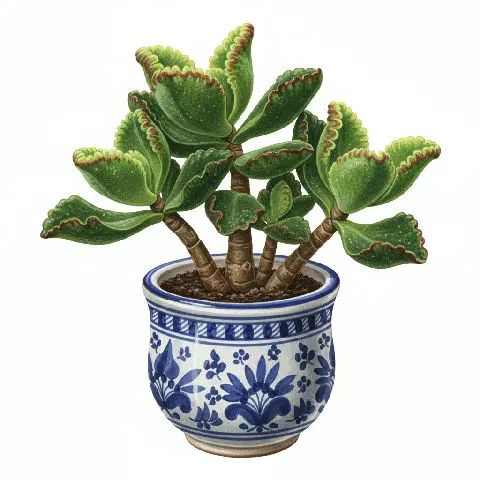
Adromischus cristatus, widely recognized as the Crinkle Leaf Plant or Key Lime Pie, is a captivating succulent species belonging to the diverse Crassulaceae family. This resilient plant is native to the arid and semi-arid regions of South Africa, specifically thriving in the Eastern Cape and KwaZulu-Natal provinces. Its natural habitat includes rocky outcrops, crevices, and sheltered spots beneath larger shrubs, where it demonstrates remarkable adaptations to conserve water. Morphologically, Adromischus cristatus features a thick, fleshy stem that typically grows 20 to 50 millimeters long, often becoming woody with age and forming dense clumps.
Its distinctive obovate leaves, which measure about 20-40 mm in length and 5-13 mm in width, are covered in fine, velvety hairs. These trichomes, along with a thick cuticle, significantly reduce water loss through transpiration. The leaves exhibit a striking range of colors from soft pale green to reddish-brown, and are famously characterized by their crinkled, undulating margins, which gave rise to its specific epithet 'cristatus.' During the spring, the plant produces slender, erect flower stalks bearing small, tubular flowers, predominantly white with subtle reddish tips, attracting various local pollinators. The root system is shallow and fibrous, an adaptation that allows for rapid absorption of moisture from infrequent rainfall events, further enhancing its survival in drought-prone environments.
While indigenous communities have long appreciated the hardiness of succulents, detailed historical records of Adromischus cristatus in traditional African medicine are limited. Today, its primary acclaim comes from its ornamental value as a unique houseplant, cherished by succulent enthusiasts for its distinctive morphology and ease of cultivation.
Trusted Scientific References
1. Authoritative external sources for Adromischus cristatus
1.1 Wikipedia — Adromischus cristatus
1.2 Kew POWO (Plants of the World Online)
1.3 PubMed — peer-reviewed research
1.4 NCBI Taxonomy Browser
1.5 GBIF — Global Biodiversity
1.1.Adromischus Cristatus — Key Features
- ✓ <strong>Distinctive crinkled, undulating</strong> — Distinctive crinkled, undulating leaf margins.
- ✓ <strong>Fleshy, obovate leaves</strong> — Fleshy, obovate leaves covered in fine, velvety hairs.
- ✓ <strong>Compact, clumping growth habit, reaching 20</strong> — 50mm in height.
- ✓ <strong>Highly drought</strong> — tolerant due to succulent adaptations.
- ✓ <strong>Shallow, fibrous root</strong> — Shallow, fibrous root system for rapid water absorption.
- ✓ <strong>Produces slender stalks</strong> — Produces slender stalks with tubular, white flowers tipped with red.
- ✓ <strong>Native to the Eastern Cape and KwaZulu</strong> — Natal provinces of South Africa.
- ✓ <strong>Low maintenance and</strong> — Low maintenance and relatively easy to propagate from cuttings.
- ✓ <strong>Evergreen perennial, providing year</strong> — round aesthetic appeal.
- ✓ <strong>Utilizes Crassulacean Acid</strong> — Utilizes Crassulacean Acid Metabolism (CAM) for efficient photosynthesis.
1.2.Adromischus Cristatus — Quick Summary
- ✓ Adromischus cristatus, known as Crinkle Leaf Plant or Key Lime Pie, is a distinctive succulent.
- ✓ Native to arid South Africa, it's highly adapted for water conservation.
- ✓ Primarily valued as an ornamental houseplant for its unique morphology and ease of care.
- ✓ Limited traditional medicinal uses; no established safety for internal consumption.
- ✓ Features crinkled, velvety leaves and compact, clumping growth.
- ✓ Requires bright light, well-draining soil, and infrequent watering.
2.Adromischus Cristatus — Scientific Identity
3.Adromischus Cristatus — Quick Facts
4.Adromischus Cristatus — Appearance & Identification
5.Adromischus Cristatus — Native Habitat
6.Adromischus Cristatus — Water Requirements
- ✓ Light — Provide bright, indirect to direct sunlight for at least 4-6 hours daily; avoid prolonged exposure to intense, scorching afternoon sun, especially in hot climates, to prevent leaf burn.
- ✓ Soil — Plant in a specialized well-draining succulent or cactus potting mix, ideally amended with additional perlite, pumice, or coarse sand to ensure excellent aeration and prevent waterlogging, which can lead to root rot.
- ✓ Watering — Water thoroughly only when the soil has completely dried out, typically every 2-4 weeks during the active growing season; significantly reduce watering to once a month or less during the cooler winter dormancy period.
- ✓ Temperature — Thrives in warm temperatures, ideally between 18-24°C (65-75°F); protect diligently from frost, as Adromischus cristatus is only hardy down to 0°C (32°F) and sensitive to freezing.
- ✓ Airflow — Ensure good air circulation around the plant to deter fungal diseases and pests, especially in more humid environments or when grown indoors.
- ✓ Fertilization — Feed sparingly with a diluted, balanced liquid fertilizer formulated for succulents during its active growing period (spring and summer), typically once every 2-4 weeks, following product instructions.
- ✓ Propagation — Easily propagated from healthy leaf cuttings or stem cuttings; allow cuttings to callous for several days in a dry, shaded area before planting them in well-draining soil.
- ✓ Pests and Diseases — Monitor for common succulent pests such as mealybugs, spider mites, and scale insects; treat infestations promptly with appropriate organic or systemic insecticides, and ensure good air circulation to prevent fungal issues.
Reviewed by the Flora Medical Global Botanical Review Panel
Multi-disciplinary editorial group · Botany · Ethnobotany · Herbal-medicine literature
Who reviewed this: This page was checked by the Flora Medical Global Botanical Review Panel — an in-house editorial group of botany graduates, ethnobotany researchers, and horticulture practitioners who collectively maintain our 7,000+ plant encyclopedia. Meet the team.
Our 4-step verification process
1. Taxonomic verification
Scientific names and synonyms cross-checked against Kew POWO, World Flora Online, and The Plant List.
2. Phytochemical & medicinal cross-reference
Active compounds, traditional uses, and reported activities are cross-referenced with PubMed, USDA Dr. Duke's database, and peer-reviewed ethnobotanical literature.
3. Conservation & distribution check
Distribution, ecology, and conservation status confirmed against GBIF occurrence records and the IUCN Red List.
4. Editorial & safety review
Every entry passes an editorial pass for clarity, originality, and safety notices (toxicity, contraindications, dosage caveats) before publication.
Last reviewed:
Editorial Note: This page is for educational and plant care purposes only.
Written by: Flora Medical Global Editorial Team
Reviewed by: Flora Medical Global Botanical Review Panel
Last Updated: June 15, 2026







Adromischus Cristatus — Comments & Community Reviews
Rate this plant