


Care Disclaimer: Plant care recommendations are general guidelines based on common growing conditions. Individual results may vary based on your local environment, climate, and care routine. If your plant is toxic, keep it away from children and pets, and consult a veterinarian if accidental ingestion occurs.
1.Air Plant Xerographica — Overview

Tillandsia xerographica, affectionately known as the ‘Queen of Air Plants,’ is a truly captivating member of the Bromeliaceae family, renowned for its majestic, large, and spherical rosette form. This epiphytic herbaceous perennial is native to the sun-drenched, arid and semi-arid landscapes of Central America, specifically thriving in regions of Mexico, Guatemala, El Salvador, and Honduras. Its natural habitat includes the upper canopy branches of tall trees, where it clings without parasitizing, demonstrating remarkable adaptation to environments characterized by infrequent rainfall and high light intensity. The morphology of Tillandsia xerographica is a testament to its xerophytic existence. Its thick, curling, silvery-green leaves are covered in specialized, highly efficient scales called trichomes.
These trichomes are not merely decorative; they are crucial for the plant's survival, functioning to absorb all necessary water and nutrients directly from the ambient air and atmospheric moisture, negating the need for soil. The plant's common name, 'Air Plant,' and its scientific epithet, 'xerographica' (derived from Greek 'xeros' meaning dry and 'grapho' meaning to write or draw, aptly describing its dry-growing nature), perfectly encapsulate this unique physiological adaptation. In terms of its reproductive biology, Tillandsia xerographica produces a striking inflorescence that can extend up to three feet in height. This showy spike features vibrant, long-lasting bracts that transition in color from green to yellow or orange-red, eventually revealing small, tubular, purple flowers. These flowers, though individually modest, collectively contribute to a dramatic display, marking a significant event in the plant's life cycle, as it typically blooms only once before producing 'pups' or offsets.
The plant's slow growth rate contributes to its mature, impressive size, making it a highly prized ornamental specimen. Historically, while many Tillandsia species may have held practical or ceremonial significance for indigenous Mesoamerican cultures, direct specific documentation linking T. xerographica to ancient medicinal texts or practices is notably scarce. Its robust nature and ability to flourish without extensive care likely rendered it a candidate for simple air purification or ornamental use within dwellings, contributing to the aesthetic and potentially energetic balance of a space. Ecologically, T.
Trusted Scientific References
Authoritative external sources for Tillandsia Xerographica:
1.1.Air Plant Xerographica — Key Features
- Epiphytic Growth — Tillandsia xerographica grows without soil, anchoring itself to trees or other surfaces.
- Xerophytic Adaptation — Highly adapted to dry environments, capable of surviving with minimal water.
- Large Rosette Form — Develops a striking, spherical rosette of thick, curling leaves.
- Silvery Foliage — Leaves are covered in specialized, silvery trichomes, giving them a frosted appearance.
- Trichome Absorption — Absorbs water and nutrients directly from the air through its unique leaf scales.
- Showy Inflorescence — Produces a tall, dramatic flower spike with colorful bracts and small purple flowers.
- Slow Growth Rate — Matures slowly, eventually reaching an impressive size.
- Drought Tolerant — Can withstand prolonged periods without water, thanks to its specialized adaptations.
- Low Maintenance — Requires minimal care once its specific light and watering regimen is established.
- Central American Native — Indigenous to arid regions of Mexico, Guatemala, El Salvador, and Honduras.
- Non — Parasitic — Attaches to host plants for support but does not draw nutrients from them.
- Evergreen Perennial — Maintains its foliage year-round and lives for multiple years.
- CAM Photosynthesis — Utilizes Crassulacean Acid Metabolism to conserve water, opening stomata at night.
- Unique Texture — The trichomes give the leaves a distinct, velvety-soft texture.
- Air Purification Potential — Contributes to general indoor air quality through natural gas exchange.
1.2.Air Plant Xerographica — Quick Summary
- Primary Use — Ornamental display and aesthetic enhancement of indoor spaces.
- Unique Adaptation — Epiphytic growth, absorbing all water and nutrients from the air via specialized trichomes.
- Key Feature — Large, silvery, curling rosette form; often called the 'Queen of Air Plants'.
- Maintenance Level — Relatively low maintenance once its specific light and watering needs are understood.
- Phytochemical Potential — Contains flavonoids and phenolic acids, common to the Tillandsia genus, known for antioxidant properties.
- Habitat — Native to arid and semi-arid regions of Central America, growing on tree branches.
- Safety Profile — Generally non-toxic for humans and pets, primarily used for decorative purposes.
- Ecological Role — Provides microhabitats in its native environment and contributes to biodiversity.
2.Air Plant Xerographica — Scientific Identity
3.Air Plant Xerographica — Categories & Tags
4.Air Plant Xerographica — Appearance & Identification
5.Air Plant Xerographica — Water Requirements
- Light Requirements — Provide bright, indirect light. A south-facing window with some diffusion or placement under a pergola outdoors in mild climates is ideal. Direct, intense sunlight can scorch the leaves, especially during peak afternoon hours.
- Watering — Tillandsia xerographica absorbs water through its leaves. Soak the entire plant in room-temperature water for 15-30 minutes every 1-2 weeks. In drier indoor environments or during warmer months, more frequent soaking may be necessary. In winter, monthly soaking can suffice.
- Drying After Watering — After soaking, gently shake excess water from the plant and allow it to dry upside-down in a well-ventilated area. This prevents water from collecting in the crown, which can lead to rot, a common issue for air plants.
- Humidity — These plants thrive in environments with moderate to high humidity (50-70%). Misting 2-3 times a week can supplement humidity, especially in dry indoor settings, but should not replace regular soaking.
- Air Circulation — Good air circulation is crucial to prevent fungal issues and ensure proper drying after watering. Avoid placing the plant in stagnant air pockets.
- Temperature — Maintain temperatures between 60-85°F (15-29°C). Tillandsia xerographica is a tropical plant and is intolerant of frost; bring indoors if temperatures drop below 50°F (10°C).
- Fertilization — Fertilize sparingly, once a month or every other month during the growing season (spring and summer). Use a liquid fertilizer specifically formulated for Tillandsias or a highly diluted (1/4 to 1/2 strength) orchid or bromeliad fertilizer added to the soaking water.
- Mounting and Display — As an epiphyte, T. xerographica does not require soil. Display it on driftwood, in decorative bowls, on rocks, or suspended from wires. Ensure the base has good air flow and is not permanently wet.
- Propagation — Tillandsia xerographica propagates primarily through offsets or 'pups' that emerge from the base after flowering. These pups can be gently separated once they reach about one-third the size of the mother plant, or left attached to form a clump.
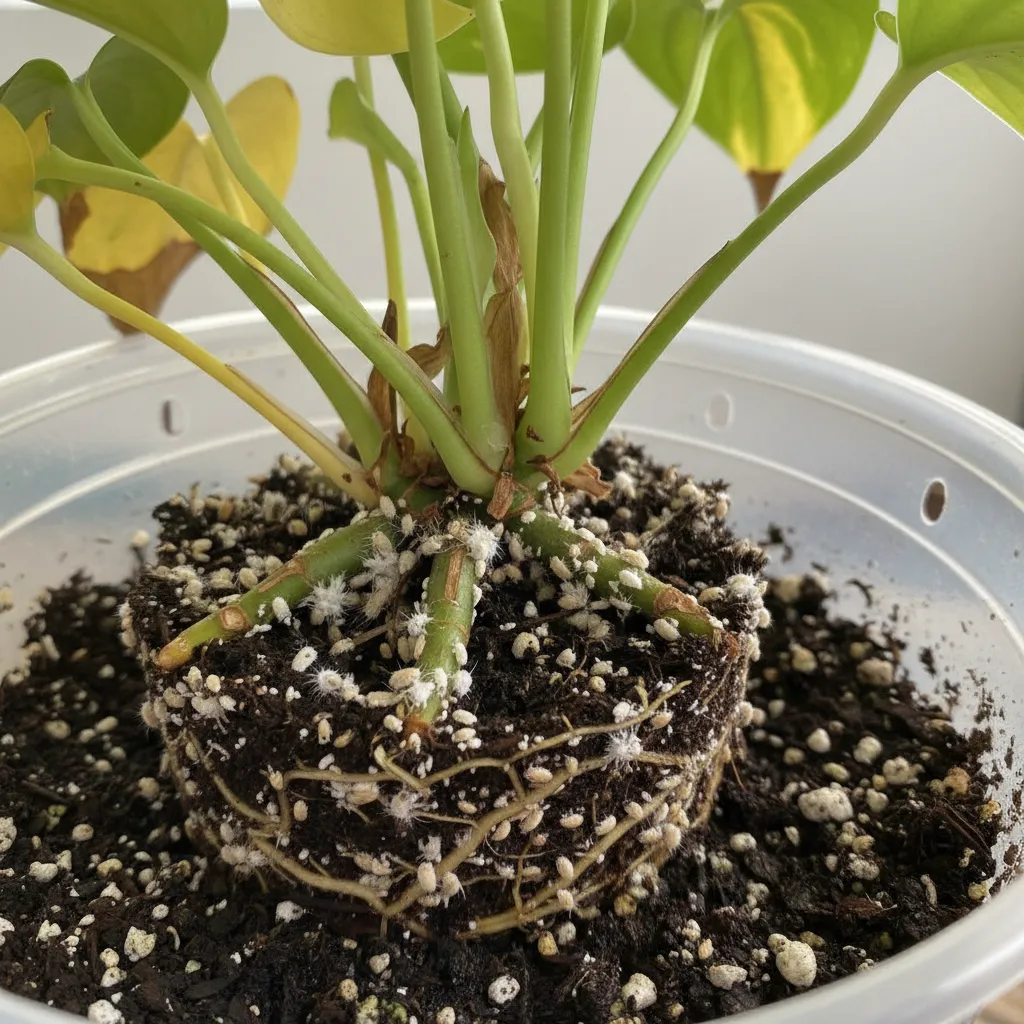
- Pests and Diseases — This plant is generally robust and not prone to many pests or diseases. Overwatering leading to rot is the most common issue. Occasional pests like mealybugs can be treated with a diluted neem oil solution.
- Substrate Requirements — No soil is needed. The plant should be displayed in a way that allows its roots (which are primarily for anchoring) to remain exposed to air.
Reviewed by the Flora Medical Global Botanical Review Panel
Multi-disciplinary editorial group · Botany · Ethnobotany · Herbal-medicine literature
Who reviewed this: This page was checked by the Flora Medical Global Botanical Review Panel — an in-house editorial group of botany graduates, ethnobotany researchers, and horticulture practitioners who collectively maintain our 7,000+ plant encyclopedia. Meet the team.
Our 4-step verification process
1. Taxonomic verification
Scientific names and synonyms cross-checked against Kew POWO, World Flora Online, and The Plant List.
2. Phytochemical & medicinal cross-reference
Active compounds, traditional uses, and reported activities are cross-referenced with PubMed, USDA Dr. Duke's database, and peer-reviewed ethnobotanical literature.
3. Conservation & distribution check
Distribution, ecology, and conservation status confirmed against GBIF occurrence records and the IUCN Red List.
4. Editorial & safety review
Every entry passes an editorial pass for clarity, originality, and safety notices (toxicity, contraindications, dosage caveats) before publication.
Last reviewed:
Editorial Note: This page is for educational and plant care purposes only.
Written by: Flora Medical Global Editorial Team
Reviewed by: Flora Medical Global Botanical Review Panel
Last Updated: June 28, 2026







Air Plant Xerographica — Comments & Community Reviews
Rate this plant
No reviews yet. Be the first!