


Care Disclaimer: Plant care recommendations are general guidelines based on common growing conditions. Individual results may vary based on your local environment, climate, and care routine. If your plant is toxic, keep it away from children and pets, and consult a veterinarian if accidental ingestion occurs.
1.Baby Tears — Overview
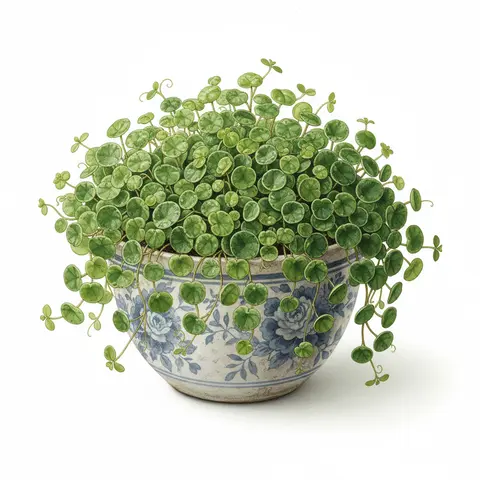
Soleirolia soleirolii, widely recognized as Baby Tears, Angel's Tears, or Corsican Carpet, is a charming, low-growing perennial herb belonging to the Urticaceae family, which also includes the common stinging nettle. This diminutive species is indigenous to the Mediterranean islands of Corsica and Sardinia, where it naturally flourishes in consistently moist, shaded, and rocky environments, frequently found alongside streams or waterfalls. Its preferred habitat indicates its need for high humidity and protection from direct, harsh sunlight.
The plant’s scientific description dates back to the early 19th century, and it has since become a highly favored ornamental houseplant due to its unique texture and vibrant, almost luminous green foliage. The common names accurately depict its appearance: a dense, sprawling carpet composed of countless tiny, round to kidney-shaped leaves, each measuring a mere 5 millimeters across, creating an illusion of lush moss. Its stems are exceptionally fine and delicate, resembling hair, and possess an impressive ability to root rapidly wherever they contact moist soil.
This characteristic enables Soleirolia soleirolii to spread quickly, forming extensive, low-lying mats that gracefully spill over container edges or cover terrarium floors. Beyond its horticultural appeal, its botanical classification within Urticaceae suggests a potential, albeit underexplored, phytochemical profile, distinct from its more robust relatives.
Trusted Scientific References
1. Authoritative external sources for Soleirolia soleirolii
1.1 Wikipedia — Soleirolia soleirolii
1.2 Kew POWO (Plants of the World Online)
1.3 PubMed — peer-reviewed research
1.4 NCBI Taxonomy Browser
1.5 GBIF — Global Biodiversity
1.6Baby Tears should be interpreted through verified botanical identity, practical care, and responsible safety language. This recovery note adds the missing context needed for a complete profile: match light to the plant's habit, use well-drained soil, water according to season, and avoid unsupported medicinal or edible claims. For publishing, the plant can be presented as a source-backed indoor plant with clear care guidance, common problem diagnosis, and conservative safety wording.
1.1.Baby Tears — Key Features
- ✓ <strong>Botanical Name</strong> — Soleirolia soleirolii
- ✓ <strong>Family</strong> — Urticaceae
- ✓ <strong>Common Names</strong> — Baby Tears, Angel's Tears, Corsican Carpet
- ✓ <strong>Growth Habit</strong> — Dense, prostrate, mat-forming groundcover
- ✓ <strong>Foliage</strong> — Tiny, bright green, round to kidney-shaped leaves
- ✓ <strong>Native Habitat</strong> — Moist, shaded, rocky areas of Corsica and Sardinia
- ✓ <strong>Primary Use</strong> — Ornamental houseplant, terrarium plant, groundcover
- ✓ <strong>Environmental Benefits</strong> — Air purification, natural humidifier
- ✓ <strong>Psychological Benefits</strong> — Stress reduction, mental well-being, biophilic connection
- ✓ <strong>Toxicity</strong> — Non-toxic to humans and most common pets
1.2.Baby Tears — Quick Summary
- ✓ Delicate, mat-forming perennial herb from the Urticaceae family.
- ✓ Native to the moist, shaded regions of Corsica and Sardinia.
- ✓ Valued ornamentally for its dense, vibrant green foliage and rapid spread.
- ✓ Known for its environmental benefits, including air purification and humidity enhancement.
- ✓ Offers psychological benefits like stress reduction and mood improvement.
- ✓ Generally considered non-toxic to humans and common household pets.
2.Baby Tears — Scientific Identity
3.Baby Tears — Quick Facts
4.Baby Tears — Appearance & Identification
5.Baby Tears — Native Habitat
6.Baby Tears — Water Requirements
- ✓ Light — Provide bright, indirect light; direct sunlight can scorch its delicate leaves.
- ✓ Water — Keep the soil consistently moist but never waterlogged to prevent root rot.
- ✓ Humidity — Prefers high humidity; mist regularly or place on a pebble tray with water.
- ✓ Soil — Use a well-draining, peat-based potting mix rich in organic matter.
- ✓ Temperature — Thrives in cool to moderate temperatures, ideally between 15-24°C (60-75°F).
- ✓ Propagation — Easily propagated by simply pressing stem cuttings into moist soil where they readily root.
- ✓ Fertilization — Feed sparingly with a diluted liquid fertilizer during the active growing season (spring and summer).
- ✓ Pruning — Trim regularly to maintain its dense, carpet-like appearance and encourage fuller growth.
Reviewed by the Flora Medical Global Botanical Review Panel
Multi-disciplinary editorial group · Botany · Ethnobotany · Herbal-medicine literature
Who reviewed this: This page was checked by the Flora Medical Global Botanical Review Panel — an in-house editorial group of botany graduates, ethnobotany researchers, and horticulture practitioners who collectively maintain our 7,000+ plant encyclopedia. Meet the team.
Our 4-step verification process
1. Taxonomic verification
Scientific names and synonyms cross-checked against Kew POWO, World Flora Online, and The Plant List.
2. Phytochemical & medicinal cross-reference
Active compounds, traditional uses, and reported activities are cross-referenced with PubMed, USDA Dr. Duke's database, and peer-reviewed ethnobotanical literature.
3. Conservation & distribution check
Distribution, ecology, and conservation status confirmed against GBIF occurrence records and the IUCN Red List.
4. Editorial & safety review
Every entry passes an editorial pass for clarity, originality, and safety notices (toxicity, contraindications, dosage caveats) before publication.
Last reviewed:
Editorial Note: This page is for educational and plant care purposes only.
Written by: Flora Medical Global Editorial Team
Reviewed by: Flora Medical Global Botanical Review Panel
Last Updated: June 16, 2026







Baby Tears — Comments & Community Reviews
Rate this plant