
Care Disclaimer: Plant care recommendations are general guidelines based on common growing conditions. Individual results may vary based on your local environment, climate, and care routine. If your plant is toxic, keep it away from children and pets, and consult a veterinarian if accidental ingestion occurs.
1.Banana Plant — Overview
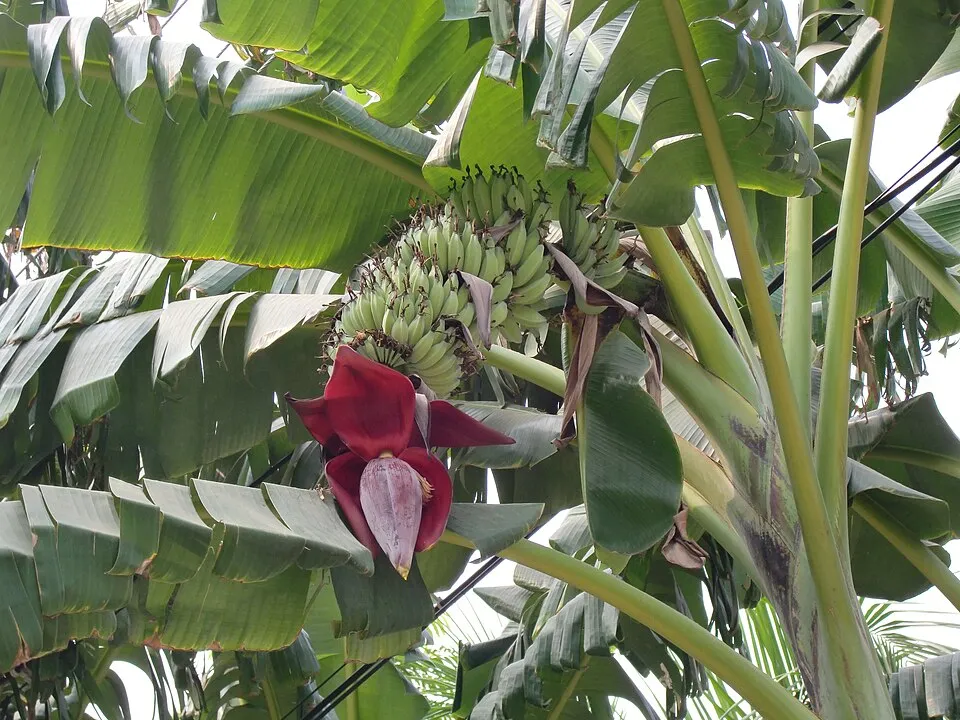
Musa acuminata, commonly recognized as the banana plant, is a pivotal species within the Musaceae family, originating from the lush tropical and subtropical lowlands of Southeast Asia. Botanically, it is classified as a giant perennial herb, not a tree, characterized by its robust pseudostem formed from tightly overlapping leaf sheaths. From this central structure, large, paddle-shaped leaves unfurl, sometimes reaching several meters in length, showcasing prominent parallel venation.
The inflorescence, a pendulous spike, produces distinct male and female flowers, eventually giving rise to the characteristic elongated, fleshy fruits. Its natural habitat demands warm, humid conditions with ample rainfall and well-drained, organically rich soil. Musa acuminata is historically significant as one of the primary ancestral species contributing the 'A' genome to the complex polyploid cultivars of edible bananas we consume today.
For indoor cultivation, dwarf varieties like 'Dwarf Cavendish' or 'Super Dwarf Cavendish' are favored due to their more manageable size, allowing enthusiasts to bring a touch of tropical grandeur into homes, though fruiting indoors can be less common. This plant's adaptability and economic importance have spread its cultivation globally, making it a staple crop and a subject of extensive botanical and ethnobotanical study.
Trusted Scientific References
1. Authoritative external sources for Musa acuminata
1.1 Wikipedia — Musa acuminata
1.2 Kew POWO (Plants of the World Online)
1.3 PubMed — peer-reviewed research
1.4 NCBI Taxonomy Browser
1.5 GBIF — Global Biodiversity
1.6Banana Plant Indoor should be interpreted through verified botanical identity, practical care, and responsible safety language. This recovery note adds the missing context needed for a complete profile: match light to the plant's habit, use well-drained soil, water according to season, and avoid unsupported medicinal or edible claims. For publishing, the plant can be presented as a source-backed indoor plant with clear care guidance, common problem diagnosis, and conservative safety wording.
1.1.Banana Plant — Key Features
- ✓ <strong>Botanical Classification</strong> — Giant perennial herb, not a tree, belonging to the Musaceae family.
- ✓ <strong>Ancestral Species</strong> — Primary contributor of the 'A' genome to modern cultivated bananas.
- ✓ <strong>Pseudostem Structure</strong> — Unique trunk-like formation from tightly packed leaf sheaths.
- ✓ <strong>Large Foliage</strong> — Distinctive, paddle-shaped leaves with prominent parallel venation.
- ✓ <strong>Tropical Origin</strong> — Native to Southeast Asian lowlands, thrives in warm, humid environments.
- ✓ <strong>Indoor Cultivation</strong> — Dwarf cultivars are popular for ornamental and occasional fruiting indoors.
- ✓ <strong>Nutritional Powerhouse</strong> — Fruit is rich in potassium, vitamins, and dietary fiber.
- ✓ <strong>Ethnobotanical Significance</strong> — Extensive traditional uses across Ayurveda, TCM, and Unani.
- ✓ <strong>Phytochemical Richness</strong> — Contains diverse phenolic compounds, flavonoids, and other bioactive molecules.
- ✓ <strong>Versatile Use</strong> — Edible fruit, cooked flower and pseudostem, medicinal sap and leaves.
1.2.Banana Plant — Quick Summary
- ✓ Musa acuminata is a vital tropical perennial herb, ancestral to most edible bananas.
- ✓ Valued for its fruit, but also for traditional medicinal uses of its leaves, sap, flower, and pseudostem.
- ✓ Rich in antioxidants, anti-inflammatories, and supports digestive and metabolic health.
- ✓ Indoor cultivation is popular using dwarf varieties, requiring bright light, high humidity, and consistent moisture.
- ✓ Research validates many traditional uses, highlighting its complex phytochemistry.
- ✓ Generally safe, but caution advised for latex allergies and individuals managing blood sugar.
2.Banana Plant — Scientific Identity
3.Banana Plant — Quick Facts
4.Banana Plant — Appearance & Identification
5.Banana Plant — Native Habitat
6.Banana Plant — Water Requirements
- ✓ Light — Provide at least six hours of direct sunlight daily; indoors, a south or west-facing window is ideal.
- ✓ Soil — Use rich, loamy, well-draining soil with a slightly acidic pH (5.0-6.5), incorporating compost annually.
- ✓ Watering — Keep soil consistently moist but not waterlogged; banana plants are tropical and require frequent watering, especially in warm conditions.
- ✓ Temperature and Humidity — Maintain temperatures between 24-35°C (75-95°F) and high humidity; use a humidifier or pebble trays indoors.
- ✓ Fertilization — Fertilize monthly during the growing season with a balanced, high-potassium fertilizer (e.g., 8-10-8), diluted to half-strength for potted plants.
- ✓ Pruning — Remove dead or damaged leaves; for fruiting varieties, prune to one main stem and one healthy sucker for replacement after the main stem fruits.
- ✓ Potting — For indoor plants, use a large container (15-gallon or more) with excellent drainage; repot every 2-3 years, dividing suckers.
- ✓ Propagation — Easily propagated by separating suckers (pups) from the main rhizome when they are at least 12 inches tall and have developed independent roots.
Reviewed by the Flora Medical Global Botanical Review Panel
Multi-disciplinary editorial group · Botany · Ethnobotany · Herbal-medicine literature
Who reviewed this: This page was checked by the Flora Medical Global Botanical Review Panel — an in-house editorial group of botany graduates, ethnobotany researchers, and horticulture practitioners who collectively maintain our 7,000+ plant encyclopedia. Meet the team.
Our 4-step verification process
1. Taxonomic verification
Scientific names and synonyms cross-checked against Kew POWO, World Flora Online, and The Plant List.
2. Phytochemical & medicinal cross-reference
Active compounds, traditional uses, and reported activities are cross-referenced with PubMed, USDA Dr. Duke's database, and peer-reviewed ethnobotanical literature.
3. Conservation & distribution check
Distribution, ecology, and conservation status confirmed against GBIF occurrence records and the IUCN Red List.
4. Editorial & safety review
Every entry passes an editorial pass for clarity, originality, and safety notices (toxicity, contraindications, dosage caveats) before publication.
Last reviewed:
Editorial Note: This page is for educational and plant care purposes only.
Written by: Flora Medical Global Editorial Team
Reviewed by: Flora Medical Global Botanical Review Panel
Last Updated: June 16, 2026







Banana Plant — Comments & Community Reviews
Rate this plant