
Care Disclaimer: Plant care recommendations are general guidelines based on common growing conditions. Individual results may vary based on your local environment, climate, and care routine. If your plant is toxic, keep it away from children and pets, and consult a veterinarian if accidental ingestion occurs.
1.Blue Star Fern — Overview
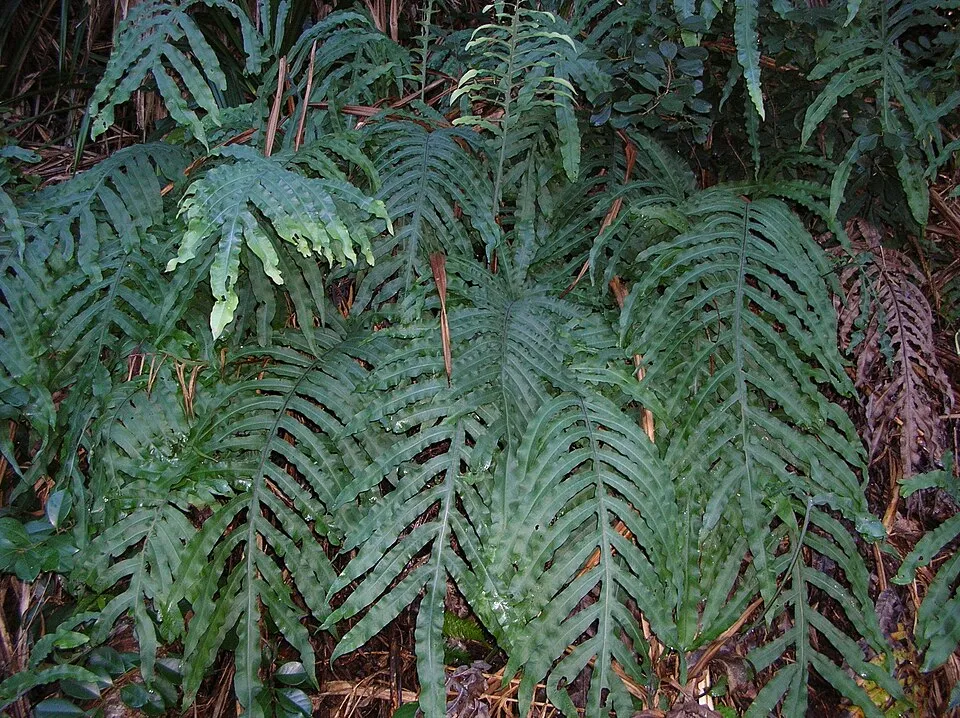
Phlebodium aureum, widely recognized as the Blue Star Fern, Hare's Foot Fern, or Golden Polypody, is a striking epiphytic and lithophytic fern indigenous to the tropical and subtropical Americas, spanning from Florida and the Caribbean through Central and South America. This species distinguishes itself with its unique growth habit, primarily colonizing tree trunks and rocks, absorbing moisture and nutrients from the atmosphere and decaying organic matter rather than soil.
This adaptation is crucial for its care as a houseplant. Belonging to the diverse Polypodiaceae family, its botanical epithet 'aureum' refers to the golden-yellow sori (spore cases) visible on the underside of its fronds.
Morphologically, the Blue Star Fern is captivating, featuring distinctive blue-green, undulate to deeply lobed fronds that can extend up to 90 centimeters (3 feet) in optimal conditions. These fronds are coated with a glaucous, waxy cuticle, which not only imparts their characteristic 'blue star' hue but also serves a vital physiological role in minimizing water loss, a key adaptation for its epiphytic lifestyle.
Its robust, creeping rhizomes, often covered in golden-brown scales, anchor the plant to its substrate and contribute to its common name, Hare's Foot Fern. The historical and ethnobotanical records indicate its traditional recognition for both its aesthetic appeal and its perceived medicinal attributes by indigenous cultures within its native range.
Trusted Scientific References
1. Authoritative external sources for Phlebodium aureum
1.1 Wikipedia — Phlebodium aureum
1.2 Kew POWO (Plants of the World Online)
1.3 PubMed — peer-reviewed research
1.4 NCBI Taxonomy Browser
1.5 GBIF — Global Biodiversity
1.6Blue Star Fern should be interpreted through verified botanical identity, practical care, and responsible safety language. This recovery note adds the missing context needed for a complete profile: match light to the plant's habit, use well-drained soil, water according to season, and avoid unsupported medicinal or edible claims. For publishing, the plant can be presented as a source-backed indoor plant with clear care guidance, common problem diagnosis, and conservative safety wording.
1.1.Blue Star Fern — Key Features
- ✓ <strong>Distinctive Blue</strong> — Green Fronds — Characterized by a glaucous, waxy cuticle giving a unique 'blue star' appearance.
- ✓ <strong>Epiphytic Growth Habit</strong> — Naturally grows on trees and rocks, absorbing moisture and nutrients from the air.
- ✓ <strong>Native to Tropical Americas</strong> — Found across Florida, Caribbean, Central, and South America.
- ✓ <strong>Rich in Phytoecdysteroids</strong> — Contains unique plant hormones with adaptogenic and immunomodulatory potential.
- ✓ <strong>Strong Photoprotective Properties</strong> — Extracts are used in commercial sun protection and skin health products.
- ✓ <strong>Anti</strong> — inflammatory & Antioxidant — High content of flavonoids and phenolic acids supports cellular protection.
- ✓ <strong>Traditional Ethnobotanical Use</strong> — Recognized by indigenous cultures for both ornamental and medicinal value.
- ✓ <strong>Member of Polypodiaceae Family</strong> — A robust and diverse fern family known for various medicinal members.
- ✓ <strong>Golden</strong> — Yellow Sori — The 'aureum' epithet refers to the golden spore cases on the frond undersides.
- ✓ <strong>Supports Skin Health</strong> — Widely studied for its benefits in managing conditions like vitiligo, psoriasis, and eczema.
1.2.Blue Star Fern — Quick Summary
- ✓ Blue Star Fern (Phlebodium aureum) is an epiphytic fern native to the Americas.
- ✓ Historically used by indigenous cultures for medicinal purposes.
- ✓ Key benefits include photoprotection, anti-inflammatory, antioxidant, and immunomodulatory effects.
- ✓ Rich in phytoecdysteroids, flavonoids, and phenolic acids like chlorogenic and quinic acid.
- ✓ Primarily used topically for skin conditions and orally as a supplement for systemic benefits.
- ✓ Requires high humidity and indirect light for cultivation.
2.Blue Star Fern — Scientific Identity
3.Blue Star Fern — Quick Facts
4.Blue Star Fern — Appearance & Identification
5.Blue Star Fern — Native Habitat
6.Blue Star Fern — Water Requirements
- ✓ Light — Prefers bright, indirect light; direct sun can scorch fronds. Ideal for shaded indoor environments.
- ✓ Humidity — Requires high humidity, mimicking its tropical native habitat. Mist regularly or use a pebble tray/humidifier.
- ✓ Watering — Keep soil (or substrate) consistently moist but not waterlogged. Allow the top inch to dry slightly between waterings.
- ✓ Substrate — As an epiphyte, it thrives in well-draining, airy potting mixes, such as orchid mix or a blend of bark, perlite, and peat.
- ✓ Temperature — Thrives in warm temperatures, ideally between 18-27°C (65-80°F). Avoid cold drafts.
- ✓ Fertilization — Feed sparingly during the growing season (spring/summer) with a diluted liquid fertilizer, about half-strength.
- ✓ Propagation — Easily propagated by division of its rhizomes, ensuring each section has fronds and roots.
- ✓ Air Circulation — Good air circulation is important to prevent fungal issues in high humidity.
Reviewed by the Flora Medical Global Botanical Review Panel
Multi-disciplinary editorial group · Botany · Ethnobotany · Herbal-medicine literature
Who reviewed this: This page was checked by the Flora Medical Global Botanical Review Panel — an in-house editorial group of botany graduates, ethnobotany researchers, and horticulture practitioners who collectively maintain our 7,000+ plant encyclopedia. Meet the team.
Our 4-step verification process
1. Taxonomic verification
Scientific names and synonyms cross-checked against Kew POWO, World Flora Online, and The Plant List.
2. Phytochemical & medicinal cross-reference
Active compounds, traditional uses, and reported activities are cross-referenced with PubMed, USDA Dr. Duke's database, and peer-reviewed ethnobotanical literature.
3. Conservation & distribution check
Distribution, ecology, and conservation status confirmed against GBIF occurrence records and the IUCN Red List.
4. Editorial & safety review
Every entry passes an editorial pass for clarity, originality, and safety notices (toxicity, contraindications, dosage caveats) before publication.
Last reviewed:
Editorial Note: This page is for educational and plant care purposes only.
Written by: Flora Medical Global Editorial Team
Reviewed by: Flora Medical Global Botanical Review Panel
Last Updated: June 16, 2026







Blue Star Fern — Comments & Community Reviews
Rate this plant